
What should you know about melanoma in situ vulva?
Short answer
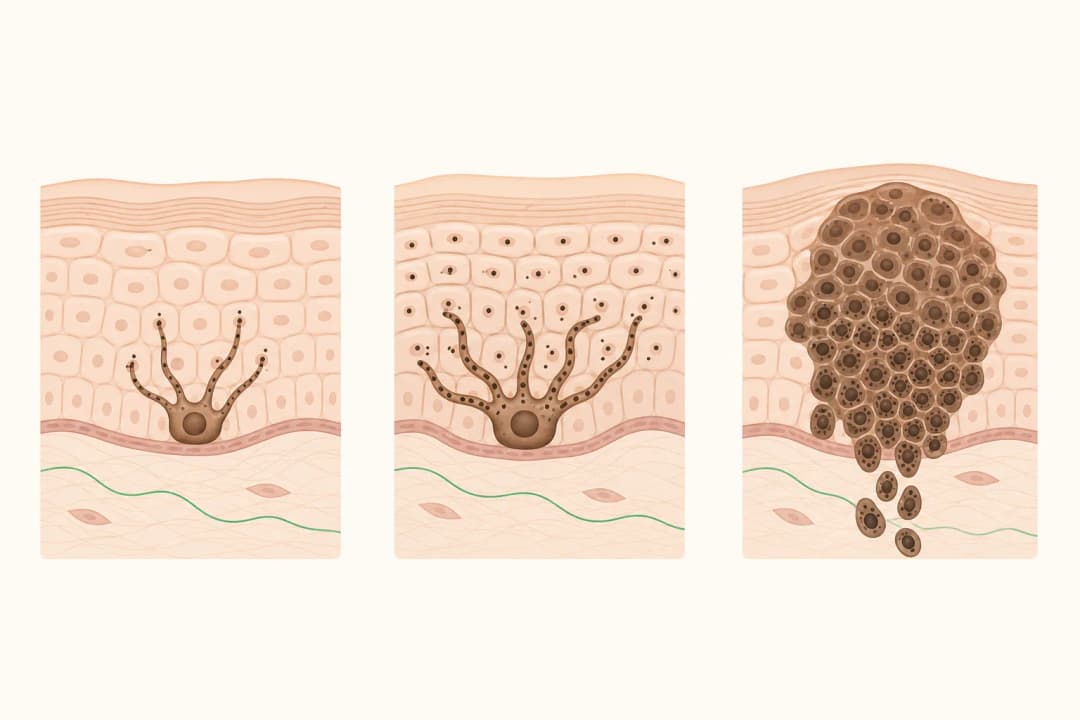
Melanoma in situ of the vulva means abnormal pigment-producing cells are confined to the surface skin, but specialist assessment is needed to plan complete removal.
This answers one question. It is not a diagnosis and does not replace an assessment by a licensed doctor.
At a glance
- Location
- The diagnosis concerns external genital skin of the vulva.
- Pathology focus
- Whether cells are confined to the surface and whether biopsy edges are clear.
- Care priorities
- Complete assessment, careful wound care and sensitive follow-up.
Understanding the diagnosis
The vulva includes the external genital skin and surrounding structures. A biopsy is examined to identify melanoma cells and determine whether they are limited to the surface layer in the sampled tissue. Pigmented vulval skin can vary naturally, and irritation, itching or a visible mark cannot establish the diagnosis by themselves. The pathology report may comment on margins, meaning the edges of the biopsy, and whether the specimen is adequate for interpretation.
Because the area is sensitive and close to structures that affect comfort, urination and sexual function, care may involve a dermatologist, gynaecologist or specialist surgeon. [Melanoma](/conditions/melanoma/) provides broader context.
Planning care for this area
Ask which specialist will coordinate your care and whether further [Surgical Excision](/treatments/surgical-dermatology/excisional-surgery/) is needed after the biopsy. Discuss the planned amount of tissue removal, closure, pain relief, urination, bathing, exercise and sexual activity during healing. Use only the cleansing and dressing products recommended for the wound; fragranced products can irritate healing vulval skin. Attend the pathology review and any wound check, and keep a record of new symptoms or changes in nearby skin.
Symptoms needing prompt review
Contact the treating team for increasing vulval pain, swelling, warmth, spreading redness, pus, wound separation, difficulty passing urine or bleeding that does not settle with pressure. Seek urgent help for heavy bleeding, inability to urinate, faintness, breathing difficulty or rapidly increasing swelling. A new dark, uneven, crusting or bleeding area anywhere on the vulva deserves an earlier examination, even if the treated site is healing well.
Questions worth asking
Ask whether the biopsy margins are clear, what further removal would involve, how healing may affect daily activities, when you can wash or exercise normally, and what changes should prompt urgent contact. Ask how often the vulva and the rest of your skin should be examined, and whether you need help checking less visible areas.
Find care
General Clinics & Polyclinics in Abu Dhabi
That answer is general. If you want it applied to your own case, these are licensed general clinics & polyclinics listed in Abu Dhabi.
27 Ar Ruwwad St - Shakhbout City - MSH4 - Abu Dhabi - United Arab Emirates
Accepts: Daman, Thiqa, Cigna, MetLife +20 more
Al Ruwais, Al Dhafrah
Accepts: Daman, Thiqa, AXA, Cigna +16 more
Al Bahyah - Al Bahyah Old - Abu Dhabi - United Arab Emirates
Accepts: Daman, Thiqa, Cigna, Allianz Care +18 more
Abu Dhabi
Accepts: Daman, Thiqa, AXA, Cigna +27 more
Ordered by verification status and how complete each clinic's public record is, then alphabetically. This is a directory listing, not a ranking — Zavis does not rate or recommend providers.
A factual listing drawn from the DHA, DOH and MOHAP licence registers. It is not a referral, an endorsement, or advice that any of these providers is right for you.
Questions people ask
Does itching prove vulval melanoma in situ?
No. Itching has many possible causes; only clinical assessment and tissue pathology can establish what a vulval lesion represents.
Will treatment affect urination or sexual comfort?
The effect depends on the lesion and the amount and location of tissue removed, so discuss expected healing and activity restrictions with the specialist.
Related
Related reading
Keep reading
Medical disclaimer. This page is general health information, not medical advice, and it cannot diagnose you. Always consult a licensed healthcare provider about your own symptoms and treatment. In an emergency in the UAE, call 998 for an ambulance.