
What should you know about melanoma in situ treatment?
Short answer
Melanoma in situ treatment usually centres on complete surgical removal, followed by pathology review and a personalised plan for skin surveillance.
This answers one question. It is not a diagnosis and does not replace an assessment by a licensed doctor.
At a glance
- Core treatment
- Complete removal of the affected area with pathology review.
- Choice of procedure
- Depends on site, lesion outline, pathology and wound closure needs.
- Long-term care
- Skin surveillance remains part of care after treatment.
Why removal is central
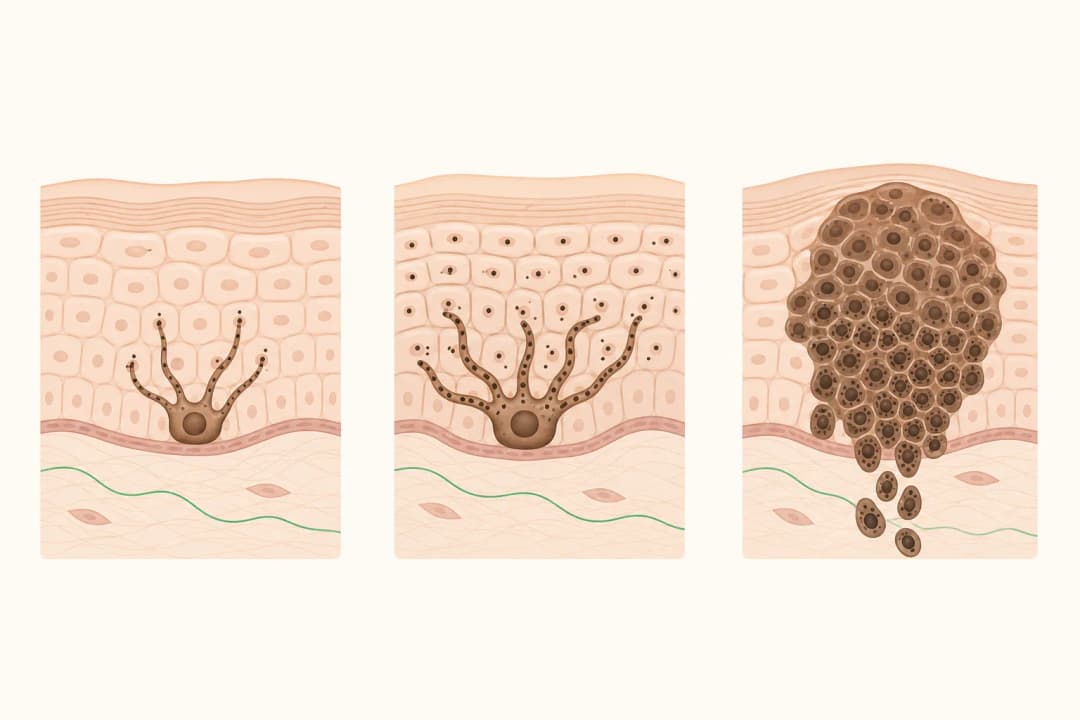
In situ describes melanoma cells confined to the outer skin layer in the tissue examined. Treatment is designed to remove the visible lesion and a surrounding border so that cells extending beyond the original biopsy area are addressed. The choice of procedure depends on the site, lesion outline, pathology wording and how the wound can be closed. A specialist may review the slides or request further tissue when the diagnosis or edges are unclear.
Treatments used for invasive melanoma are not automatically needed for an in situ diagnosis. Your team decides whether additional staging or treatment has a clear purpose from the final findings. Read more about [Skin Cancer Surgery](/treatments/surgical-dermatology/skin-cancer-surgery/).
Steps that support treatment
Bring the pathology report and a list of medicines to your appointment. Discuss the planned margin, anaesthetic, closure, scar care and when the result will be reviewed. After treatment, follow dressing instructions, avoid pulling or soaking the wound until advised, and use sun protection around healed skin. Keep follow-up appointments even when the site looks settled. Examine your skin regularly with a mirror or another person’s help for areas you cannot see.
When to seek help
Contact the treatment team for worsening pain, spreading redness, warmth, swelling, pus, wound separation or bleeding that continues after pressure. Seek urgent care for severe bleeding, faintness, breathing trouble or a rapidly worsening allergic reaction. Outside the treated site, arrange a dermatology review for a new, changing, crusting or bleeding pigmented mark rather than waiting for the next routine visit.
Questions about your plan
Ask what treatment is recommended and why, whether the biopsy removed all visible disease, whether the margins are clear, what the scar may look like, and how often your skin should be examined. Ask what symptoms after treatment are expected and which require a same-day call.
Find care
General Clinics & Polyclinics in Abu Dhabi
That answer is general. If you want it applied to your own case, these are licensed general clinics & polyclinics listed in Abu Dhabi.
27 Ar Ruwwad St - Shakhbout City - MSH4 - Abu Dhabi - United Arab Emirates
Accepts: Daman, Thiqa, Cigna, MetLife +20 more
Al Ruwais, Al Dhafrah
Accepts: Daman, Thiqa, AXA, Cigna +16 more
Al Bahyah - Al Bahyah Old - Abu Dhabi - United Arab Emirates
Accepts: Daman, Thiqa, Cigna, Allianz Care +18 more
Abu Dhabi
Accepts: Daman, Thiqa, AXA, Cigna +27 more
Ordered by verification status and how complete each clinic's public record is, then alphabetically. This is a directory listing, not a ranking — Zavis does not rate or recommend providers.
A factual listing drawn from the DHA, DOH and MOHAP licence registers. It is not a referral, an endorsement, or advice that any of these providers is right for you.
Questions people ask
Is a cream always enough for melanoma in situ?
Treatment depends on the exact site and pathology; a clinician must decide whether a non-surgical option is appropriate or whether removal is needed.
Why are follow-up visits needed after treatment?
They allow examination of the treated area and early assessment of a separate new or changing lesion.
Related
Related reading
Keep reading
Medical disclaimer. This page is general health information, not medical advice, and it cannot diagnose you. Always consult a licensed healthcare provider about your own symptoms and treatment. In an emergency in the UAE, call 998 for an ambulance.