
What should you know about melanoma in situ prognosis?
Short answer
Melanoma in situ generally has a favourable outlook when fully removed, but ongoing skin checks matter because another melanoma can develop.
This answers one question. It is not a diagnosis and does not replace an assessment by a licensed doctor.
At a glance
- In situ
- The examined melanoma cells are limited to the outer skin layer.
- Main follow-up goal
- Detect a new or changing lesion early and monitor the treated site.
- Outlook depends on
- Final pathology, completeness of removal and individual skin history.
How prognosis is understood
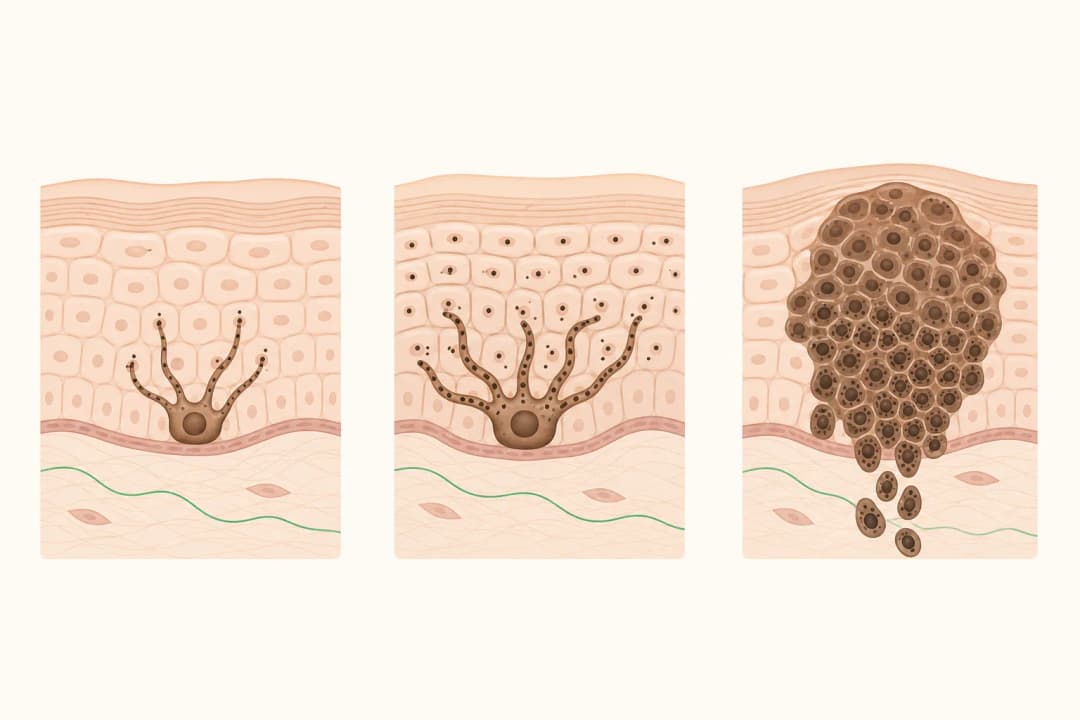
In situ means the abnormal cells are limited to the outer skin layer in the tissue examined. They have not been reported as growing into deeper layers, where melanoma can gain access to lymphatic or blood vessels. Prognosis depends on the final pathology, whether the lesion has been completely removed, its location, and your wider skin history. A clear margin is reassuring for that treated site, but it does not prevent a different melanoma from appearing elsewhere.
A prognosis is personal rather than a promise about one person’s future. Your dermatologist can explain what the final report shows and whether any additional assessment is appropriate. See the overview of [Melanoma](/conditions/melanoma/).
Protect your future skin health
Keep every scheduled dermatology review and learn the normal appearance of your scar. Check your skin in good light, including the scalp, soles, between the toes and areas covered by clothing, using help for hard-to-see places. Report a spot that changes in colour, shape or size, or a lesion that repeatedly crusts or bleeds. Use shade, clothing and broad-spectrum sunscreen as part of a practical sun-protection routine. A written [Follow-Up After Cancer Treatment](/treatments/survivorship-and-rehabilitation/post-treatment-surveillance/) plan can make visits easier to track.
When not to wait for a routine visit
Arrange an earlier review for a new or changing pigmented lesion, a sore that does not heal, a bleeding or crusting mark, or a firm area developing in or near the scar. Seek urgent care for uncontrolled bleeding, severe infection symptoms, faintness, or breathing difficulty after a procedure. These warning signs call for assessment of the symptom itself; they do not establish what diagnosis it represents.
Useful questions
Ask how the final margins affect your outlook, when the next skin examination is due, which areas need help checking, how to protect the scar, and which changes should be reported immediately. Ask whether your personal or family history changes the follow-up schedule.
Find care
General Clinics & Polyclinics in Abu Dhabi
That answer is general. If you want it applied to your own case, these are licensed general clinics & polyclinics listed in Abu Dhabi.
27 Ar Ruwwad St - Shakhbout City - MSH4 - Abu Dhabi - United Arab Emirates
Accepts: Daman, Thiqa, Cigna, MetLife +20 more
Al Ruwais, Al Dhafrah
Accepts: Daman, Thiqa, AXA, Cigna +16 more
Al Bahyah - Al Bahyah Old - Abu Dhabi - United Arab Emirates
Accepts: Daman, Thiqa, Cigna, Allianz Care +18 more
Abu Dhabi
Accepts: Daman, Thiqa, AXA, Cigna +27 more
Ordered by verification status and how complete each clinic's public record is, then alphabetically. This is a directory listing, not a ranking — Zavis does not rate or recommend providers.
A factual listing drawn from the DHA, DOH and MOHAP licence registers. It is not a referral, an endorsement, or advice that any of these providers is right for you.
Questions people ask
Can melanoma in situ come back?
The treated area is monitored because residual cells are possible if removal is incomplete, and a separate melanoma can also develop elsewhere.
Does a favourable outlook remove the need for check-ups?
No. Follow-up helps examine the scar and identify new or changing lesions that need timely assessment.
Related
Related reading
Keep reading
Medical disclaimer. This page is general health information, not medical advice, and it cannot diagnose you. Always consult a licensed healthcare provider about your own symptoms and treatment. In an emergency in the UAE, call 998 for an ambulance.