
Melanoma in situ explained
Short answer
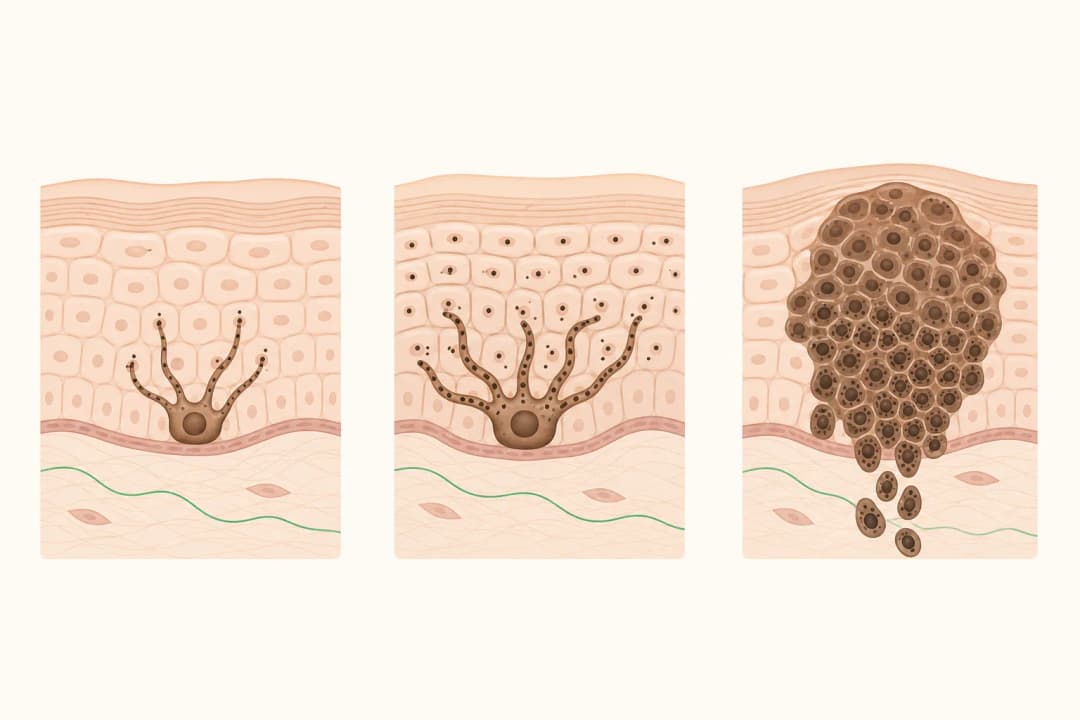
Melanoma in situ means melanoma cells are confined to the outer skin layer, but the area still needs complete assessment and treatment to prevent deeper invasion.
This answers one question. It is not a diagnosis and does not replace an assessment by a licensed doctor.
At a glance
- Meaning of in situ
- Abnormal melanoma cells are limited to the outer skin layer in the examined sample
- Care focus
- Remove the affected area and monitor for new or changing skin marks
Understanding the diagnosis
The word in situ means in its original place. In this form of melanoma, abnormal cells are limited to the epidermis, the skin's outer layer, and have not been reported as growing into deeper skin on the examined sample. It may look like an uneven brown, black, or mixed-colour patch, although appearance alone cannot determine the diagnosis.
A pathology report helps the care team confirm the diagnosis and whether the sample has clear edges. The clinician may also inspect the rest of the skin and nearby areas for other suspicious marks. The diagnosis is serious, but its meaning is different from melanoma that has invaded deeper tissue.
Treatment and follow-up
Treatment commonly focuses on removing the affected skin with a margin chosen for the lesion and its location. Your clinician may discuss surgical excision or another form of skin cancer surgery, followed by examination of the removed tissue. Sentinel lymph node biopsy is not automatically needed for every in-situ diagnosis; ask why it is or is not being considered. Protect the treated area as instructed and attend planned skin checks. Melanoma information can help you prepare for those visits.
When to seek care
Contact your clinician promptly if the site changes, bleeds, becomes sore, or develops a new lump before treatment or during follow-up. After a procedure, seek advice for spreading redness, increasing swelling, fever, persistent bleeding, or wound separation. A new changing mark elsewhere on the skin also needs assessment; it should not be assumed to be related to the original site.
Questions for your doctor
Ask what the pathology report says about the margins, which treatment is recommended, and whether another procedure is needed. Ask how often your skin should be examined, which changes to report, and whether family members should help inspect hard-to-see areas.
Find care
General Clinics & Polyclinics in Abu Dhabi
That answer is general. If you want it applied to your own case, these are licensed general clinics & polyclinics listed in Abu Dhabi.
27 Ar Ruwwad St - Shakhbout City - MSH4 - Abu Dhabi - United Arab Emirates
Accepts: Daman, Thiqa, Cigna, MetLife +20 more
Al Ruwais, Al Dhafrah
Accepts: Daman, Thiqa, AXA, Cigna +16 more
Al Bahyah - Al Bahyah Old - Abu Dhabi - United Arab Emirates
Accepts: Daman, Thiqa, Cigna, Allianz Care +18 more
Abu Dhabi
Accepts: Daman, Thiqa, AXA, Cigna +27 more
Ordered by verification status and how complete each clinic's public record is, then alphabetically. This is a directory listing, not a ranking — Zavis does not rate or recommend providers.
A factual listing drawn from the DHA, DOH and MOHAP licence registers. It is not a referral, an endorsement, or advice that any of these providers is right for you.
Questions people ask
Is melanoma in situ the same as invasive melanoma?
No. In situ melanoma is limited to the outer skin layer, while invasive melanoma has grown into deeper tissue.
Does melanoma in situ need treatment?
Yes. A clinician usually recommends treatment to remove the affected area and then plans appropriate follow-up.
Related
Related reading
Keep reading
Medical disclaimer. This page is general health information, not medical advice, and it cannot diagnose you. Always consult a licensed healthcare provider about your own symptoms and treatment. In an emergency in the UAE, call 998 for an ambulance.