
What should you know about melanoma how do you get it?
Short answer
What should you know about melanoma how do you get it? Melanoma develops from abnormal pigment cells, with ultraviolet exposure, inherited traits, and other factors contributing to risk.
This answers one question. It is not a diagnosis and does not replace an assessment by a licensed doctor.
At a glance
- Cell involved
- Melanocytes, the pigment-producing cells
- Contributors
- Ultraviolet exposure, inherited traits, moles, and personal history
- Prevention habits
- Shade, protective clothing, sunscreen, and avoiding tanning beds
Why melanoma can develop
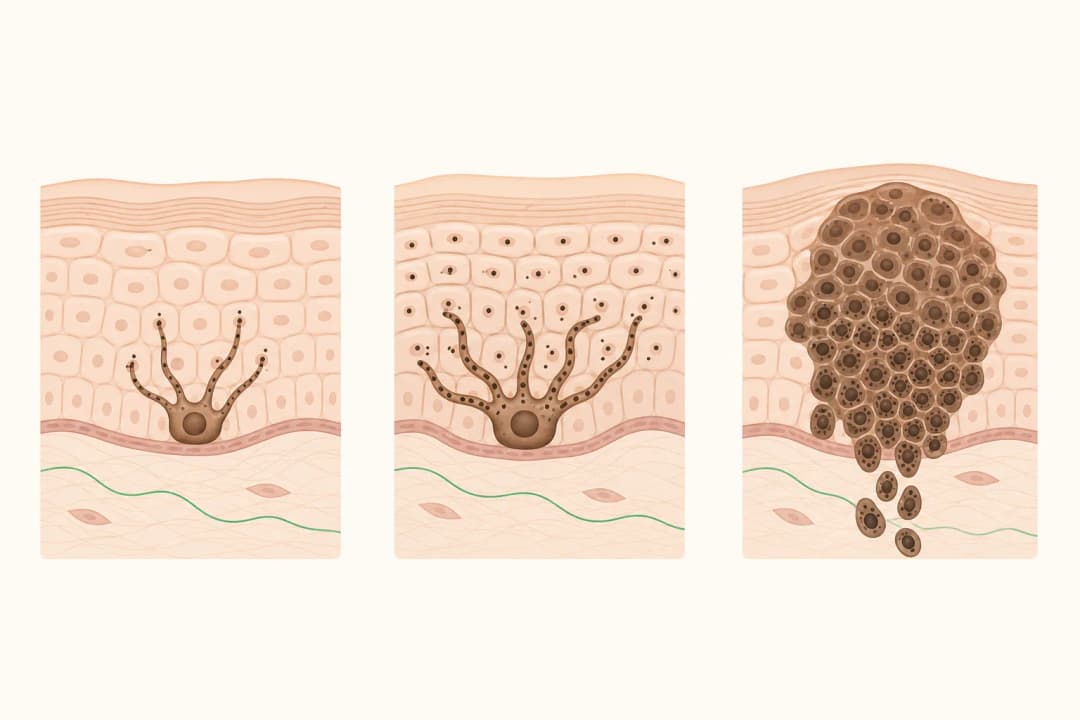
Melanoma begins when melanocytes, the cells that make pigment, acquire changes that allow them to grow and survive abnormally. Sunlight and other ultraviolet exposure can damage skin-cell DNA, particularly with repeated intense exposure or sunburn. Risk can also relate to fair or sun-sensitive skin, many moles, unusual moles, a personal history of melanoma, or a family pattern. Melanoma can occur on skin that receives little sun, so exposure history does not explain every diagnosis.
Melanoma is not contagious. It cannot be caught from another person, and a bump or dark mark is not enough to identify it. Examination and biopsy are needed when a lesion looks concerning.
Reducing risk and finding change
Use shade, protective clothing, a hat, and broad-spectrum sunscreen when outdoors; reapply sunscreen as directed, especially after sweating or swimming. Avoid tanning beds and deliberate tanning. Check your skin periodically, including the scalp, soles, nails, and areas covered by clothing, and ask for help with hard-to-see sites. Arrange a professional check if a mole changes in colour, outline, size, or surface. When melanoma is diagnosed, care may involve Surgical Excision, staging, follow-up, or Immunotherapy.
When to seek care
Book a prompt appointment for a new mark in adulthood, a changing mole, an irregular dark patch, repeated bleeding, crusting, or a sore that does not heal. Seek urgent care for uncontrolled bleeding, rapidly worsening swelling, or signs of infection. These features warrant examination but do not establish melanoma by themselves.
Questions for your doctor
Ask which personal and family factors affect your monitoring plan, how to examine areas you cannot see, whether photography would help, and whether a suspicious lesion needs biopsy. If melanoma is confirmed, ask how its depth and spread affect treatment choices and follow-up.
Find care
General Clinics & Polyclinics in Abu Dhabi
That answer is general. If you want it applied to your own case, these are licensed general clinics & polyclinics listed in Abu Dhabi.
27 Ar Ruwwad St - Shakhbout City - MSH4 - Abu Dhabi - United Arab Emirates
Accepts: Daman, Thiqa, Cigna, MetLife +20 more
Al Ruwais, Al Dhafrah
Accepts: Daman, Thiqa, AXA, Cigna +16 more
Al Bahyah - Al Bahyah Old - Abu Dhabi - United Arab Emirates
Accepts: Daman, Thiqa, Cigna, Allianz Care +18 more
Abu Dhabi
Accepts: Daman, Thiqa, AXA, Cigna +27 more
Ordered by verification status and how complete each clinic's public record is, then alphabetically. This is a directory listing, not a ranking — Zavis does not rate or recommend providers.
A factual listing drawn from the DHA, DOH and MOHAP licence registers. It is not a referral, an endorsement, or advice that any of these providers is right for you.
Questions people ask
Is melanoma caused only by the sun?
No. Ultraviolet exposure is one contributor, while inherited traits, mole patterns, and other factors can also matter.
Can melanoma spread from person to person?
No. Melanoma is not contagious or transmitted through ordinary contact.
Related
Related reading
Keep reading
Medical disclaimer. This page is general health information, not medical advice, and it cannot diagnose you. Always consult a licensed healthcare provider about your own symptoms and treatment. In an emergency in the UAE, call 998 for an ambulance.