
What should you know about melanoma hereditary?
Short answer
What should you know about melanoma hereditary? A family history can signal increased melanoma risk, so careful skin checks and personalised medical advice may be appropriate.
This answers one question. It is not a diagnosis and does not replace an assessment by a licensed doctor.
At a glance
- Family history
- Record affected relatives, cancer types, and ages at diagnosis
- Monitoring
- Professional skin checks plus familiarity with your own moles
- Genetics
- Counselling can explain whether testing may help
How heredity fits in
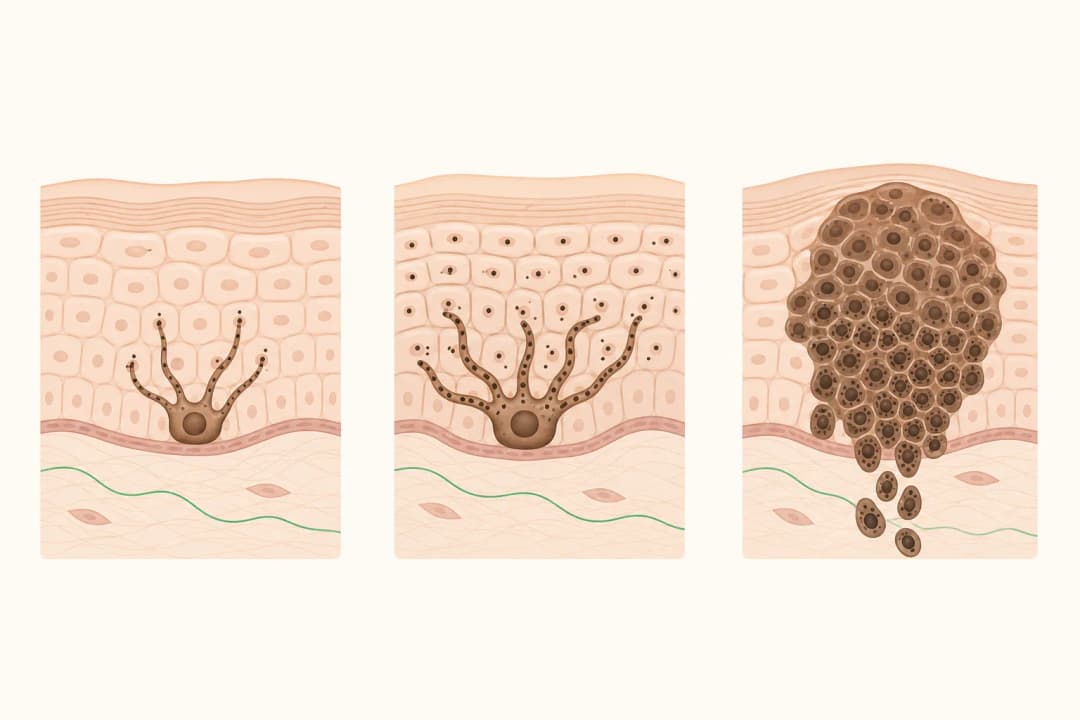
Melanoma usually reflects a combination of inherited traits, ultraviolet exposure, skin type, number and type of moles, and other factors. In some families, a genetic change can increase the tendency to develop melanoma. Having an affected relative does not mean that you have melanoma, and having no family history does not rule it out.
A clinician may ask which relatives were affected, their ages at diagnosis, whether one person had more than one melanoma, and whether pancreatic cancer or many unusual moles occur in the family. A genetics consultation may help decide whether testing is useful and how results could affect relatives.
Steps that can help
Write down your family cancer history and share it with a dermatologist or doctor. Arrange a baseline skin examination, learn how your own moles look, and check hard-to-see areas with help or a mirror. Use shade, clothing, and broad-spectrum sunscreen when outdoors, and avoid intentional tanning. A clinician may recommend scheduled examinations, photographs, genetic counselling, or biopsy of a changing lesion. If melanoma is found, treatment may include Surgical Excision, Sentinel Lymph Node Biopsy, or Immunotherapy depending on its features.
When to seek care
Contact a clinician promptly for a new mole or a lesion that changes in size, shape, colour, border, or surface, or that bleeds or fails to heal. Seek urgent attention for a rapidly growing, painful, or infected-looking lesion. A family history supports closer attention but should not be used to label a spot as cancer without examination.
Questions for your doctor
Ask whether your family pattern suggests genetic counselling, how often your skin should be examined, which relatives might benefit from advice, and how to monitor scalp, nails, mouth, and other less visible sites. Ask how a genetic result would change screening or treatment decisions.
Find care
General Clinics & Polyclinics in Abu Dhabi
That answer is general. If you want it applied to your own case, these are licensed general clinics & polyclinics listed in Abu Dhabi.
27 Ar Ruwwad St - Shakhbout City - MSH4 - Abu Dhabi - United Arab Emirates
Accepts: Daman, Thiqa, Cigna, MetLife +20 more
Al Ruwais, Al Dhafrah
Accepts: Daman, Thiqa, AXA, Cigna +16 more
Al Bahyah - Al Bahyah Old - Abu Dhabi - United Arab Emirates
Accepts: Daman, Thiqa, Cigna, Allianz Care +18 more
Abu Dhabi
Accepts: Daman, Thiqa, AXA, Cigna +27 more
Ordered by verification status and how complete each clinic's public record is, then alphabetically. This is a directory listing, not a ranking — Zavis does not rate or recommend providers.
A factual listing drawn from the DHA, DOH and MOHAP licence registers. It is not a referral, an endorsement, or advice that any of these providers is right for you.
Questions people ask
Does hereditary risk mean I will get melanoma?
No. It may increase susceptibility, but it cannot predict an individual diagnosis.
Should relatives be checked?
Relatives may benefit from discussing the family pattern with a clinician, who can tailor examination and counselling.
Related
Related reading
Keep reading
Medical disclaimer. This page is general health information, not medical advice, and it cannot diagnose you. Always consult a licensed healthcare provider about your own symptoms and treatment. In an emergency in the UAE, call 998 for an ambulance.