
What should you know about melanoma groin?
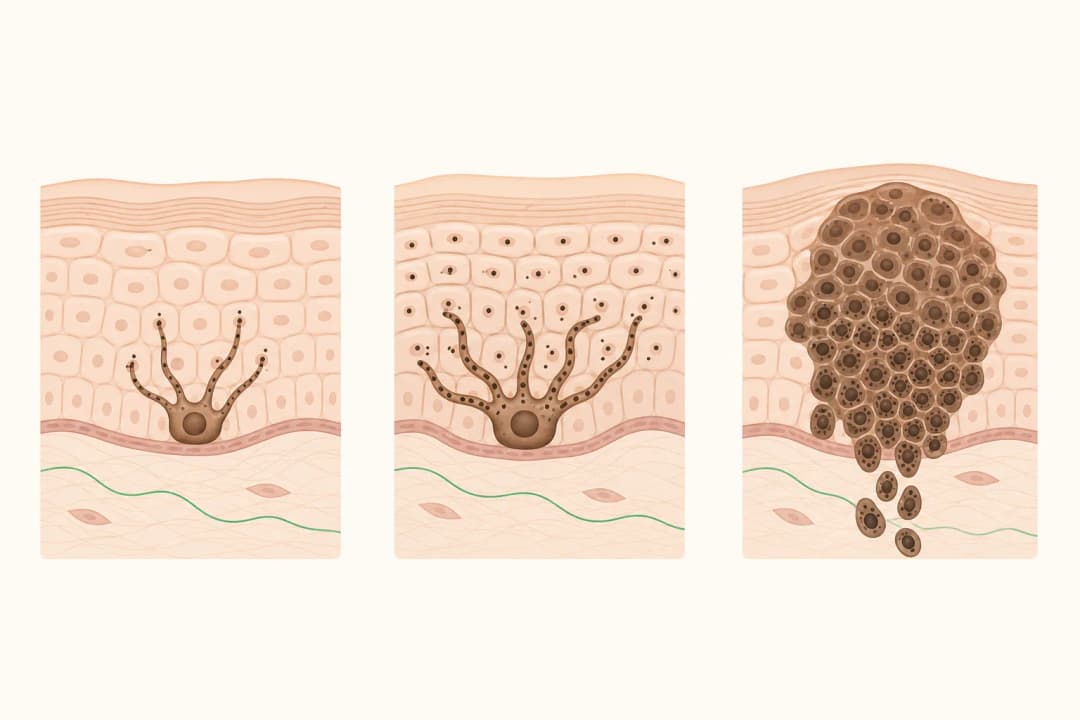
Short answer
What should you know about melanoma groin? A changing or unusual mark in the groin area should be examined promptly, because melanoma can arise on covered skin.
This answers one question. It is not a diagnosis and does not replace an assessment by a licensed doctor.
At a glance
- Location
- Groin folds and nearby upper-thigh or external genital skin
- Assessment
- Skin examination, lymph-node check, and biopsy when indicated
- Do not delay
- Changes in colour, border, thickness, bleeding, or surface
Understanding a groin-area lesion
The groin includes the skin folds and nearby skin of the upper inner thigh, pubic region, and external genital area. Melanoma there may look like a new dark mark, an uneven mole, or a lesion that changes in colour, border, thickness, or surface. Friction, shaving, ingrown hairs, infections, and benign moles can also cause changes. Examination is needed because appearance alone cannot establish the cause.
A clinician may inspect the whole skin surface and feel nearby lymph nodes. If the lesion is concerning, a biopsy examines cells under a microscope and helps determine the next steps.
Practical next steps
Book a prompt appointment with a dermatologist or doctor and mention the exact location, recent changes, itching, pain, bleeding, or discharge. Do not repeatedly shave over, pick, or apply irritants to the area before review. If melanoma is diagnosed, treatment is chosen according to the lesion and staging; it can involve Surgical Excision, Skin Cancer Surgery, lymph-node assessment, or Immunotherapy. Ask about protecting privacy and having a chaperone during examination if that would help you feel comfortable.
When to seek care
Arrange faster assessment for a mark that is enlarging, becoming asymmetric, developing several colours, crusting, bleeding, or forming an open sore. Seek urgent help for uncontrolled bleeding, severe swelling, fever with spreading redness, or difficulty passing urine. These symptoms are reasons to seek care because they may signal infection, injury, or another problem as well as cancer.
Questions for your doctor
Ask whether the lesion needs biopsy, whether nearby lymph nodes need review, how much tissue may be removed, how the wound will heal, and what follow-up schedule is appropriate. Ask who will explain the pathology result and what symptoms should trigger an earlier visit.
Find care
General Clinics & Polyclinics in Abu Dhabi
That answer is general. If you want it applied to your own case, these are licensed general clinics & polyclinics listed in Abu Dhabi.
27 Ar Ruwwad St - Shakhbout City - MSH4 - Abu Dhabi - United Arab Emirates
Accepts: Daman, Thiqa, Cigna, MetLife +20 more
Al Ruwais, Al Dhafrah
Accepts: Daman, Thiqa, AXA, Cigna +16 more
Al Bahyah - Al Bahyah Old - Abu Dhabi - United Arab Emirates
Accepts: Daman, Thiqa, Cigna, Allianz Care +18 more
Abu Dhabi
Accepts: Daman, Thiqa, AXA, Cigna +27 more
Ordered by verification status and how complete each clinic's public record is, then alphabetically. This is a directory listing, not a ranking — Zavis does not rate or recommend providers.
A factual listing drawn from the DHA, DOH and MOHAP licence registers. It is not a referral, an endorsement, or advice that any of these providers is right for you.
Questions people ask
Is every groin mole dangerous?
No. Many groin-area marks are benign, but a new or changing lesion still deserves professional examination.
Can melanoma occur where skin is usually covered?
Yes. Melanoma can develop on covered skin, so inspect areas such as the groin during routine skin checks.
Related
Related reading
Keep reading
Medical disclaimer. This page is general health information, not medical advice, and it cannot diagnose you. Always consult a licensed healthcare provider about your own symptoms and treatment. In an emergency in the UAE, call 998 for an ambulance.