
What should you know about melanoma gingival?
Short answer
What should you know about melanoma gingival? A dark or changing gum lesion needs prompt dental or medical assessment because melanoma can occur in the mouth.
This answers one question. It is not a diagnosis and does not replace an assessment by a licensed doctor.
At a glance
- Site
- Gum tissue, also called the gingiva
- Confirmation
- A clinical examination and biopsy are used
- Possible signs
- New pigmentation, growth, bleeding, or ulceration
What a gingival melanoma can mean
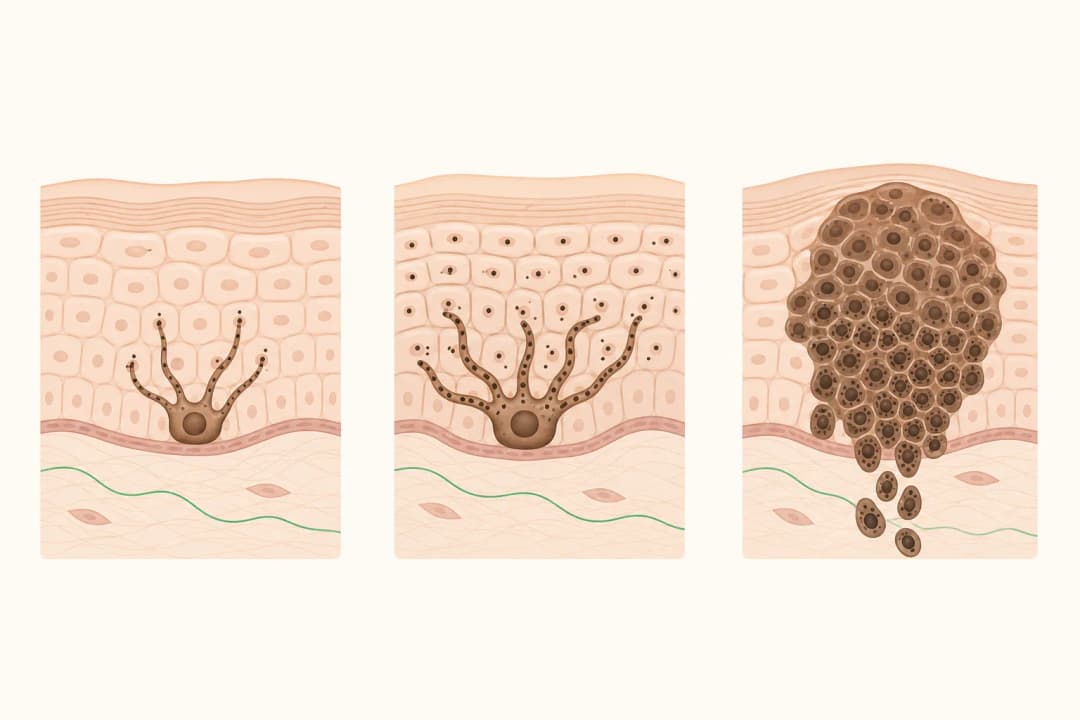
Gingival melanoma is melanoma arising in the gum lining, often appearing as a brown, black, grey, or irregularly coloured patch or raised area. It may bleed, ulcerate, swell, or interfere with chewing, although early lesions can cause little discomfort. A dentist or oral-health clinician may examine the gums, palate, tongue, and nearby tissues, then arrange a biopsy. The tissue diagnosis confirms whether melanoma is present and helps guide staging.
A diagnosis does not come from colour alone. Benign pigmentation, irritation, medication effects, and other mouth conditions can look similar, so avoid trying to identify a lesion from photographs.
What to do next
Arrange an appointment promptly with a dentist, oral medicine specialist, dermatologist, or doctor. Record when the mark appeared and whether its colour, border, size, bleeding, or texture has changed. Bring a list of medicines and any previous skin or mouth-cancer history. If melanoma is confirmed, care may include biopsy review, imaging, surgery to remove the lesion, lymph-node assessment, and treatment that acts throughout the body. Relevant options may include Surgical Excision, Tumour Removal Surgery, Sentinel Lymph Node Biopsy, or Immunotherapy.
When to seek care
Seek urgent clinical advice for a new or changing dark gum patch, unexplained gum bleeding, a sore that does not heal, a growing lump, loose teeth near the lesion, facial swelling, or trouble swallowing. Seek emergency help for heavy bleeding, rapidly increasing swelling, or difficulty breathing. These warning signs need assessment because symptoms can reflect several conditions, not because they prove melanoma.
Questions for your doctor
Ask whether the lesion needs biopsy, which specialist should coordinate care, what the pathology report shows, whether imaging or lymph-node testing is needed, and how treatment could affect chewing, speech, and appearance. Ask how follow-up will check the mouth and skin after treatment.
Find care
General Clinics & Polyclinics in Abu Dhabi
That answer is general. If you want it applied to your own case, these are licensed general clinics & polyclinics listed in Abu Dhabi.
27 Ar Ruwwad St - Shakhbout City - MSH4 - Abu Dhabi - United Arab Emirates
Accepts: Daman, Thiqa, Cigna, MetLife +20 more
Al Ruwais, Al Dhafrah
Accepts: Daman, Thiqa, AXA, Cigna +16 more
Al Bahyah - Al Bahyah Old - Abu Dhabi - United Arab Emirates
Accepts: Daman, Thiqa, Cigna, Allianz Care +18 more
Abu Dhabi
Accepts: Daman, Thiqa, AXA, Cigna +27 more
Ordered by verification status and how complete each clinic's public record is, then alphabetically. This is a directory listing, not a ranking — Zavis does not rate or recommend providers.
A factual listing drawn from the DHA, DOH and MOHAP licence registers. It is not a referral, an endorsement, or advice that any of these providers is right for you.
Questions people ask
Can a dark spot on the gum be melanoma?
It can have many explanations, including harmless pigmentation. A new, changing, bleeding, or irregular spot should be examined and may need biopsy.
Who can assess a suspicious gum lesion?
A dentist or doctor can begin the assessment and refer you to oral medicine, dermatology, or oncology when needed.
Related
Related reading
Keep reading
Medical disclaimer. This page is general health information, not medical advice, and it cannot diagnose you. Always consult a licensed healthcare provider about your own symptoms and treatment. In an emergency in the UAE, call 998 for an ambulance.