
What should you know about melanoma from sun?
Short answer
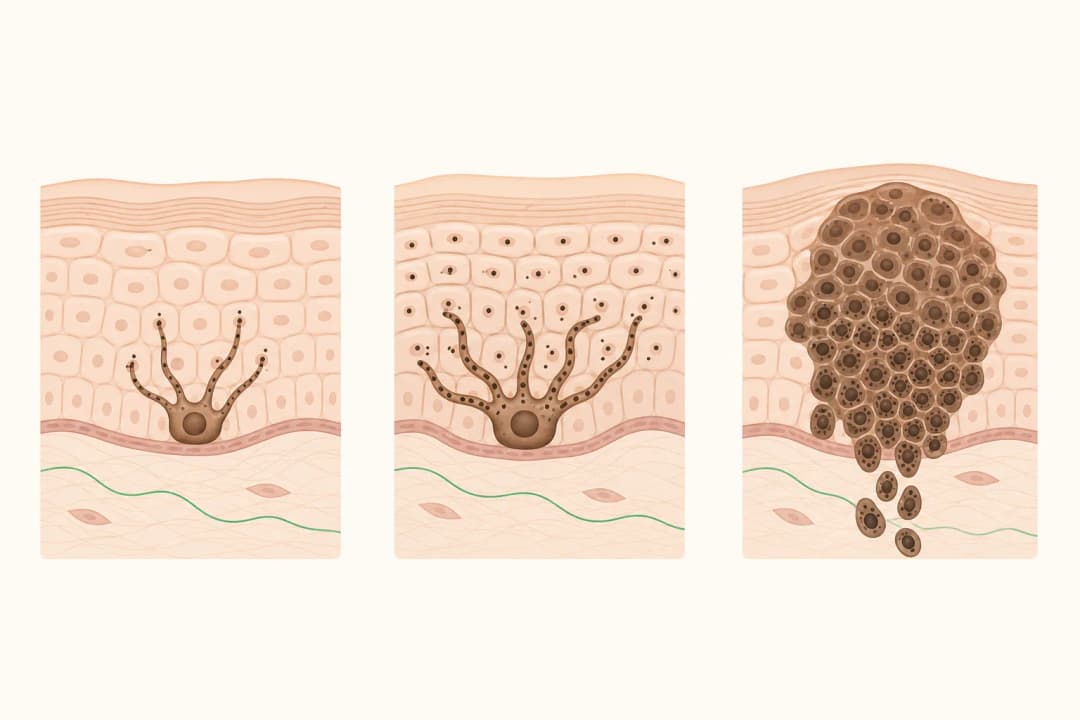
Sun exposure can damage skin cells and contribute to melanoma, but a melanoma can also arise on skin that receives little sun, so every changing lesion deserves attention.
This answers one question. It is not a diagnosis and does not replace an assessment by a licensed doctor.
At a glance
- Sunlight effect
- Ultraviolet radiation can damage skin-cell DNA
- Important limit
- Melanoma can occur on less sun-exposed skin
- Protective habits
- Shade, clothing, hat, and sunscreen
How sunlight fits in
Ultraviolet radiation can injure the DNA of skin cells. Repeated exposure and episodes of sunburn can add to that damage, while inherited traits and other factors also influence melanoma risk. Sunlight is therefore one contributor, not a way to identify the cause of a particular mole.
Melanoma may appear as a new mark or a change in an existing one. Look for asymmetry, an irregular edge, several colours, growth, or a spot that stands out from the rest. These features are prompts for assessment, not a diagnosis. A clinician may use dermoscopy and recommend biopsy when needed.
Reducing further exposure
Use shade, tightly woven clothing, a wide-brimmed hat, and sunscreen on exposed skin. Reapply sunscreen as directed, especially after sweating or swimming. Avoid deliberate tanning and take extra care around reflective surfaces such as water or pale sand. These habits protect skin but do not replace checking existing marks.
If a suspicious lesion is found, treatment may involve surgical excision. The biopsy and examination determine whether further staging, surveillance, or treatments such as immunotherapy should be considered.
When to seek care
Book a prompt skin assessment for a mole that changes in size, shape, colour, or sensation; a new unusual mark; a sore that does not heal; or bleeding without a clear explanation. Seek urgent care for uncontrolled bleeding, rapidly spreading redness with fever, or severe pain. Sunburn itself can also need medical attention when blistering is extensive or illness develops.
Questions for your doctor
Does this mark need dermoscopy or biopsy? How should I protect my skin in the UAE climate? Which areas should I check, including less sun-exposed skin? How will you monitor this lesion if biopsy is not needed?
Find care
General Clinics & Polyclinics in Abu Dhabi
That answer is general. If you want it applied to your own case, these are licensed general clinics & polyclinics listed in Abu Dhabi.
27 Ar Ruwwad St - Shakhbout City - MSH4 - Abu Dhabi - United Arab Emirates
Accepts: Daman, Thiqa, Cigna, MetLife +20 more
Al Ruwais, Al Dhafrah
Accepts: Daman, Thiqa, AXA, Cigna +16 more
Al Bahyah - Al Bahyah Old - Abu Dhabi - United Arab Emirates
Accepts: Daman, Thiqa, Cigna, Allianz Care +18 more
Abu Dhabi
Accepts: Daman, Thiqa, AXA, Cigna +27 more
Ordered by verification status and how complete each clinic's public record is, then alphabetically. This is a directory listing, not a ranking — Zavis does not rate or recommend providers.
A factual listing drawn from the DHA, DOH and MOHAP licence registers. It is not a referral, an endorsement, or advice that any of these providers is right for you.
Questions people ask
Can melanoma happen without a history of sunburn?
Yes. Sun exposure is one contributor, while inherited and other factors also matter; a changing lesion should be assessed regardless of sunburn history.
Can sunscreen remove the need for skin checks?
No. Sunscreen helps reduce ultraviolet exposure, but it cannot evaluate a changing mole or detect every melanoma.
Related
Related reading
Keep reading
Medical disclaimer. This page is general health information, not medical advice, and it cannot diagnose you. Always consult a licensed healthcare provider about your own symptoms and treatment. In an emergency in the UAE, call 998 for an ambulance.