
What should you know about melanoma day?
Short answer
Melanoma day is an opportunity to recognise changing skin marks, learn about melanoma, and arrange timely medical assessment.
This answers one question. It is not a diagnosis and does not replace an assessment by a licensed doctor.
At a glance
- Condition
- Melanoma is a cancer of pigment-producing skin cells.
- First step
- Have a changing or unusual mark assessed by a clinician.
- Diagnosis
- A tissue examination is needed to confirm melanoma.
What melanoma means
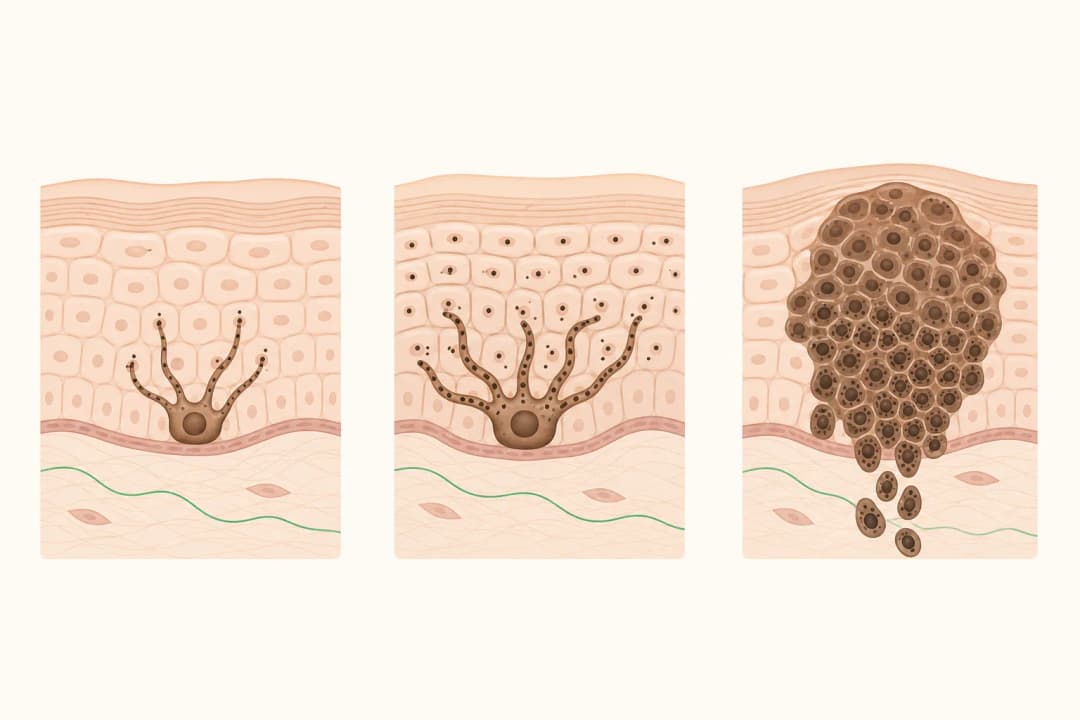
Melanoma is a skin cancer arising from pigment-producing cells. It may appear in an existing mole or as a new mark. Look for a spot that changes in size, shape, colour, or elevation, or one that repeatedly bleeds, crusts, itches, or feels sore. A visual check cannot confirm the diagnosis; harmless moles and other skin conditions can look unusual too.
A clinician may examine the whole skin surface and use a magnifying device. If a lesion is concerning, removal or a sample allows a laboratory to examine its cells. The result guides the next conversation about depth, nearby lymph nodes, and whether further treatment is needed.
Useful steps today
Take a clear photograph of a changing mark beside a familiar object for scale, record when you first noticed the change, and avoid picking or treating it with home products. Arrange a skin assessment, especially when the mark is new or unlike your other moles. A clinician may discuss [Melanoma](/conditions/melanoma/) and, when appropriate, [Surgical Excision](/treatments/surgical-dermatology/excisional-surgery/).
After a diagnosis, keep copies of the pathology and treatment plan. Follow-up may include skin checks and examination of nearby lymph nodes. Ask whether [Follow-Up After Cancer Treatment](/treatments/survivorship-and-rehabilitation/post-treatment-surveillance/) is appropriate for you.
When to seek care
Arrange prompt medical review for a mark that is changing, bleeding without a clear injury, developing an irregular border, or becoming distinctly darker or multicoloured. Seek urgent help for heavy bleeding that will not stop with steady pressure, rapidly worsening swelling, or severe illness. These warning signs call for assessment; they do not by themselves establish melanoma.
Questions for your doctor
Ask: Does this mark need removal or a biopsy? What will the pathology report describe? If melanoma is confirmed, do I need a [Sentinel Lymph Node Biopsy](/treatments/diagnostics-and-staging/sentinel-lymph-node-biopsy/), imaging, or a wider operation? What skin-check schedule suits my history?
Find care
General Clinics & Polyclinics in Abu Dhabi
That answer is general. If you want it applied to your own case, these are licensed general clinics & polyclinics listed in Abu Dhabi.
27 Ar Ruwwad St - Shakhbout City - MSH4 - Abu Dhabi - United Arab Emirates
Accepts: Daman, Thiqa, Cigna, MetLife +20 more
Al Ruwais, Al Dhafrah
Accepts: Daman, Thiqa, AXA, Cigna +16 more
Al Bahyah - Al Bahyah Old - Abu Dhabi - United Arab Emirates
Accepts: Daman, Thiqa, Cigna, Allianz Care +18 more
Abu Dhabi
Accepts: Daman, Thiqa, AXA, Cigna +27 more
Ordered by verification status and how complete each clinic's public record is, then alphabetically. This is a directory listing, not a ranking — Zavis does not rate or recommend providers.
A factual listing drawn from the DHA, DOH and MOHAP licence registers. It is not a referral, an endorsement, or advice that any of these providers is right for you.
Questions people ask
Is every changing mole melanoma?
No. Many changing marks are benign, but a change in a mole or a new unusual mark deserves clinical assessment.
What happens after a suspicious mark is removed?
A laboratory examines the tissue, and the result helps determine whether more treatment or monitoring is needed.
Related
Related reading
Keep reading
Medical disclaimer. This page is general health information, not medical advice, and it cannot diagnose you. Always consult a licensed healthcare provider about your own symptoms and treatment. In an emergency in the UAE, call 998 for an ambulance.