
What should you know about melanoma behind the eye?
Short answer
Melanoma behind the eye is an uncommon cancer that requires prompt assessment of any new visual or eye changes.
This answers one question. It is not a diagnosis and does not replace an assessment by a licensed doctor.
At a glance
- Specialist
- Ophthalmologist or ocular oncology team
- Possible symptoms
- Blurred vision, flashes, floaters or a visual-field shadow
- Urgency
- Sudden vision loss needs emergency assessment
What it can mean
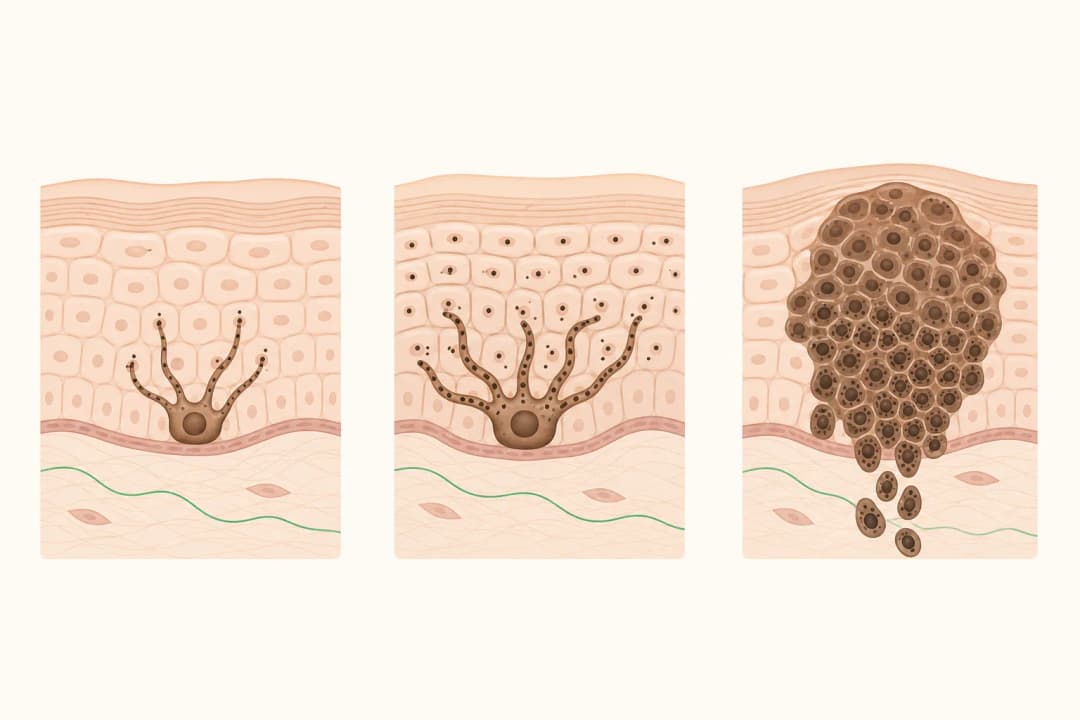
Melanoma can begin in pigment-producing cells inside the eye, including tissues that help you see. A person may notice blurred or reduced vision, flashes, floating spots, a shadow in the field of view, or a change in the appearance or position of the eye. Some people have no obvious symptoms and the finding is made during an eye examination.
These symptoms do not establish melanoma. Retinal problems, inflammation, bleeding, cataract or other eye conditions can look similar. If melanoma is confirmed, clinicians assess the eye and the rest of the body to understand the tumour and whether it has spread. Melanoma can spread to distant organs, including the brain, but a symptom alone cannot show that this has happened.
What to do next
Arrange an urgent appointment with an ophthalmologist, especially when a visual change is new, persistent or affecting one eye. The assessment may include a detailed examination, pupil-dilated imaging and scans; the exact tests depend on what the specialist sees.
Take a list of medicines and prior cancer diagnoses, and record when the change began. Do not rub the eye or delay assessment while trying home treatments. If a tumour is suspected, your team may discuss observation, local treatment, surgery or systemic treatment according to its location, size and features.
When to seek care urgently
Seek emergency care for sudden loss of vision, a curtain-like shadow, severe eye pain, marked redness, new double vision, weakness, confusion, trouble speaking or a seizure. These signs can reflect an eye emergency or a neurological problem and need immediate evaluation.
Questions for your doctor
Ask where the lesion is located, which tests are needed, whether a biopsy is appropriate, how vision may be affected, and which treatments are realistic for your findings. Also ask how often follow-up examinations will occur and which symptoms should prompt a same-day call.
Find care
General Clinics & Polyclinics in Abu Dhabi
That answer is general. If you want it applied to your own case, these are licensed general clinics & polyclinics listed in Abu Dhabi.
27 Ar Ruwwad St - Shakhbout City - MSH4 - Abu Dhabi - United Arab Emirates
Accepts: Daman, Thiqa, Cigna, MetLife +20 more
Al Ruwais, Al Dhafrah
Accepts: Daman, Thiqa, AXA, Cigna +16 more
Al Bahyah - Al Bahyah Old - Abu Dhabi - United Arab Emirates
Accepts: Daman, Thiqa, Cigna, Allianz Care +18 more
Abu Dhabi
Accepts: Daman, Thiqa, AXA, Cigna +27 more
Ordered by verification status and how complete each clinic's public record is, then alphabetically. This is a directory listing, not a ranking — Zavis does not rate or recommend providers.
A factual listing drawn from the DHA, DOH and MOHAP licence registers. It is not a referral, an endorsement, or advice that any of these providers is right for you.
Questions people ask
Does a spot or floater prove melanoma behind the eye?
No. Floaters and spots have many possible causes, so an eye examination is needed to identify the source.
Can melanoma behind the eye spread elsewhere?
It can spread in some cases, which is why specialists may assess the eye and other parts of the body.
Related
Related reading
Keep reading
Medical disclaimer. This page is general health information, not medical advice, and it cannot diagnose you. Always consult a licensed healthcare provider about your own symptoms and treatment. In an emergency in the UAE, call 998 for an ambulance.