
What should you know about malignant melanoma treatment?
Short answer
Malignant melanoma treatment is chosen after staging and may include surgery, lymph-node assessment, immunotherapy and careful follow-up.
This answers one question. It is not a diagnosis and does not replace an assessment by a licensed doctor.
At a glance
- Treatment basis
- Tumour stage, depth, spread and health
- Common components
- Surgery, staging, medicines and surveillance
What treatment involves
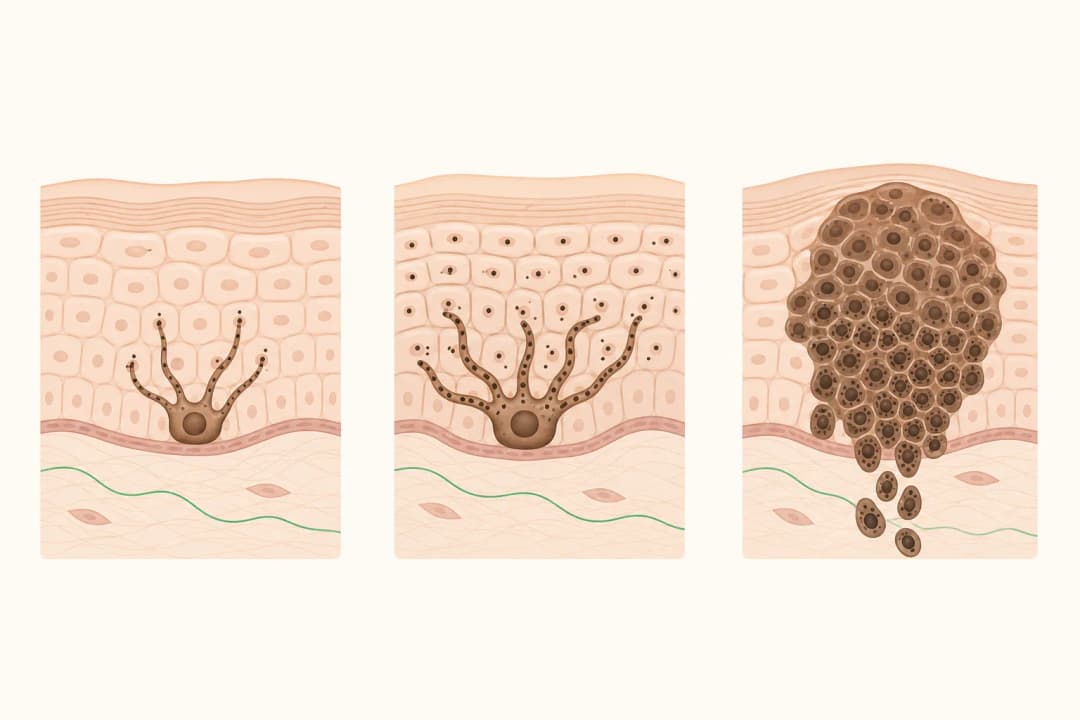
Melanoma is a skin cancer arising from pigment-producing cells. The team first confirms the diagnosis and assesses how deeply it has grown and whether it has reached nearby lymph nodes or other organs. A small, localised melanoma is often treated by removing the lesion with a margin of surrounding skin. A sentinel lymph node biopsy may help assess whether cells have travelled beyond the original site. More advanced disease can require medicines that help the immune system recognise and attack melanoma. Treatment choices are individual, and a scar, wound care, medication effects and emotional strain may all form part of the conversation.
Practical next steps
Bring the pathology report, a list of medicines and details of previous skin cancers to the appointment. Ask which stage has been assigned, whether further surgery is needed, and what the proposed treatment is intended to achieve. Protect treated and untreated skin from intense sunlight, check the skin and lymph-node areas as advised, and keep scheduled reviews. Do not start supplements or stop prescribed treatment without discussing it with the oncology team.
When to contact your team
Contact the treating service promptly for a wound that is opening, spreading redness, increasing swelling, pus, fever or bleeding that does not settle with pressure. During systemic treatment, report new or worsening breathlessness, severe diarrhoea, marked weakness, confusion, jaundice or a widespread rash urgently. A new persistent headache, seizure, weakness or change in vision also needs urgent assessment because melanoma can spread to the brain.
Questions for your doctor
Which findings determine my stage? Do I need surgical excision or sentinel lymph node biopsy? What benefits and side effects should I weigh for immunotherapy? How will scans and skin checks be scheduled? Which symptoms should trigger a same-day call?
Find care
General Clinics & Polyclinics in Abu Dhabi
That answer is general. If you want it applied to your own case, these are licensed general clinics & polyclinics listed in Abu Dhabi.
27 Ar Ruwwad St - Shakhbout City - MSH4 - Abu Dhabi - United Arab Emirates
Accepts: Daman, Thiqa, Cigna, MetLife +20 more
Al Ruwais, Al Dhafrah
Accepts: Daman, Thiqa, AXA, Cigna +16 more
Al Bahyah - Al Bahyah Old - Abu Dhabi - United Arab Emirates
Accepts: Daman, Thiqa, Cigna, Allianz Care +18 more
Abu Dhabi
Accepts: Daman, Thiqa, AXA, Cigna +27 more
Ordered by verification status and how complete each clinic's public record is, then alphabetically. This is a directory listing, not a ranking — Zavis does not rate or recommend providers.
A factual listing drawn from the DHA, DOH and MOHAP licence registers. It is not a referral, an endorsement, or advice that any of these providers is right for you.
Questions people ask
Can melanoma be treated with surgery alone?
Some melanomas are managed primarily with removal, while others need lymph-node assessment or additional treatment based on staging.
Why is follow-up needed after treatment?
Follow-up helps the team inspect the treated area, look for new skin changes and respond early to symptoms or treatment effects.
Related
Related reading
Keep reading
Medical disclaimer. This page is general health information, not medical advice, and it cannot diagnose you. Always consult a licensed healthcare provider about your own symptoms and treatment. In an emergency in the UAE, call 998 for an ambulance.