
What should you know about a macroscopic urine test?
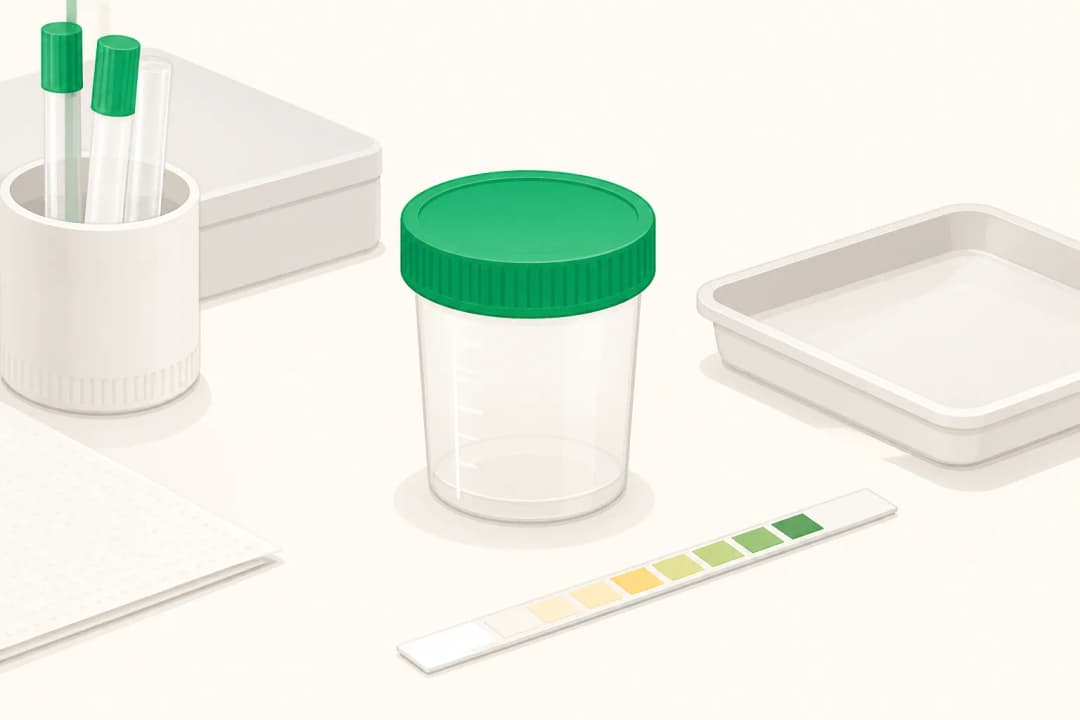
Short answer
A macroscopic urine test checks visible features of a sample, but appearance alone cannot identify the underlying cause.
This answers one question. It is not a diagnosis and does not replace an assessment by a licensed doctor.
At a glance
- Looks at
- Colour, clarity and visible concentration
- Cannot do alone
- Identify the cause of an abnormal appearance
- Sample tip
- Use a fresh clean-catch sample when requested
What the sample can show
A clinician or laboratory may note whether urine looks clear or cloudy and whether its colour is unusually dark, pale, red or brown. Hydration, food, medicines, menstrual blood and the time a sample has been standing can affect appearance. A cloudy sample may reflect cells, crystals or contamination; it does not by itself confirm infection.
Visible blood, a strong change in colour or persistent cloudiness needs context. A urine test can add information about blood, protein, glucose, white cells, nitrites and other findings. Symptoms and examination help decide whether the result fits a urinary tract infection, kidney infection, prostate enlargement or another issue.
What to do next
Provide a fresh, clean-catch sample when requested. Wash your hands, follow the container instructions, avoid touching the inside, and tell the clinician if you are menstruating or taking medicines that change urine colour. If the sample cannot be delivered promptly, follow the laboratory's storage instructions rather than guessing.
Do not start antibiotics because urine looks cloudy or smells strong. Treatment depends on symptoms and testing; antibiotics may be unnecessary when bacteria are absent or when another cause explains the finding. Drink normally unless a clinician has given you a fluid restriction.
When to seek medical care
Arrange prompt medical assessment for visible blood, fever with urinary symptoms, pain in the side or back, vomiting, difficulty passing urine, or feeling markedly unwell. These features can occur with infection or obstruction and need more than visual inspection.
Seek emergency help for confusion, fainting, severe weakness or rapidly worsening pain. Take the urine result, medicine list and details of any pregnancy, recent procedure or known kidney problem to the assessment.
Questions for your doctor
Ask: Which visible feature was unusual? Do I need a dipstick, microscopy or culture? Could menstruation, food or medicine explain the colour? What symptoms should make me return, and when will the result be reviewed?
Find care
General Clinics & Polyclinics in Abu Dhabi
That answer is general. If you want it applied to your own case, these are licensed general clinics & polyclinics listed in Abu Dhabi.
27 Ar Ruwwad St - Shakhbout City - MSH4 - Abu Dhabi - United Arab Emirates
Accepts: Daman, Thiqa, Cigna, MetLife +20 more
Al Ruwais, Al Dhafrah
Accepts: Daman, Thiqa, AXA, Cigna +16 more
Al Bahyah - Al Bahyah Old - Abu Dhabi - United Arab Emirates
Accepts: Daman, Thiqa, Cigna, Allianz Care +18 more
Abu Dhabi
Accepts: Daman, Thiqa, AXA, Cigna +27 more
Ordered by verification status and how complete each clinic's public record is, then alphabetically. This is a directory listing, not a ranking — Zavis does not rate or recommend providers.
A factual listing drawn from the DHA, DOH and MOHAP licence registers. It is not a referral, an endorsement, or advice that any of these providers is right for you.
Questions people ask
Does cloudy urine prove a urinary tract infection?
No. Cloudiness can have several explanations, including cells, crystals or contamination; symptoms and additional testing are needed.
Can food or medicine change urine colour?
Yes. Some foods and medicines can alter colour, so tell the clinician what you have taken.
Related
Related reading
Keep reading
Medical disclaimer. This page is general health information, not medical advice, and it cannot diagnose you. Always consult a licensed healthcare provider about your own symptoms and treatment. In an emergency in the UAE, call 998 for an ambulance.