
What should you know about long term groin strain?
Short answer
Long-term groin strain needs assessment of the injured muscles, nearby hip structures, and activity demands before a gradual rehabilitation plan.
This answers one question. It is not a diagnosis and does not replace an assessment by a licensed doctor.
At a glance
- Often involved
- Inner-thigh muscles and their tendons
- Useful assessment
- Strength, hip movement, walking, and sport tasks
- Rehabilitation principle
- Progress loading gradually
What persistent groin pain can mean
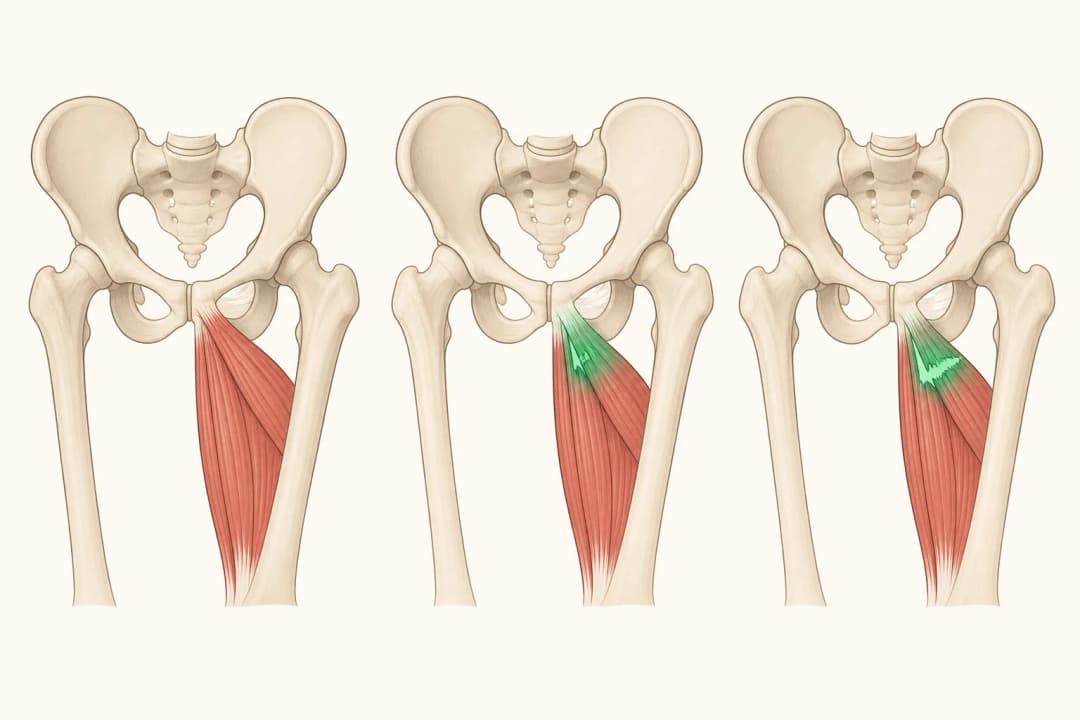
A strain affects muscle or tendon tissue, often around the inner thigh. Symptoms that linger may reflect incomplete rehabilitation, repeated loading, reduced hip strength, or another source of pain. Groin pain can also come from the hip joint, abdominal wall, or pelvic region, so the location and triggers matter. Pain with cutting, sprinting, kicking, changing direction, or squeezing the knees gives a clinician useful clues. A clinical examination may compare strength, hip movement, walking, and sport-specific tasks.
What to do now
Reduce movements that sharply increase pain while keeping comfortable daily activity. A physiotherapist may begin with gentle range-of-motion work and controlled isometric contractions, then progress to resisted adductor, hip, and trunk strengthening. Load should increase in small steps, with symptoms monitored during exercise and afterward. Do not use a pain-free day as the sole test for readiness; hopping, acceleration, deceleration, and direction changes may place different demands on the area. Exercise Therapy can support this progression, while Sports Physiotherapy or a Return-to-Sport Programme can help match rehabilitation to your activity.
When to seek care
Arrange an assessment when groin pain continues, keeps returning, limits walking or sleep, or prevents normal training. Seek prompt medical care for sudden severe pain, inability to bear weight, marked swelling, bruising after a significant injury, fever, a painful groin bulge, numbness, or pain with abdominal or urinary symptoms. A clinician can decide whether imaging or another specialty assessment is appropriate.
Questions for your doctor or physiotherapist
Ask which structure seems involved, which movements should be paused, how strength will be measured, and what milestones should come before running or sport. Also ask how to respond if pain increases after exercise and whether your hip, back, or abdominal wall needs examination.
Find care
General Clinics & Polyclinics in Abu Dhabi
That answer is general. If you want it applied to your own case, these are licensed general clinics & polyclinics listed in Abu Dhabi.
27 Ar Ruwwad St - Shakhbout City - MSH4 - Abu Dhabi - United Arab Emirates
Accepts: Daman, Thiqa, Cigna, MetLife +20 more
Al Ruwais, Al Dhafrah
Accepts: Daman, Thiqa, AXA, Cigna +16 more
Al Bahyah - Al Bahyah Old - Abu Dhabi - United Arab Emirates
Accepts: Daman, Thiqa, Cigna, Allianz Care +18 more
Abu Dhabi
Accepts: Daman, Thiqa, AXA, Cigna +27 more
Ordered by verification status and how complete each clinic's public record is, then alphabetically. This is a directory listing, not a ranking — Zavis does not rate or recommend providers.
A factual listing drawn from the DHA, DOH and MOHAP licence registers. It is not a referral, an endorsement, or advice that any of these providers is right for you.
Questions people ask
Can a groin strain last a long time?
Yes. Ongoing symptoms can occur when the area is repeatedly loaded or when strength and movement control have not fully recovered, but persistent pain deserves an assessment.
When can I return to sport?
Return when everyday activity and progressive running or sport drills are tolerated, strength is improving, and a clinician agrees that your tasks can be increased safely.
Related
Related reading
Keep reading
Medical disclaimer. This page is general health information, not medical advice, and it cannot diagnose you. Always consult a licensed healthcare provider about your own symptoms and treatment. In an emergency in the UAE, call 998 for an ambulance.