
Living with alopecia areata
Short answer
Living with alopecia areata means adapting to unpredictable hair loss while protecting exposed skin and reviewing treatment choices with a dermatologist.
This answers one question. It is not a diagnosis and does not replace an assessment by a licensed doctor.
At a glance
- Can it change?
- Hair loss and regrowth can vary over time.
- Is it contagious?
- No; alopecia areata is not spread by contact.
What alopecia areata can mean day to day
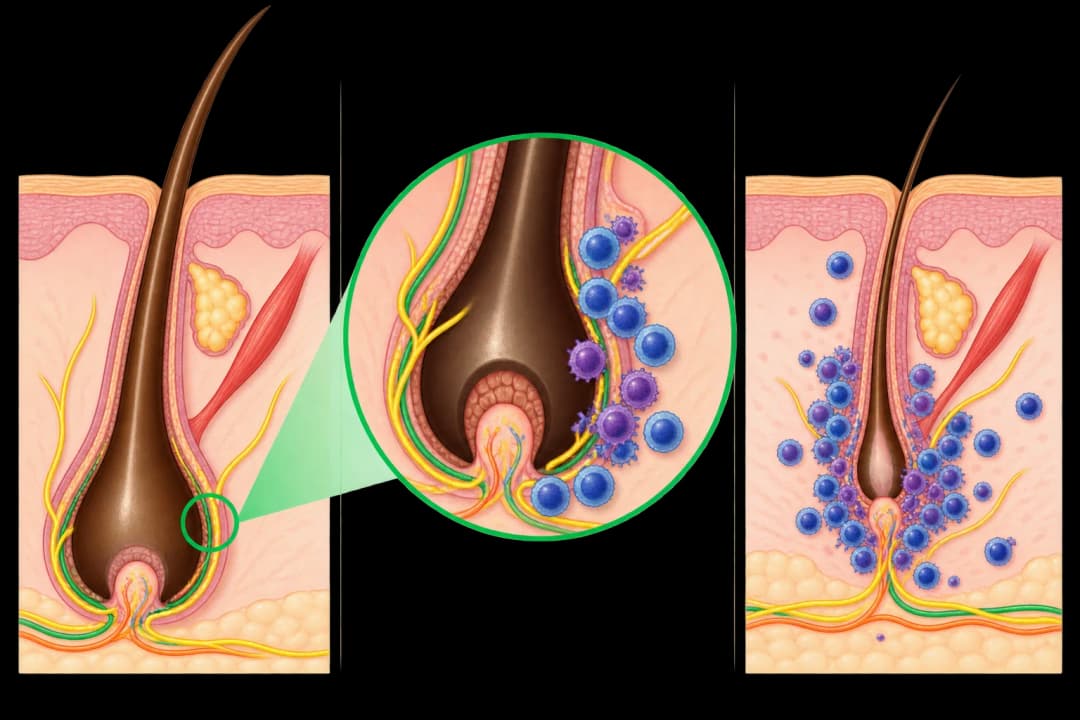
Alopecia areata is an immune-related condition that can cause smooth patches without hair on the scalp, beard area, eyebrows, eyelashes, or other body sites. Hair may regrow, remain sparse, or shed in new areas, so the pattern can change over time. The condition does not make a person contagious. Hair loss can affect confidence, work, school, sleep, and social comfort even when the skin feels normal.
Use the condition overview for background, and note changes in bald patches or broader hair loss so your clinician can assess the pattern.
Practical steps and treatment conversations
Gentle hair care can reduce breakage: avoid tight styles, harsh chemicals, vigorous brushing, and unnecessary heat. Cover bare areas from strong sunlight and cold, and consider eyebrow or eyelash protection when those areas are affected. A dermatologist may discuss topical corticosteroids, steroid injection into the skin, oral corticosteroid treatment, or JAK inhibitor treatment. The choice depends on age, extent and location of loss, other health conditions, medicines, and whether new patches are appearing.
Photographs taken in similar lighting can help you and your clinician track change. Emotional support or counselling is reasonable when appearance-related distress is interfering with daily life.
When to seek care
Arrange a dermatology review if hair loss is spreading, recurring, affecting eyebrows or eyelashes, or accompanied by scalp inflammation, scaling, pain, or scarring. Seek prompt assessment for sudden extensive loss or symptoms involving vision or the eye surface. Get help for severe distress, withdrawal, or thoughts of self-harm; mental health support is part of appropriate care.
Questions for your doctor
Ask which pattern of alopecia areata you have, what signs would suggest regrowth or progression, how long a treatment trial should be reviewed, and how to protect exposed scalp or eyelid skin. Ask about side effects, interactions, pregnancy considerations, and what to do if new patches appear.
Find care
General Clinics & Polyclinics in Abu Dhabi
That answer is general. If you want it applied to your own case, these are licensed general clinics & polyclinics listed in Abu Dhabi.
27 Ar Ruwwad St - Shakhbout City - MSH4 - Abu Dhabi - United Arab Emirates
Accepts: Daman, Thiqa, Cigna, MetLife +20 more
Al Ruwais, Al Dhafrah
Accepts: Daman, Thiqa, AXA, Cigna +16 more
Al Bahyah - Al Bahyah Old - Abu Dhabi - United Arab Emirates
Accepts: Daman, Thiqa, Cigna, Allianz Care +18 more
Abu Dhabi
Accepts: Daman, Thiqa, AXA, Cigna +27 more
Ordered by verification status and how complete each clinic's public record is, then alphabetically. This is a directory listing, not a ranking — Zavis does not rate or recommend providers.
A factual listing drawn from the DHA, DOH and MOHAP licence registers. It is not a referral, an endorsement, or advice that any of these providers is right for you.
Questions people ask
Can alopecia areata affect more than the scalp?
Yes. Eyebrows, eyelashes, beard hair, and body hair can also be affected.
Should I hide new patches from my doctor?
No. Sharing when patches appeared and how they changed helps guide assessment and treatment.
Related
Related reading
Keep reading
Medical disclaimer. This page is general health information, not medical advice, and it cannot diagnose you. Always consult a licensed healthcare provider about your own symptoms and treatment. In an emergency in the UAE, call 998 for an ambulance.