
What should you know about limbal melanoma in a dog's eye?
Short answer
A dark or raised growth at the limbus of a dog's eye needs veterinary examination because melanoma can affect nearby eye tissue and may require treatment.
This answers one question. It is not a diagnosis and does not replace an assessment by a licensed doctor.
At a glance
- Location
- The limbus, at the border of the cornea and white of the eye
- Key concern
- Growth, pain, irritation, or a change in vision
What limbal melanoma can mean
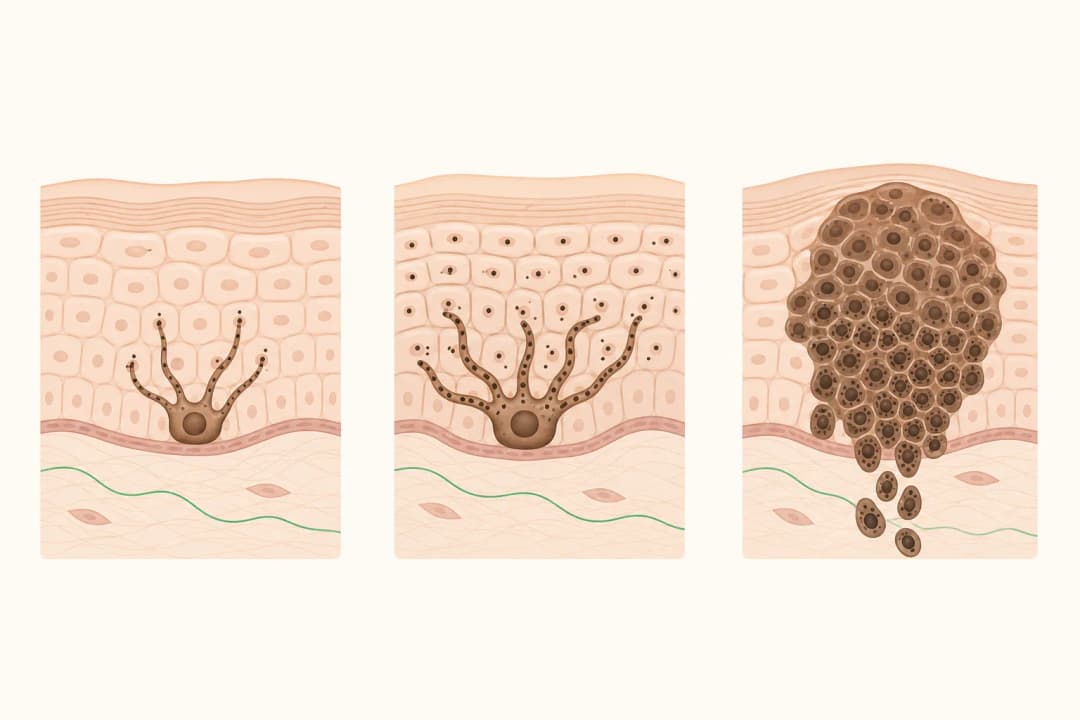
The limbus is the border where the clear cornea meets the white part of the eye. A melanoma there is a tumour involving pigment-producing cells. It may look like a brown or black spot, a thickened area, or a mass that changes the eye's outline. Appearance alone cannot confirm the diagnosis; an eye examination may include close inspection of the cornea, iris, and surrounding tissue.
The veterinarian will consider whether the lesion is growing, irritating the eye, affecting vision, or extending into deeper structures. A biopsy or removal may be discussed when tissue identification is needed. Melanoma is a cancer term; the outlook depends on the lesion's location, behaviour, and findings from assessment.
What to do next
Arrange an appointment with a veterinarian, preferably one experienced in eye disease, and take clear photographs showing when the change began. Do not apply human eye drops or try to scrape the lesion. Prevent rubbing with a protective collar if your dog is pawing at the eye, and follow prescribed drops exactly.
If removal is advised, ask whether the goal is to preserve vision, obtain a diagnosis, or control local growth. Relevant options may include Surgical Excision, Skin Cancer Surgery, or Tumour Removal Surgery. Staging and follow-up can be tailored to the examination findings; some cases may prompt discussion of Sentinel Lymph Node Biopsy, Immunotherapy, or Follow-Up After Cancer Treatment.
When to seek care promptly
Seek same-day veterinary care if the eye becomes cloudy, suddenly painful, swollen, or difficult to open, or if your dog develops marked light sensitivity, discharge, bleeding, or a sudden change in vision. Rapid enlargement or repeated rubbing also needs prompt assessment. These signs can reflect injury, inflammation, pressure changes, or tumour-related effects and cannot be sorted safely from a photograph.
Questions for your veterinarian
Ask: Where exactly is the lesion, and is it changing? Could examination or sampling distinguish melanoma from another pigmented growth? Is vision threatened? What treatment preserves the eye's function? What signs should trigger an urgent recheck, and what follow-up schedule fits the findings?
Find care
General Clinics & Polyclinics in Abu Dhabi
That answer is general. If you want it applied to your own case, these are licensed general clinics & polyclinics listed in Abu Dhabi.
27 Ar Ruwwad St - Shakhbout City - MSH4 - Abu Dhabi - United Arab Emirates
Accepts: Daman, Thiqa, Cigna, MetLife +20 more
Al Ruwais, Al Dhafrah
Accepts: Daman, Thiqa, AXA, Cigna +16 more
Al Bahyah - Al Bahyah Old - Abu Dhabi - United Arab Emirates
Accepts: Daman, Thiqa, Cigna, Allianz Care +18 more
Abu Dhabi
Accepts: Daman, Thiqa, AXA, Cigna +27 more
Ordered by verification status and how complete each clinic's public record is, then alphabetically. This is a directory listing, not a ranking — Zavis does not rate or recommend providers.
A factual listing drawn from the DHA, DOH and MOHAP licence registers. It is not a referral, an endorsement, or advice that any of these providers is right for you.
Questions people ask
Can a photograph diagnose limbal melanoma?
No. A photograph can document change, but a veterinarian must examine the eye and decide whether testing is needed.
Should a dog with a new dark eye spot be seen?
Yes. New, enlarging, raised, painful, or vision-affecting eye changes warrant veterinary assessment.
Related
Related reading
Keep reading
Medical disclaimer. This page is general health information, not medical advice, and it cannot diagnose you. Always consult a licensed healthcare provider about your own symptoms and treatment. In an emergency in the UAE, call 998 for an ambulance.