
What should you know about Lilly alopecia areata?
Short answer
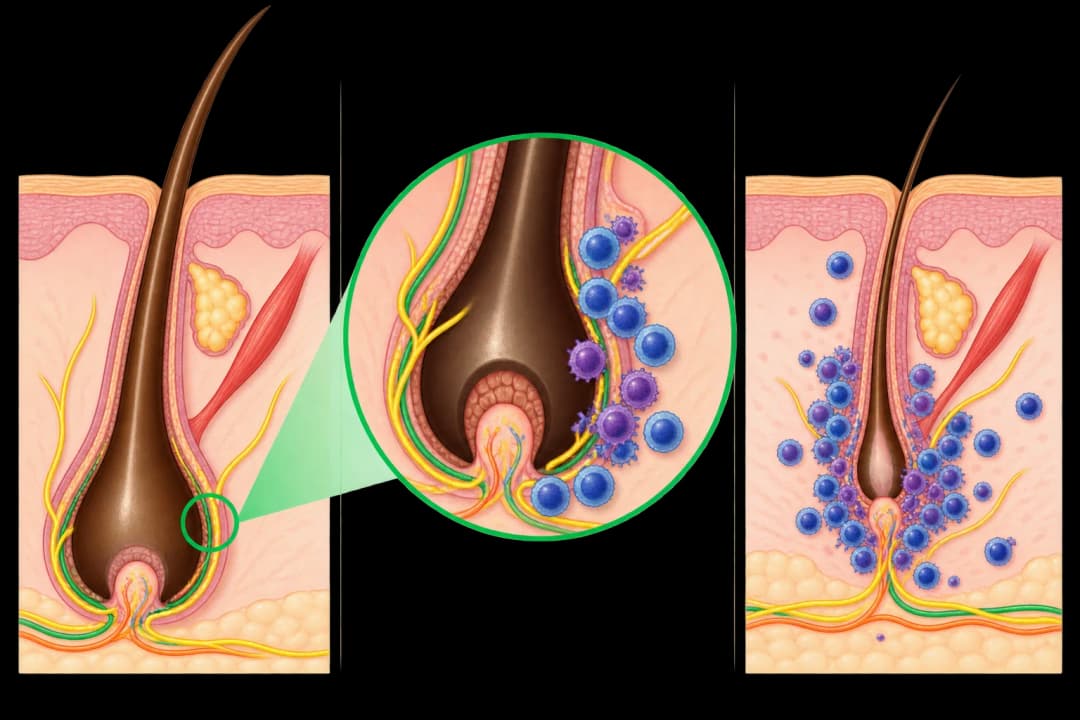
Alopecia areata is an immune-related condition that can cause sudden smooth patches of hair loss on the scalp, beard, or body.
This answers one question. It is not a diagnosis and does not replace an assessment by a licensed doctor.
At a glance
- Typical pattern
- Smooth, distinct patches of hair loss
- Possible sites
- Scalp, beard, eyebrows, eyelashes, or body
- Care focus
- Confirm the cause before choosing treatment
Recognising the pattern
The hair often comes away in distinct round or oval areas, with skin that looks relatively smooth rather than scaly. Eyebrows, eyelashes, and other body hair can also be involved. The condition can change over time, with regrowth in one area and new loss in another; a bald patch is a presentation of alopecia areata, but it can also have other causes.
A dermatologist may examine the scalp and nails and ask about the timing of loss, itching, illness, family history, and other autoimmune symptoms. Testing is guided by what the examination suggests.
Treatment and daily care
Treatment depends on the extent, duration, and location of hair loss. Options may include steroid medicine placed into affected skin, topical corticosteroids, oral corticosteroid treatment, or JAK inhibitor treatment for selected patients. A clinician will discuss benefits, monitoring, and whether treatment is suitable for you.
Handle hair gently, avoid tight styles and harsh chemical processing, and protect exposed scalp from sun and cold. Photographing patches in consistent lighting can help show changes at follow-up.
When to arrange an assessment
Book a dermatology review for sudden, expanding, or unexplained hair loss, especially when the scalp is inflamed, scaly, painful, or scarred. Prompt assessment is also sensible when eyelashes or eyebrows are thinning because eye protection may be affected. Seek advice if hair loss comes with fatigue, weight change, joint symptoms, or other new health concerns.
Questions for your doctor
Ask whether the pattern fits alopecia areata, whether the hair follicles appear scarred, which treatment matches the affected areas, and what monitoring is needed. Ask how to protect the scalp and eyes while regrowth is uncertain.
Find care
General Clinics & Polyclinics in Abu Dhabi
That answer is general. If you want it applied to your own case, these are licensed general clinics & polyclinics listed in Abu Dhabi.
27 Ar Ruwwad St - Shakhbout City - MSH4 - Abu Dhabi - United Arab Emirates
Accepts: Daman, Thiqa, Cigna, MetLife +20 more
Al Ruwais, Al Dhafrah
Accepts: Daman, Thiqa, AXA, Cigna +16 more
Al Bahyah - Al Bahyah Old - Abu Dhabi - United Arab Emirates
Accepts: Daman, Thiqa, Cigna, Allianz Care +18 more
Abu Dhabi
Accepts: Daman, Thiqa, AXA, Cigna +27 more
Ordered by verification status and how complete each clinic's public record is, then alphabetically. This is a directory listing, not a ranking — Zavis does not rate or recommend providers.
A factual listing drawn from the DHA, DOH and MOHAP licence registers. It is not a referral, an endorsement, or advice that any of these providers is right for you.
Questions people ask
Is alopecia areata contagious?
No. It is an immune-related condition and does not spread from one person to another.
Can hair grow back after alopecia areata?
Hair may regrow, but the course varies; a dermatologist can discuss the pattern and treatment options after examining you.
Related
Related reading
Keep reading
Medical disclaimer. This page is general health information, not medical advice, and it cannot diagnose you. Always consult a licensed healthcare provider about your own symptoms and treatment. In an emergency in the UAE, call 998 for an ambulance.