
Leg ulcers in sickle cell disease: care and warning signs
Short answer
Leg ulcers in sickle cell disease are open wounds linked to reduced oxygen delivery and need coordinated wound, pain, and sickle-cell care.
This answers one question. It is not a diagnosis and does not replace an assessment by a licensed doctor.
At a glance
- Protect the wound
- Reduce friction and follow the dressing instructions rather than experimenting with creams or coverings.
- Watch closely
- New odour, drainage, redness, warmth, or worsening pain can indicate infection.
Why these ulcers need attention
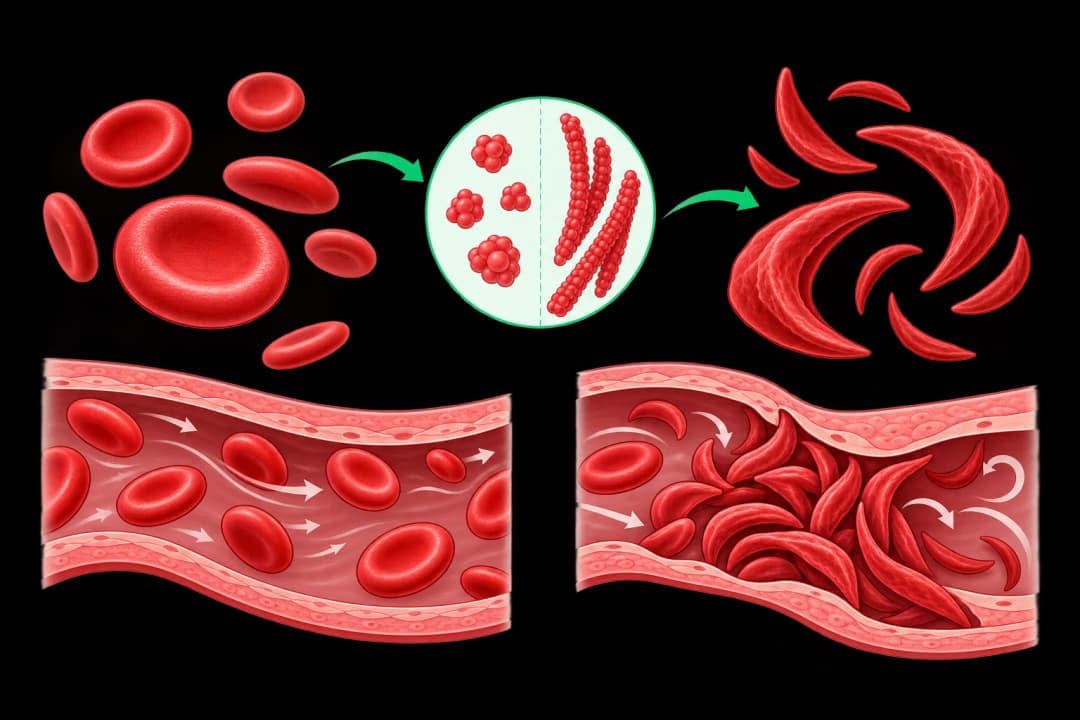
Sickle cell disease can affect small blood vessels and the oxygen supply to skin, especially around the lower leg and ankle. A wound may begin after minor trauma or develop over irritated skin, then remain open because tissue repair is impaired. Pain, drainage, odour, redness, or a change in the wound can signal infection. Fatigue, joint pain, or pale skin may also reflect the underlying disease or anaemia and should be reported rather than attributed to the ulcer alone.
Daily wound care
Have the ulcer assessed by a clinician familiar with sickle cell disease and wound care. Follow the dressing plan, keep the surrounding skin clean and moisturised as advised, protect the area from friction, and do not apply home remedies or remove attached tissue yourself. Take prescribed pain relief and sickle-cell medicines as directed. Keep appointments so the team can review healing, circulation, infection, nutrition, and blood results; a blood test may be part of that review.
When to seek urgent help
Seek urgent medical advice for fever, rapidly spreading redness, increasing warmth, pus, a strong new odour, sudden worsening pain, blackened tissue, or feeling acutely unwell. Contact your sickle-cell team promptly if the ulcer enlarges, bleeds repeatedly, or you cannot manage pain or dressing changes. Emergency care is needed for severe breathlessness, chest pain, confusion, or symptoms of a serious sickle-cell crisis.
Questions for your care team
Ask which dressing is suitable, how often it should change, whether infection testing or a blood test is needed, how to protect the ankle, and who to contact if healing slows.
Find care
General Clinics & Polyclinics in Abu Dhabi
That answer is general. If you want it applied to your own case, these are licensed general clinics & polyclinics listed in Abu Dhabi.
27 Ar Ruwwad St - Shakhbout City - MSH4 - Abu Dhabi - United Arab Emirates
Accepts: Daman, Thiqa, Cigna, MetLife +20 more
Al Ruwais, Al Dhafrah
Accepts: Daman, Thiqa, AXA, Cigna +16 more
Al Bahyah - Al Bahyah Old - Abu Dhabi - United Arab Emirates
Accepts: Daman, Thiqa, Cigna, Allianz Care +18 more
Abu Dhabi
Accepts: Daman, Thiqa, AXA, Cigna +27 more
Ordered by verification status and how complete each clinic's public record is, then alphabetically. This is a directory listing, not a ranking — Zavis does not rate or recommend providers.
A factual listing drawn from the DHA, DOH and MOHAP licence registers. It is not a referral, an endorsement, or advice that any of these providers is right for you.
Questions people ask
Can a sickle-cell leg ulcer heal at home without review?
It needs clinical assessment and follow-up because wound depth, infection, circulation, and sickle-cell activity can all affect healing.
Why might a blood test be included?
Blood results can help the team assess anaemia, inflammation, infection, and how sickle cell disease is affecting you.
Related
Related reading
Keep reading
Medical disclaimer. This page is general health information, not medical advice, and it cannot diagnose you. Always consult a licensed healthcare provider about your own symptoms and treatment. In an emergency in the UAE, call 998 for an ambulance.