
What should you know about left sided nephrolithiasis?
Short answer
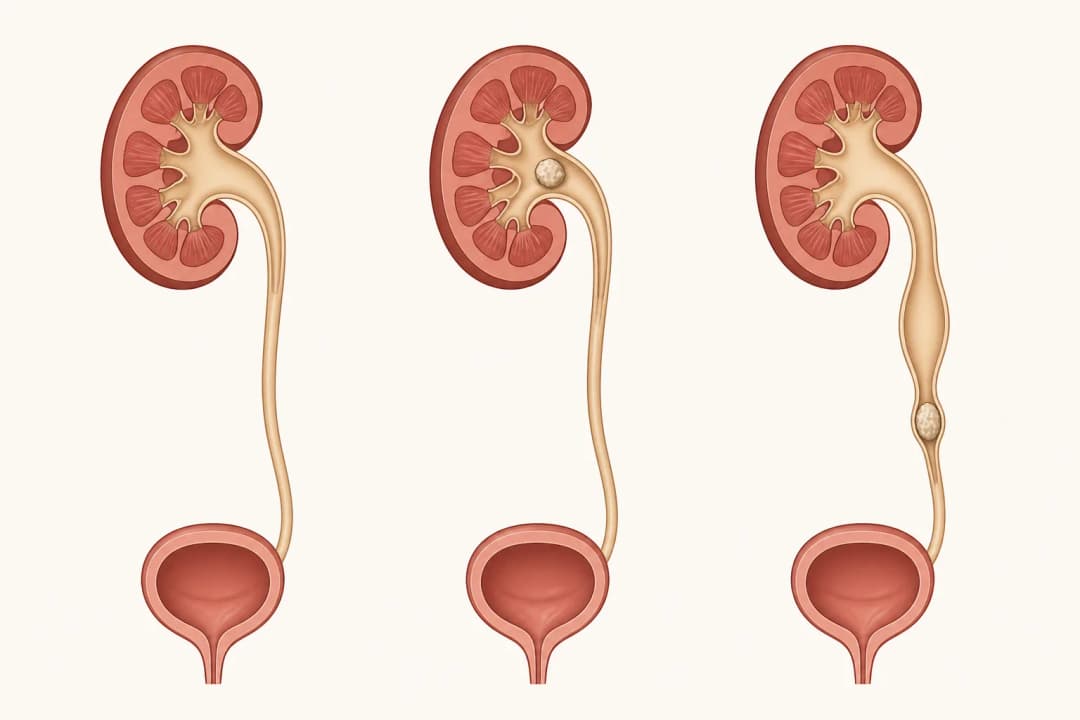
Left sided nephrolithiasis means a kidney stone is affecting the left kidney or the tube carrying urine from it.
This answers one question. It is not a diagnosis and does not replace an assessment by a licensed doctor.
At a glance
- Meaning
- A stone in the left kidney or left urinary tract
- Common pain area
- Left flank or back, sometimes spreading towards the groin
- Assessment
- Symptoms, urine and blood tests, and suitable imaging
The short answer
The stone may stay in the kidney or move into the ureter, where it can interrupt urine flow and cause waves of pain. The location and size of the stone, your symptoms, and whether there is infection determine the next step.
What it means
Pain from a left-sided stone is often felt in the left flank or back and may spread towards the lower abdomen or groin. Nausea, vomiting, blood in the urine, urinary urgency, or painful urination can also occur. A stone can cause no symptoms when it is not obstructing urine.
Dehydration can make urine more concentrated and may contribute to stone formation. The type of stone and your medical history matter when planning prevention. A clinician may check a urine sample, kidney function, and imaging to see where the stone is and whether urine is blocked.
What to do next
Arrange a GP consultation if you have new one-sided flank pain, urinary symptoms, or blood in the urine. Assessment can guide pain relief, hydration advice, follow-up, and referral when needed. An abdominal ultrasound may be used to look for a stone or swelling of the urinary system; another scan may be considered if the picture remains unclear.
Take fluids regularly unless a clinician has told you to restrict them, and follow the recommended pain-relief instructions. Do not delay assessment if you cannot keep fluids down or your pain remains difficult to control.
When to seek urgent care
Seek urgent medical care for severe or worsening flank or abdominal pain, fever or chills, repeated vomiting, confusion, faintness, or difficulty passing urine. These symptoms can occur when a stone blocks urine flow or when infection is present, and they need prompt assessment.
Seek advice promptly if you are pregnant, have one functioning kidney, known kidney disease, or a weakened immune system. Bring a list of medicines and describe when the pain started, where it travels, and any change in urination.
Questions for your doctor
Ask where the stone is located, whether urine flow is blocked, what symptoms should trigger urgent review, and how follow-up will confirm that it has passed. You can also ask whether the stone should be tested and what changes could reduce the chance of another stone.
Find care
General Clinics & Polyclinics in Abu Dhabi
That answer is general. If you want it applied to your own case, these are licensed general clinics & polyclinics listed in Abu Dhabi.
27 Ar Ruwwad St - Shakhbout City - MSH4 - Abu Dhabi - United Arab Emirates
Accepts: Daman, Thiqa, Cigna, MetLife +20 more
Al Ruwais, Al Dhafrah
Accepts: Daman, Thiqa, AXA, Cigna +16 more
Al Bahyah - Al Bahyah Old - Abu Dhabi - United Arab Emirates
Accepts: Daman, Thiqa, Cigna, Allianz Care +18 more
Abu Dhabi
Accepts: Daman, Thiqa, AXA, Cigna +27 more
Ordered by verification status and how complete each clinic's public record is, then alphabetically. This is a directory listing, not a ranking — Zavis does not rate or recommend providers.
A factual listing drawn from the DHA, DOH and MOHAP licence registers. It is not a referral, an endorsement, or advice that any of these providers is right for you.
Questions people ask
Can a left-sided kidney stone cause pain in the abdomen?
Yes. Pain can move from the left flank or back into the lower abdomen or groin as the stone travels through the ureter.
Is blood in the urine possible with nephrolithiasis?
Yes, a stone can irritate the urinary tract and cause visible or microscopic blood. Blood in the urine still needs clinical assessment because stones are not the only possible cause.
When is a kidney stone an emergency?
Severe pain with fever or chills, repeated vomiting, confusion, faintness, or difficulty passing urine needs urgent medical care.
Related
Related reading
Keep reading
Medical disclaimer. This page is general health information, not medical advice, and it cannot diagnose you. Always consult a licensed healthcare provider about your own symptoms and treatment. In an emergency in the UAE, call 998 for an ambulance.