
Left hepatectomy surgery
Short answer
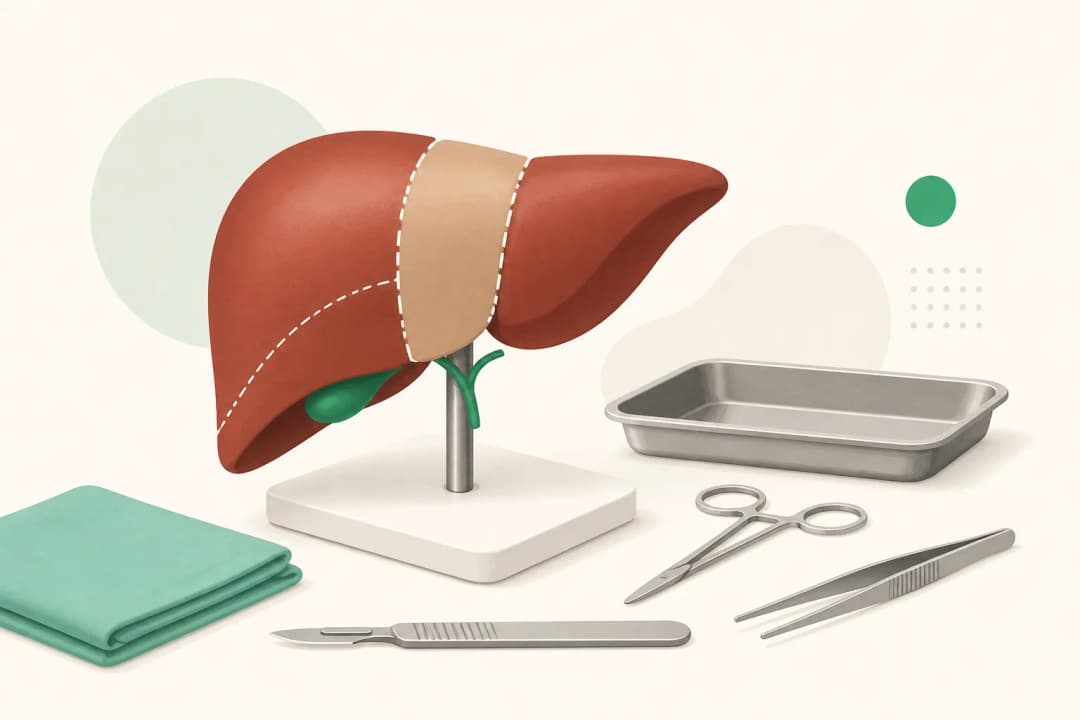
Left hepatectomy surgery removes a planned portion of the liver under general anaesthesia, followed by close recovery monitoring.
This answers one question. It is not a diagnosis and does not replace an assessment by a licensed doctor.
At a glance
- What it removes
- A planned left portion of the liver
- Planning tools
- Scans, blood tests, and liver assessment
- After surgery
- Pain control, movement, nutrition, and monitoring
Understanding the surgery
The liver is divided into sections, and a left hepatectomy targets the left side rather than removing the entire organ. The surgical plan is based on scans, blood results, the position of the lesion, and the health of the liver that will remain. During surgery, the team identifies and controls the relevant blood vessels and bile ducts before removing the affected tissue. A specimen is sent for laboratory examination. Open surgery uses one larger incision; minimally invasive surgery uses smaller access points when suitable.
Planning your care
Give the team a complete list of medicines, supplements, allergies, and previous operations. Follow fasting instructions and ask which medicines to pause or continue. Afterward, expect checks of pain, breathing, wound condition, bowel function, appetite, and liver tests. Start with supported movement and breathing exercises, then build activity slowly. Do not drive or lift until your team says it is safe. Surgery can be used for selected Bowel Cancer, Liver Cancer, or Liver Metastases. Your care plan may also discuss Liver Resection or Tumour Ablation.
Warning signs after discharge
Call the hospital team if pain is worsening despite the prescribed plan, you cannot keep fluids down, your wound becomes red or leaky, or your eyes or skin look increasingly yellow. Urgent assessment is needed for collapse, severe breathing difficulty, new confusion, sudden chest pain, or significant bleeding. Keep your discharge instructions available when you call.
Useful questions
Ask why this operation is recommended, what alternatives fit your diagnosis, and how much liver is expected to remain. Discuss the surgical approach, possible drains, hospital recovery, pathology report, follow-up scans, and when treatment decisions will be reviewed.
Questions people ask
Will I be awake for left hepatectomy surgery?
No. The operation is performed under general anaesthesia, so you are asleep while it takes place.
How is the removed tissue used?
It is examined to confirm the diagnosis and help the team plan any further treatment.
Related
Related reading
Keep reading
Cancer care in the UAE
Hospitals & Medical Centers in Abu Dhabi
Most UAE cancer care is delivered inside hospital services rather than by standalone oncology clinics, so these are licensed hospitals & medical centers listed in Abu Dhabi. Confirm the specific cancer service exists before you travel, and know that asking for a second opinion is routine.
Ahalia Hospital Musaffah Building - Musaffah - Musaffah Industrial - Abu Dhabi - United Arab Emirates
Accepts: Daman, Thiqa, AXA, Cigna +26 more
Al Ruwais Industrial City - Abu Dhabi - United Arab Emirates
Accepts: Daman, Thiqa, AXA, Cigna +30 more
Abu Dhabi, Abu Dhabi
Accepts: Daman, Thiqa, AXA, Cigna +30 more
Second opinions are routine in cancer care and asking for one does not affect your treatment. How to arrange a second opinion in the UAE.
Ordered by verification status and how complete each clinic's public record is, then alphabetically. This is a directory listing, not a ranking — Zavis does not rate or recommend providers.
A factual listing drawn from the DHA, DOH and MOHAP licence registers. It is not a referral, an endorsement, or advice that any of these providers is right for you.
Medical disclaimer. This page is general health information, not medical advice, and it cannot diagnose you. Always consult a licensed healthcare provider about your own symptoms and treatment. In an emergency in the UAE, call 998 for an ambulance.