
What should you know about kyphoplasty and vertebroplasty?
Short answer
Kyphoplasty and vertebroplasty are image-guided procedures that place bone cement inside a painful compressed vertebra to support it and may reduce fracture-related pain.
This answers one question. It is not a diagnosis and does not replace an assessment by a licensed doctor.
At a glance
- Main purpose
- Support a painful compressed vertebra
- Guidance
- Performed with imaging
- Material
- Bone cement
What the procedures involve
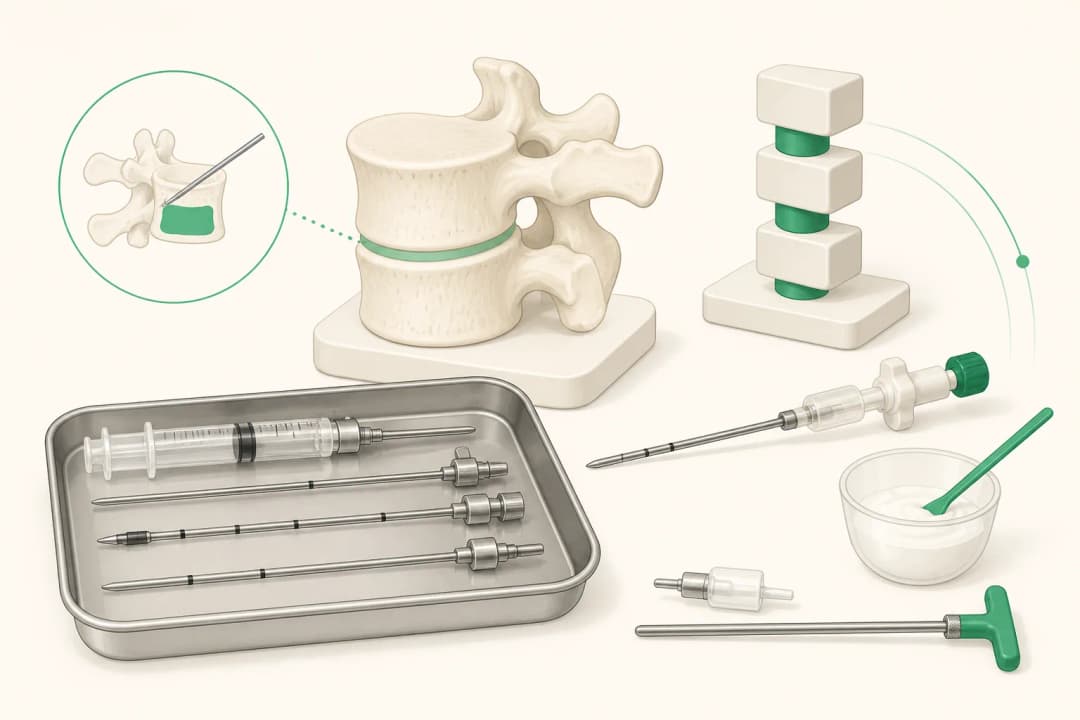
A vertebral compression fracture can make a spinal bone collapse and cause sudden or persistent back pain. During vertebroplasty, a clinician guides a needle into the affected vertebra and injects cement. Kyphoplasty adds a small balloon step before cement placement; the balloon can create a cavity and may help restore some vertebral height. Both procedures use imaging to guide needle placement.
They are different from open spine surgery and do not remove pressure from every nerve problem. The choice depends on the fracture's age, stability, pain pattern, imaging findings, bone health, and general medical condition. Bone cement is the supporting material used inside the vertebra.
Preparing and recovering
Bring a list of medicines, allergies, prior procedures, and medical conditions to the assessment. Tell the team about blood-thinning medicines, infection, pregnancy possibility, or new weakness. Follow the instructions about eating, drinking, and medicines before the procedure.
Afterward, follow the discharge plan for activity, wound care, and pain relief. Gentle movement is often encouraged, while heavy lifting and strenuous bending may need to wait. Treating low bone strength matters because cement supports the treated vertebra but does not prevent new fractures elsewhere. Your clinician may discuss osteoporosis evaluation, nutrition, fall prevention, and rehabilitation.
When to seek urgent care
Seek urgent medical help for new leg weakness, numbness around the groin, loss of bladder or bowel control, severe breathing difficulty, chest pain, fainting, or rapidly worsening back pain. Contact the treating team promptly for fever, increasing redness or drainage at the needle site, or pain that is becoming harder to control. These symptoms need assessment because they can signal a neurological problem, infection, bleeding, or another complication.
Questions for your doctor
Ask which vertebra is fractured and what the scan shows; why kyphoplasty or vertebroplasty fits your situation; what non-procedure options remain; how medicines should be adjusted; what activity is suitable after discharge; and how bone strength will be assessed.
Find care
General Clinics & Polyclinics in Abu Dhabi
That answer is general. If you want it applied to your own case, these are licensed general clinics & polyclinics listed in Abu Dhabi.
27 Ar Ruwwad St - Shakhbout City - MSH4 - Abu Dhabi - United Arab Emirates
Accepts: Daman, Thiqa, Cigna, MetLife +20 more
Al Ruwais, Al Dhafrah
Accepts: Daman, Thiqa, AXA, Cigna +16 more
Al Bahyah - Al Bahyah Old - Abu Dhabi - United Arab Emirates
Accepts: Daman, Thiqa, Cigna, Allianz Care +18 more
Abu Dhabi
Accepts: Daman, Thiqa, AXA, Cigna +27 more
Ordered by verification status and how complete each clinic's public record is, then alphabetically. This is a directory listing, not a ranking — Zavis does not rate or recommend providers.
A factual listing drawn from the DHA, DOH and MOHAP licence registers. It is not a referral, an endorsement, or advice that any of these providers is right for you.
Questions people ask
Are kyphoplasty and vertebroplasty the same?
Both place cement in a compressed vertebra, but kyphoplasty uses a balloon step before cement injection.
Will the procedure treat every cause of back pain?
No. It is aimed at pain related to a suitable vertebral compression fracture, not every spinal or muscle condition.
Related
Related reading
Keep reading
Medical disclaimer. This page is general health information, not medical advice, and it cannot diagnose you. Always consult a licensed healthcare provider about your own symptoms and treatment. In an emergency in the UAE, call 998 for an ambulance.