
Joint pain in sickle cell disease: what to know
Short answer
Joint pain in sickle cell disease can signal a pain crisis, so follow your care plan and seek urgent help for severe or unusual pain.
This answers one question. It is not a diagnosis and does not replace an assessment by a licensed doctor.
At a glance
- Common pattern
- Deep pain during a crisis can affect several joints or body areas
- Keep available
- Your written pain plan and emergency contact details
- Urgent warning
- Fever, chest symptoms, breathing trouble, or new weakness
Why it happens
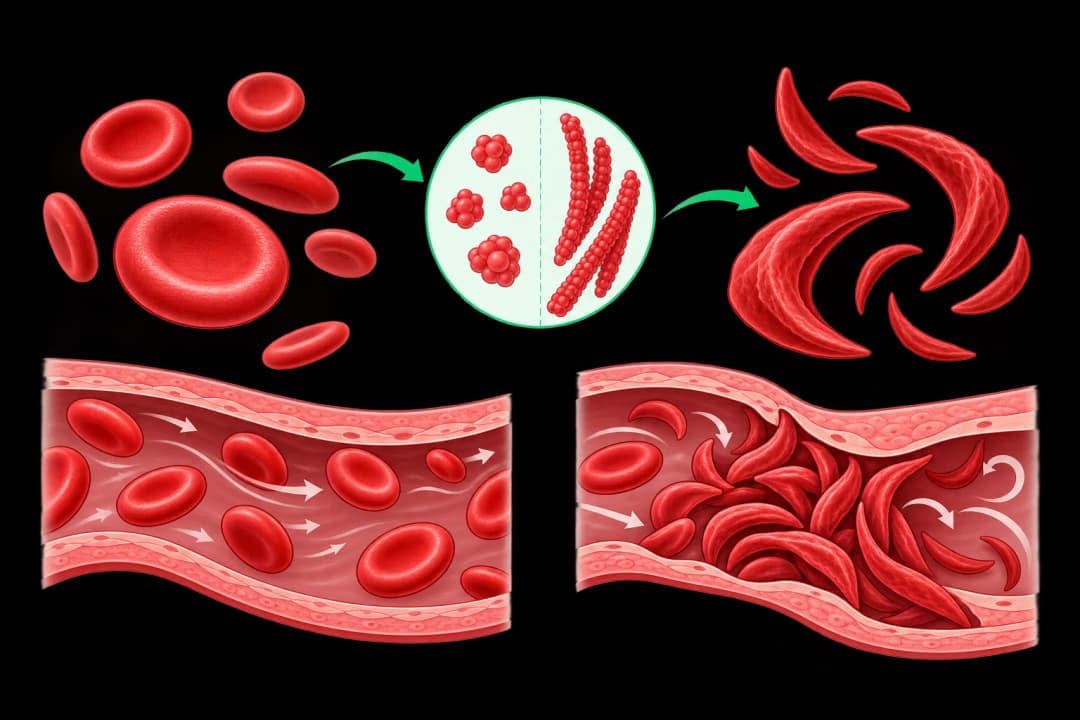
Sickle-shaped blood cells can obstruct small blood vessels, reducing oxygen delivery to tissues and causing episodes of deep pain. Pain may affect the hips, knees, shoulders, back, hands, or other areas, and it may come with fatigue or pale skin. Repeated pain in one joint, swelling, reduced movement, or pain between crises can have an additional cause, including inflammation, infection, or bone and joint damage. The person’s usual pattern matters: a new location or a different intensity deserves attention. Joint pain is a symptom of sickle cell disease, not a way to determine its diagnosis.
What you can do
Use the written pain plan from your haematology team, keep warm, rest without staying completely still, and drink fluids unless a clinician has advised a restriction. Note the pain site, severity, triggers, temperature, and medicines taken. Do not exceed prescribed doses or add medicines without checking, especially if you have kidney problems or take other treatments. Regular follow-up may include a clinical examination and a blood test to assess your health and guide care. Keep your emergency contacts and treatment information accessible.
When to seek care
Contact your sickle cell team promptly when pain is not improving with your plan, is unusually severe, or prevents normal movement. Seek emergency care for fever, chest pain, trouble breathing, sudden weakness, confusion, severe headache, fainting, marked dehydration, or new one-sided symptoms. A painful swollen joint or a limb that becomes cold or changes colour also needs urgent assessment. Do not wait for pain to become unbearable before asking for help.
Questions for your doctor
How does this episode compare with my usual pain crises? Which warning signs should make me go straight to emergency care? Could this pain reflect a joint problem as well as sickle cell disease? When should I have a blood test or review of my treatment?
Find care
General Clinics & Polyclinics in Abu Dhabi
That answer is general. If you want it applied to your own case, these are licensed general clinics & polyclinics listed in Abu Dhabi.
27 Ar Ruwwad St - Shakhbout City - MSH4 - Abu Dhabi - United Arab Emirates
Accepts: Daman, Thiqa, Cigna, MetLife +20 more
Al Ruwais, Al Dhafrah
Accepts: Daman, Thiqa, AXA, Cigna +16 more
Al Bahyah - Al Bahyah Old - Abu Dhabi - United Arab Emirates
Accepts: Daman, Thiqa, Cigna, Allianz Care +18 more
Abu Dhabi
Accepts: Daman, Thiqa, AXA, Cigna +27 more
Ordered by verification status and how complete each clinic's public record is, then alphabetically. This is a directory listing, not a ranking — Zavis does not rate or recommend providers.
A factual listing drawn from the DHA, DOH and MOHAP licence registers. It is not a referral, an endorsement, or advice that any of these providers is right for you.
Questions people ask
Is every joint pain episode a sickle cell crisis?
Not necessarily. A crisis is one possibility, while infection, inflammation, injury, or joint damage may also cause pain.
Should I wait before seeking help?
Follow your personal plan, but seek prompt advice when pain is unusual, severe, or not responding as expected.
Related
Related reading
Keep reading
Medical disclaimer. This page is general health information, not medical advice, and it cannot diagnose you. Always consult a licensed healthcare provider about your own symptoms and treatment. In an emergency in the UAE, call 998 for an ambulance.