
IV antibiotics for pyelonephritis: what to know
Short answer
IV antibiotics for pyelonephritis deliver medicine into a vein when a kidney infection needs rapid treatment or tablets are unsuitable.
This answers one question. It is not a diagnosis and does not replace an assessment by a licensed doctor.
At a glance
- Medicine route
- Into a vein through a cannula
- Common symptoms
- Fever, chills, side or back pain, and urinary discomfort
- Treatment review
- Urine findings and clinical response guide decisions
The short answer
IV antibiotics for pyelonephritis deliver medicine into a vein when a kidney infection needs rapid treatment or tablets are unsuitable. The clinician selects treatment using your examination, urine findings, allergies, kidney function and general health.
Understanding the treatment
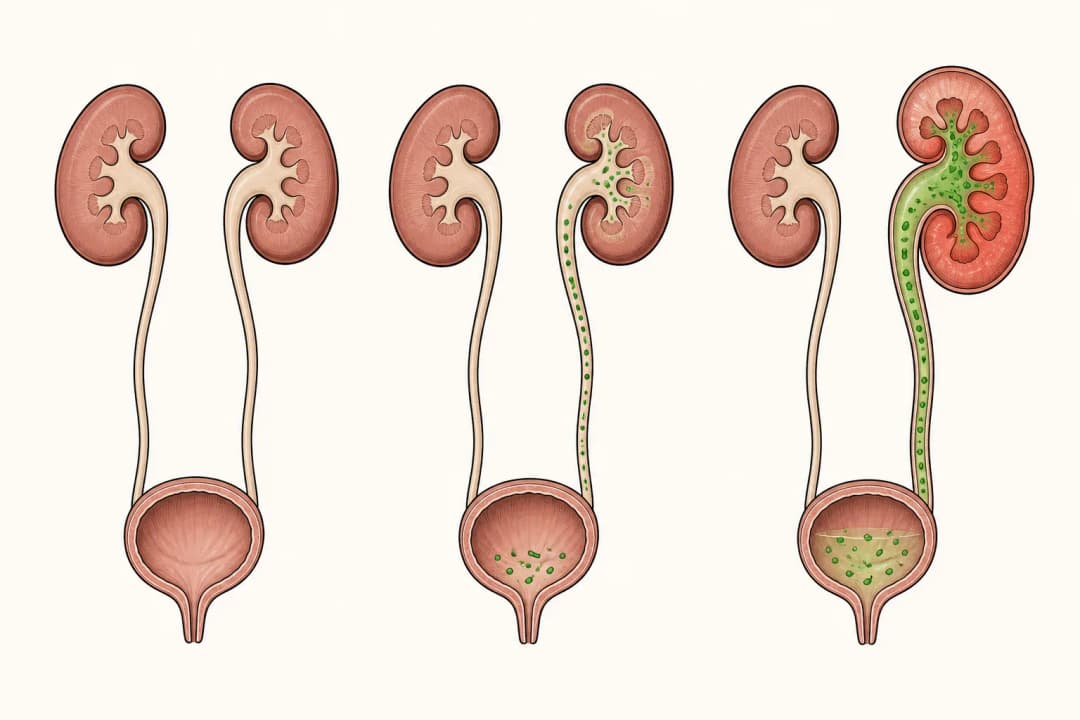
Pyelonephritis can cause fever, chills, pain in the side or back, nausea, and painful urination. A urine test may help identify bacteria and guide the antibiotic. The medicine enters through a cannula in the hand or arm, while the team watches your symptoms, hydration, urine output and response.
If you improve and can swallow and absorb medicine, treatment may change to tablets. Take the full prescribed course and tell the clinician about kidney disease, pregnancy, allergies or previous antibiotic reactions.
Practical steps
Rest and drink fluids only as advised, especially if you have another condition affecting fluid intake. Take each dose as prescribed. Report persistent vomiting, worsening side or back pain, reduced urine, a new rash, or soreness and redness around the cannula. Do not use someone else’s antibiotics or save doses for later.
When to get urgent help
Seek urgent care for confusion, fainting, severe weakness, difficulty breathing, inability to keep fluids down, or rapidly worsening pain or fever. After an antibiotic dose, emergency help is needed for facial swelling, wheezing or trouble breathing. Prompt review is also needed if symptoms are not settling or urine output falls.
Useful questions
Ask whether the infection involves the kidney, what the urine test shows, why IV treatment is needed, how kidney function will be monitored, and what changes would allow a switch to tablets.
Find care
General Clinics & Polyclinics in Abu Dhabi
That answer is general. If you want it applied to your own case, these are licensed general clinics & polyclinics listed in Abu Dhabi.
27 Ar Ruwwad St - Shakhbout City - MSH4 - Abu Dhabi - United Arab Emirates
Accepts: Daman, Thiqa, Cigna, MetLife +20 more
Al Ruwais, Al Dhafrah
Accepts: Daman, Thiqa, AXA, Cigna +16 more
Al Bahyah - Al Bahyah Old - Abu Dhabi - United Arab Emirates
Accepts: Daman, Thiqa, Cigna, Allianz Care +18 more
Abu Dhabi
Accepts: Daman, Thiqa, AXA, Cigna +27 more
Ordered by verification status and how complete each clinic's public record is, then alphabetically. This is a directory listing, not a ranking — Zavis does not rate or recommend providers.
A factual listing drawn from the DHA, DOH and MOHAP licence registers. It is not a referral, an endorsement, or advice that any of these providers is right for you.
Questions people ask
Why might tablets not be suitable at first?
Severe illness, vomiting, poor absorption, or the need for prompt treatment may lead a clinician to choose IV medicine.
Does IV treatment replace a urine test?
Not necessarily. A urine test can help identify bacteria and refine antibiotic choice.
Related
Related reading
Keep reading
Medical disclaimer. This page is general health information, not medical advice, and it cannot diagnose you. Always consult a licensed healthcare provider about your own symptoms and treatment. In an emergency in the UAE, call 998 for an ambulance.