
How to understand an IUGR chart
Short answer
An IUGR chart compares fetal measurements with expected growth, but clinicians interpret the trend alongside blood flow, fluid, movements, and heart monitoring.
This answers one question. It is not a diagnosis and does not replace an assessment by a licensed doctor.
At a glance
- A chart can show
- Measurements and growth over pregnancy time
- It cannot show alone
- The baby's complete wellbeing or exact birth weight
- Other checks
- Fluid, circulation, movements, and fetal heart pattern
What the chart is showing
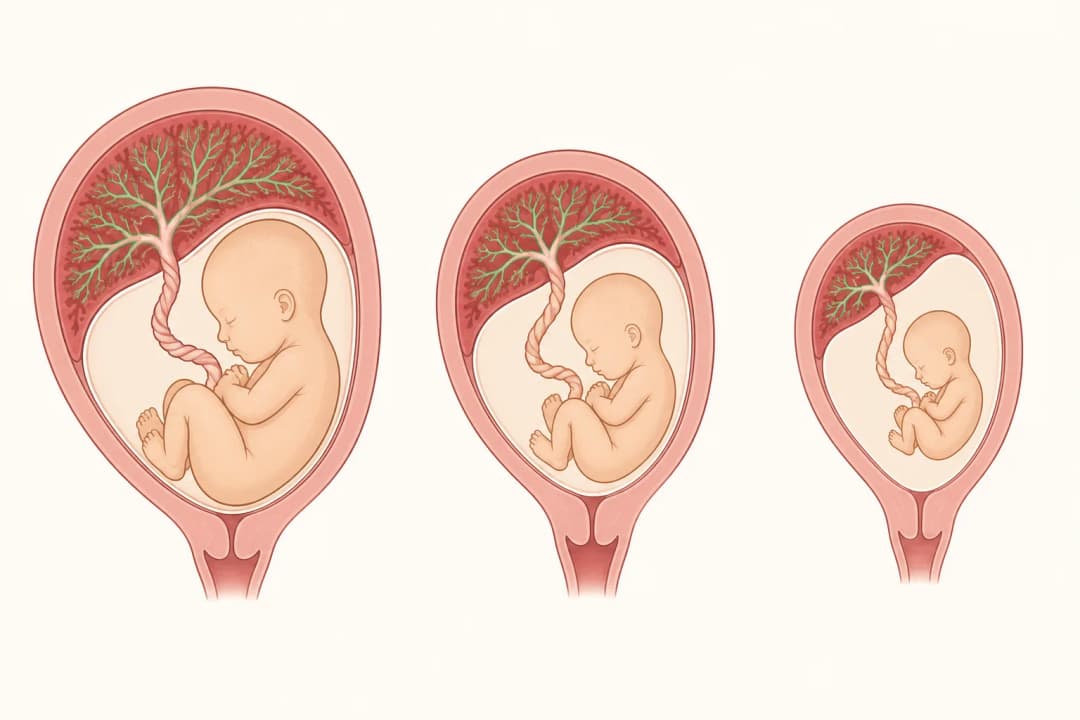
A growth chart may plot estimated fetal weight, head size, abdominal size, or thigh-bone length against pregnancy age. The plotted position helps the clinician see whether the baby is measuring smaller than expected and whether growth continues between scans. Charts are reference tools, not a diagnosis by themselves.
The abdominal measurement can be especially useful because it reflects the baby's growth pattern, while estimated weight combines several measurements. Dates, scan technique, fetal position, and normal measurement variation can affect the result, so a trend is more informative than a single plotted point.
How your team uses the information
Bring previous scan reports when changing clinicians and ask which chart or reference method was used. A Growth Scan can repeat measurements and assess fluid and circulation. Fetal Heart Monitoring may add information about how the baby is coping. The team may also review blood pressure, urine findings, symptoms, and movement pattern before recommending continued observation or birth planning.
Keep appointments even when you feel well, because growth restriction often has no obvious symptom for the pregnant person. Record the movement pattern your maternity team has asked you to monitor.
When assessment is urgent
Seek prompt pregnancy assessment for reduced or changed fetal movements, vaginal bleeding, fluid leakage, painful regular contractions, severe headache, visual changes, severe upper abdominal pain, or sudden swelling. A chart cannot assess these symptoms remotely. Follow your maternity unit's instructions for urgent care, especially if symptoms are severe or you cannot contact your usual clinician.
Useful questions about your chart
Ask: Which measurement is driving the concern? Has the growth curve changed between scans? Are fluid and blood-flow findings reassuring? What is the monitoring schedule? What would make you recommend delivery? How will the plan change if the next scan is similar or smaller?
Find care
General Clinics & Polyclinics in Abu Dhabi
That answer is general. If you want it applied to your own case, these are licensed general clinics & polyclinics listed in Abu Dhabi.
27 Ar Ruwwad St - Shakhbout City - MSH4 - Abu Dhabi - United Arab Emirates
Accepts: Daman, Thiqa, Cigna, MetLife +20 more
Al Ruwais, Al Dhafrah
Accepts: Daman, Thiqa, AXA, Cigna +16 more
Al Bahyah - Al Bahyah Old - Abu Dhabi - United Arab Emirates
Accepts: Daman, Thiqa, Cigna, Allianz Care +18 more
Abu Dhabi
Accepts: Daman, Thiqa, AXA, Cigna +27 more
Ordered by verification status and how complete each clinic's public record is, then alphabetically. This is a directory listing, not a ranking — Zavis does not rate or recommend providers.
A factual listing drawn from the DHA, DOH and MOHAP licence registers. It is not a referral, an endorsement, or advice that any of these providers is right for you.
Questions people ask
Is a low chart position proof of IUGR?
No. The chart is one part of assessment; clinicians combine it with the growth trend and other pregnancy findings.
Why can two charts look different?
Charts may use different reference populations or methods, so the clinical team should interpret the result using the method recorded in your report.
Related
Related reading
Keep reading
Medical disclaimer. This page is general health information, not medical advice, and it cannot diagnose you. Always consult a licensed healthcare provider about your own symptoms and treatment. In an emergency in the UAE, call 998 for an ambulance.