
Is central centrifugal cicatricial alopecia safe in skin of colour?
Short answer
Central centrifugal cicatricial alopecia can affect skin of colour, and it is safest to have scalp changes assessed early by a dermatologist.
This answers one question. It is not a diagnosis and does not replace an assessment by a licensed doctor.
At a glance
- Type
- Scarring hair loss
- Possible symptoms
- Itch, tenderness, burning, or breakage
- Goal of early care
- Calm inflammation and protect remaining follicles
What CCCA involves
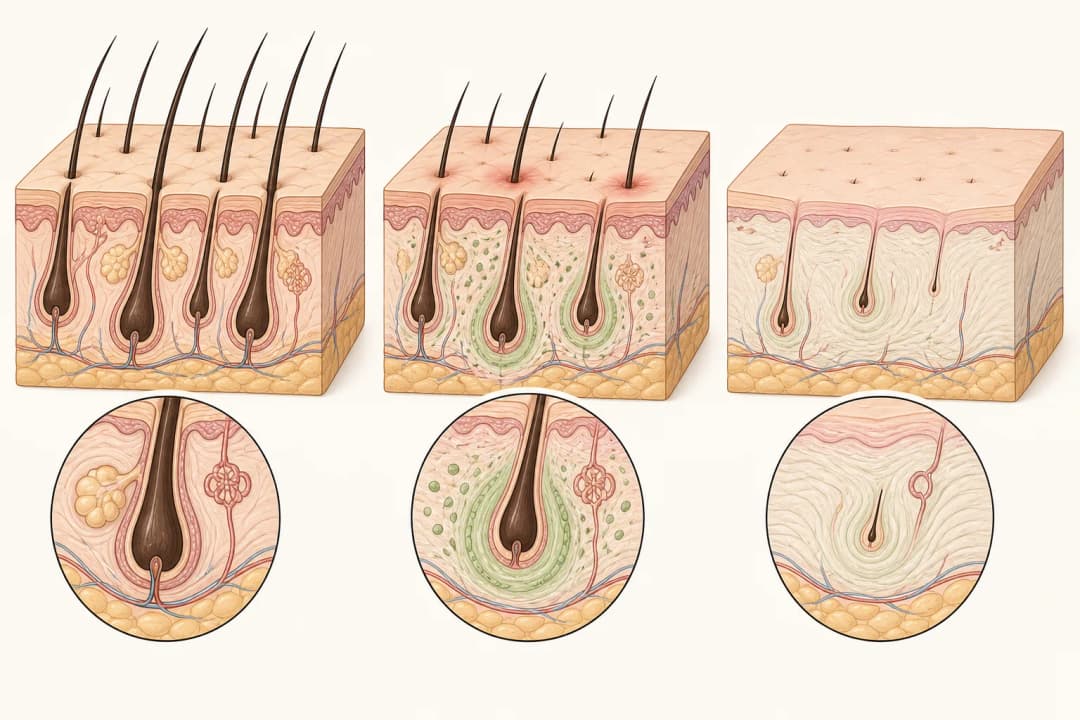
CCCA is a scarring form of hair loss that often begins near the centre of the scalp and may spread outward. Inflammation around follicles can injure them, and a scarred follicle may no longer produce hair. Skin of colour is not a reason to avoid evaluation or treatment. However, darker skin can develop visible colour changes after inflammation or irritation, so scalp redness may be less obvious than symptoms such as itch, tenderness, burning, scaling, or increased hair breakage. The diagnosis may require a close scalp examination and sometimes a small biopsy.
Protect the scalp and hair
Arrange a dermatology appointment if thinning is widening, the scalp feels sore or itchy, or you notice smooth areas with fewer visible follicles. Until you are assessed, reduce tight braids, extensions, chemical straightening, and heat that causes scalp discomfort. Use gentle cleansing and avoid scratching or picking. Keep notes about when symptoms began and bring a list of hair products and styling practices. Treatment may aim to calm inflammation and protect remaining follicles; the plan depends on examination findings.
When to seek care
Seek a prompt review for rapidly expanding hair loss, increasing scalp pain, pus, crusting, marked swelling, or tender bumps. Urgent help is needed if swelling spreads to the face, you develop fever, or you have eye symptoms. A new smooth or shiny patch should not be dismissed as a styling issue, because scarring hair loss can progress with few early visible changes.
Questions for your doctor
Ask whether the pattern suggests scarring hair loss, whether a biopsy is useful, how activity will be monitored, and which treatments suit your scalp. Discuss safe styling, colour-change risk, ways to manage itch or pain, and what changes should trigger an earlier appointment.
Find care
General Clinics & Polyclinics in Abu Dhabi
That answer is general. If you want it applied to your own case, these are licensed general clinics & polyclinics listed in Abu Dhabi.
27 Ar Ruwwad St - Shakhbout City - MSH4 - Abu Dhabi - United Arab Emirates
Accepts: Daman, Thiqa, Cigna, MetLife +20 more
Al Ruwais, Al Dhafrah
Accepts: Daman, Thiqa, AXA, Cigna +16 more
Al Bahyah - Al Bahyah Old - Abu Dhabi - United Arab Emirates
Accepts: Daman, Thiqa, Cigna, Allianz Care +18 more
Abu Dhabi
Accepts: Daman, Thiqa, AXA, Cigna +27 more
Ordered by verification status and how complete each clinic's public record is, then alphabetically. This is a directory listing, not a ranking — Zavis does not rate or recommend providers.
A factual listing drawn from the DHA, DOH and MOHAP licence registers. It is not a referral, an endorsement, or advice that any of these providers is right for you.
Questions people ask
Does skin of colour make CCCA unsafe to treat?
No. Skin of colour can be treated, but the clinician should account for irritation and possible colour changes when choosing care.
Can hair grow back after CCCA?
Hair may be difficult to regrow where follicles are scarred, so identifying and calming active inflammation early is important.
Medical disclaimer. This page is general health information, not medical advice, and it cannot diagnose you. Always consult a licensed healthcare provider about your own symptoms and treatment. In an emergency in the UAE, call 998 for an ambulance.