
What is an iodine urine test?
Short answer
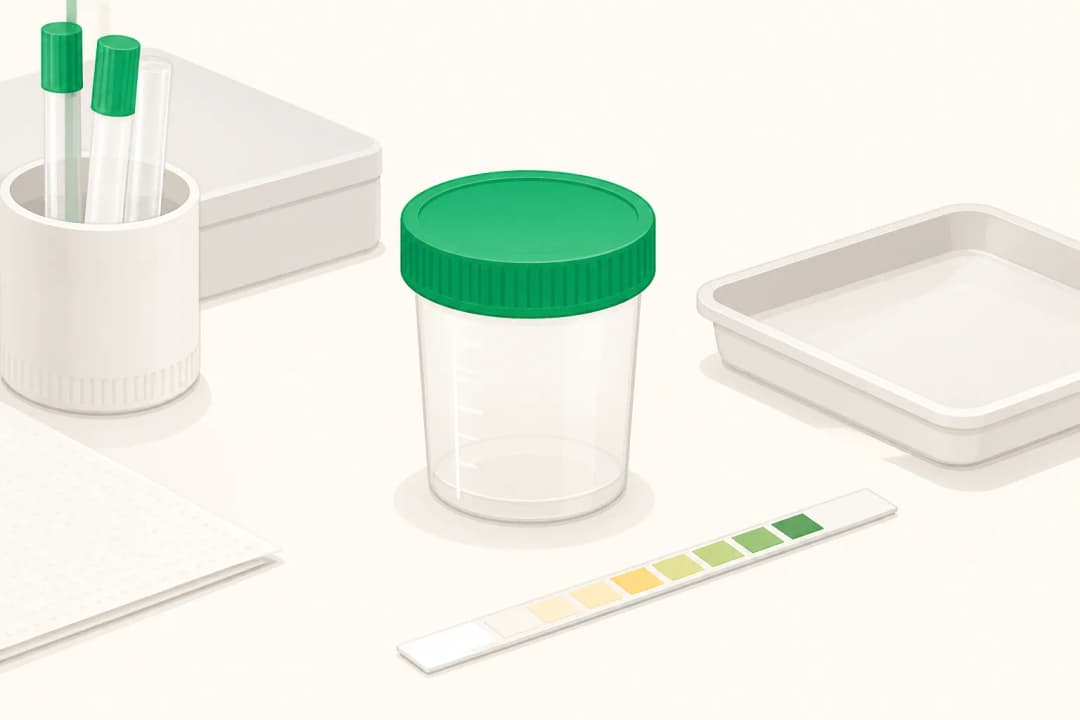
An iodine urine test measures iodine in urine, but the result needs clinical context to be meaningful.
This answers one question. It is not a diagnosis and does not replace an assessment by a licensed doctor.
At a glance
- Sample
- Urine may be collected once or over a defined period.
- Interpretation
- Recent intake and hydration can affect the result.
- Related testing
- Thyroid blood tests may answer a different clinical question.
What the sample can show
Iodine leaves the body mainly through urine, so a sample can provide information about recent iodine exposure. A spot sample is convenient, while a collection over a set period may be chosen for a specific clinical reason. The result can vary with recent food, supplements, hydration, and the timing of collection. One result may not describe a person’s usual iodine intake or prove the cause of a thyroid symptom.
The test is different from a routine urine test, which may look for blood, protein, glucose, or signs of infection. Urine testing may be used alongside other assessments when someone has urinary symptoms, but iodine measurement does not diagnose a urinary tract infection, kidney infection, or prostate enlargement.
Preparing for the test
Follow the laboratory’s collection instructions carefully. Tell the clinician about iodine-containing supplements, seaweed products, medicines, recent imaging with contrast, pregnancy, and any kidney condition. Do not deliberately increase or restrict iodine before testing unless instructed, because changing your intake can make the result harder to interpret. Ask whether the sample should be taken at a particular time and whether it must be kept cool or delivered quickly.
Results are considered with symptoms, dietary history, thyroid blood tests, and the reason the test was requested. If urinary symptoms are the concern, a clinician may request a separate routine urine test and decide whether treatment such as antibiotic treatment is appropriate.
When to seek care
Contact a clinician promptly for fever with back or side pain, vomiting, visible blood in urine, confusion, or difficulty passing urine. Seek urgent help if you feel severely unwell or cannot keep fluids down. These symptoms need assessment based on the urinary or general illness, regardless of an iodine result.
Questions to ask your doctor
Ask why iodine is being measured, which type of urine collection is planned, and which factors could alter the result. Clarify whether you also need thyroid blood tests, a routine urine test, or follow-up with a specialist, and when the result will be explained.
Find care
General Clinics & Polyclinics in Abu Dhabi
That answer is general. If you want it applied to your own case, these are licensed general clinics & polyclinics listed in Abu Dhabi.
27 Ar Ruwwad St - Shakhbout City - MSH4 - Abu Dhabi - United Arab Emirates
Accepts: Daman, Thiqa, Cigna, MetLife +20 more
Al Ruwais, Al Dhafrah
Accepts: Daman, Thiqa, AXA, Cigna +16 more
Al Bahyah - Al Bahyah Old - Abu Dhabi - United Arab Emirates
Accepts: Daman, Thiqa, Cigna, Allianz Care +18 more
Abu Dhabi
Accepts: Daman, Thiqa, AXA, Cigna +27 more
Ordered by verification status and how complete each clinic's public record is, then alphabetically. This is a directory listing, not a ranking — Zavis does not rate or recommend providers.
A factual listing drawn from the DHA, DOH and MOHAP licence registers. It is not a referral, an endorsement, or advice that any of these providers is right for you.
Questions people ask
Can I interpret an iodine urine result by myself?
It is safer to review it with the requesting clinician because collection timing, diet, supplements, and kidney function affect interpretation.
Does this test diagnose a urine infection?
No. A urine infection is assessed with symptoms and appropriate urine testing, not iodine measurement alone.
Related
Related reading
Keep reading
Medical disclaimer. This page is general health information, not medical advice, and it cannot diagnose you. Always consult a licensed healthcare provider about your own symptoms and treatment. In an emergency in the UAE, call 998 for an ambulance.