
What should you know about intense pulsed light IPL devices?
Short answer
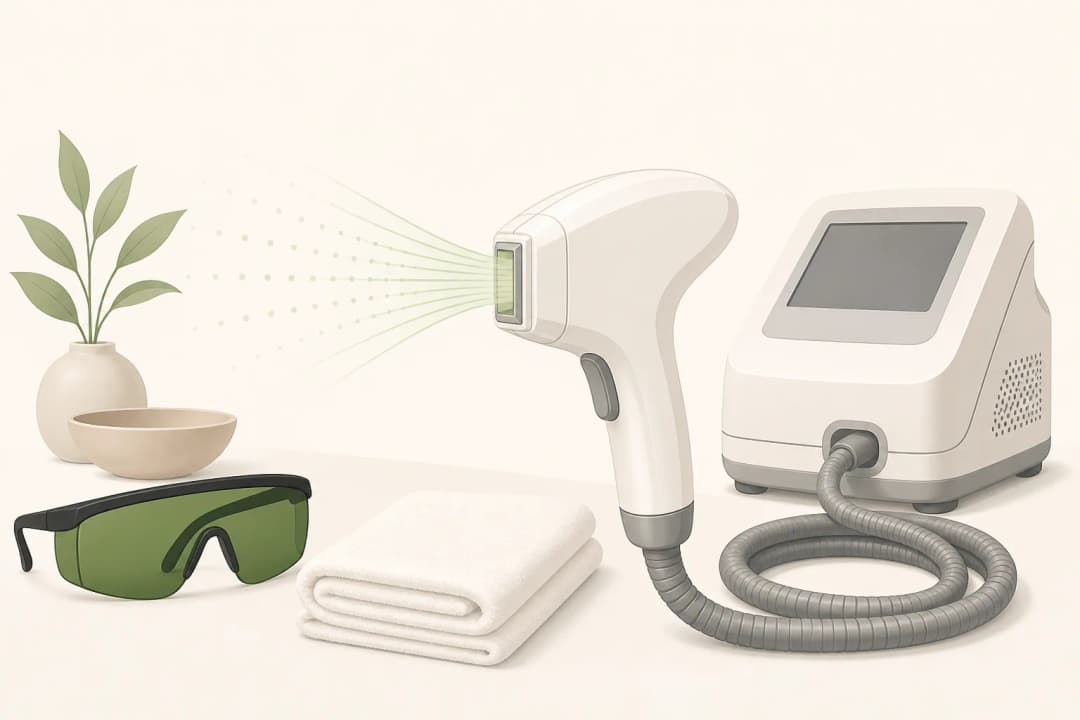
Intense pulsed light IPL devices use filtered flashes of broad-spectrum light to target selected pigment and visible blood vessels in the skin.
This answers one question. It is not a diagnosis and does not replace an assessment by a licensed doctor.
At a glance
- Technology
- Filtered broad-spectrum light
- Common targets
- Selected pigment and superficial redness
- Key preparation
- Avoid tanning and disclose light-sensitive medicines
What IPL treatment means
Unlike a conventional laser, IPL emits a range of wavelengths. A clinician chooses filters and settings for the concern, body area, and skin characteristics. Light energy can heat pigment in sun spots or pigment changes, and can reduce the appearance of some redness linked with superficial vessels. It is often discussed for sun-damaged skin, rosacea, uneven skin tone, and facial redness, but it does not diagnose the cause of a mark.
The treated area may feel warm or briefly sting. Redness, swelling, or darkening of pigmented spots can occur afterward. Results vary with the target, skin tone, device, and treatment plan; some concerns need more than one session and maintenance may be discussed.
Before and after a session
Have a qualified clinician assess any changing or uncertain spot before light treatment. Share your skin history, tendency to develop dark marks, recent tanning, medicines, and products that increase light sensitivity. Follow the clinic's instructions about avoiding tanning and active irritants.
Afterward, protect the area from sunlight with clothing and a suitable sunscreen, and avoid picking or scrubbing flaking spots. Use gentle cleansing and the recommended moisturiser. Do not resume strong exfoliants or heat-based activities until your clinician says the skin barrier has settled.
When to seek care
Contact the treating clinic if pain is worsening, swelling is marked, blistering develops, or the treated skin becomes increasingly hot or tender. Seek urgent medical help for facial swelling with breathing difficulty, widespread blistering, or eye pain or vision changes after treatment.
Questions for your doctor
Ask which target is being treated, whether the device and filter suit your skin tone, what changes are expected, how many visits may be considered, and which symptoms should prompt a same-day call.
Find care
General Clinics & Polyclinics in Abu Dhabi
That answer is general. If you want it applied to your own case, these are licensed general clinics & polyclinics listed in Abu Dhabi.
27 Ar Ruwwad St - Shakhbout City - MSH4 - Abu Dhabi - United Arab Emirates
Accepts: Daman, Thiqa, Cigna, MetLife +20 more
Al Ruwais, Al Dhafrah
Accepts: Daman, Thiqa, AXA, Cigna +16 more
Al Bahyah - Al Bahyah Old - Abu Dhabi - United Arab Emirates
Accepts: Daman, Thiqa, Cigna, Allianz Care +18 more
Abu Dhabi
Accepts: Daman, Thiqa, AXA, Cigna +27 more
Ordered by verification status and how complete each clinic's public record is, then alphabetically. This is a directory listing, not a ranking — Zavis does not rate or recommend providers.
A factual listing drawn from the DHA, DOH and MOHAP licence registers. It is not a referral, an endorsement, or advice that any of these providers is right for you.
Questions people ask
Is IPL the same as laser treatment?
No. IPL uses a range of filtered light wavelengths, while a laser generally delivers a narrower wavelength.
Can IPL treat every dark spot?
No. A clinician should assess an uncertain or changing mark before any cosmetic light treatment.
Related
Related reading
Keep reading
Medical disclaimer. This page is general health information, not medical advice, and it cannot diagnose you. Always consult a licensed healthcare provider about your own symptoms and treatment. In an emergency in the UAE, call 998 for an ambulance.