
Insulin Therapy for Type 2 Diabetes: What to Know
Short answer
Insulin therapy for type 2 diabetes helps move glucose from the bloodstream into cells when the body does not make or use enough insulin.
This answers one question. It is not a diagnosis and does not replace an assessment by a licensed doctor.
At a glance
- Purpose
- Helps glucose move from the bloodstream into cells
- Common tools
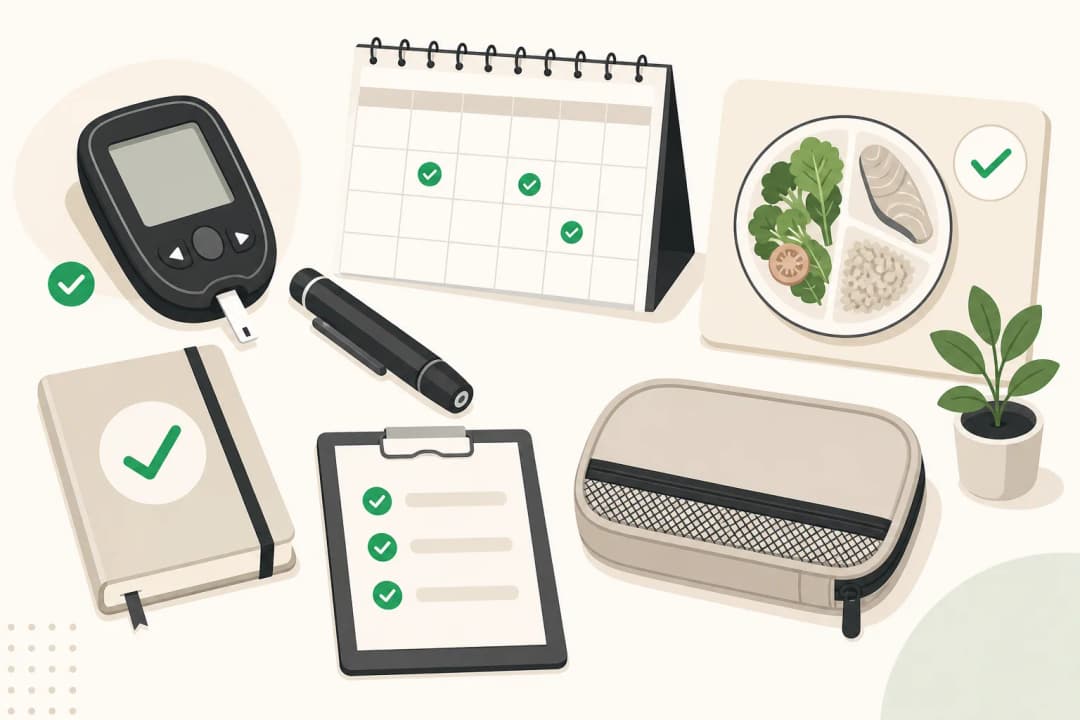
- Insulin pen, syringe, pump, or glucose monitor
- Key safety issue
- Recognise and treat low blood glucose using your care plan
The short answer
A clinician may recommend insulin when other medicines and daily habits do not keep glucose in the agreed range, or when glucose is very high during illness or another period of physical stress. The plan is tailored to your meals, activity, other medicines, kidney function, and ability to monitor glucose.
What insulin treatment involves
Insulin is commonly given with a pen, syringe, or pump. Some plans use a background dose that works between meals and overnight; others add mealtime doses to cover food. Your prescription should specify the insulin name, dose, timing, and what to do if you eat less than planned or miss a dose. Do not change the dose on your own.
Glucose checks show how your body responds. A continuous glucose monitor can display changing readings and trends, while finger-stick testing may still be part of some plans. Record unusual readings, skipped meals, exercise, and symptoms so your care team can adjust treatment safely.
Using insulin safely
Learn the injection technique, storage instructions, needle disposal method, and sick-day plan before starting. Rotate injection areas as shown by your clinician and check the insulin label each time. Keep a quick source of glucose available if your care team advises it, and tell household members how to respond if you become confused or unable to treat yourself.
Low blood glucose can cause sweating, shaking, hunger, dizziness, irritability, blurred vision, or confusion. Follow the treatment steps supplied by your diabetes team, recheck as instructed, and seek help if symptoms do not improve. Alcohol, delayed meals, extra activity, and taking more insulin than prescribed can increase this risk.
When to seek medical care
Contact your diabetes team promptly if readings repeatedly fall outside your agreed range, injections are difficult, the injection site becomes painful or swollen, or you are vomiting and cannot keep fluids down. Illness can change insulin needs even when you are eating less, so use the sick-day instructions given to you.
Seek emergency help for severe confusion, a seizure, loss of consciousness, severe breathing difficulty, or marked dehydration. Do not give food or drink to someone who is unconscious. If you have a prescribed emergency treatment for severe low glucose, use it according to your clinician's instructions while emergency help is arranged.
Questions for your doctor
Ask which insulin you are using, when it starts working, when to take it around meals, and what to do after a missed or delayed dose. Ask how often to check glucose, what readings require a call, how exercise and fasting affect your plan, and how to store and transport your supplies. Bring your glucose record and a complete list of medicines to review visits.
Find care
General Clinics & Polyclinics in Abu Dhabi
That answer is general. If you want it applied to your own case, these are licensed general clinics & polyclinics listed in Abu Dhabi.
27 Ar Ruwwad St - Shakhbout City - MSH4 - Abu Dhabi - United Arab Emirates
Accepts: Daman, Thiqa, Cigna, MetLife +20 more
Al Ruwais, Al Dhafrah
Accepts: Daman, Thiqa, AXA, Cigna +16 more
Al Bahyah - Al Bahyah Old - Abu Dhabi - United Arab Emirates
Accepts: Daman, Thiqa, Cigna, Allianz Care +18 more
Abu Dhabi
Accepts: Daman, Thiqa, AXA, Cigna +27 more
Ordered by verification status and how complete each clinic's public record is, then alphabetically. This is a directory listing, not a ranking — Zavis does not rate or recommend providers.
A factual listing drawn from the DHA, DOH and MOHAP licence registers. It is not a referral, an endorsement, or advice that any of these providers is right for you.
Questions people ask
Does starting insulin mean type 2 diabetes has become type 1 diabetes?
No. Type 1 and type 2 diabetes have different underlying processes. Insulin may be added to type 2 diabetes treatment when the body's insulin supply or response is not enough for the glucose target.
Can I stop insulin when my glucose improves?
Do not stop or reduce insulin without a clinician's plan. Better readings may reflect the treatment working, and stopping suddenly can cause glucose to rise. Your care team can review whether the dose or combination of treatments should change.
What if I am not eating normally?
Follow your sick-day instructions and contact your diabetes team for personalised advice. The correct action depends on the insulin type, your glucose readings, illness, and ability to drink fluids.
Related
Related reading
Keep reading
Medical disclaimer. This page is general health information, not medical advice, and it cannot diagnose you. Always consult a licensed healthcare provider about your own symptoms and treatment. In an emergency in the UAE, call 998 for an ambulance.