
Insulin resistance and type 2 diabetes
Short answer
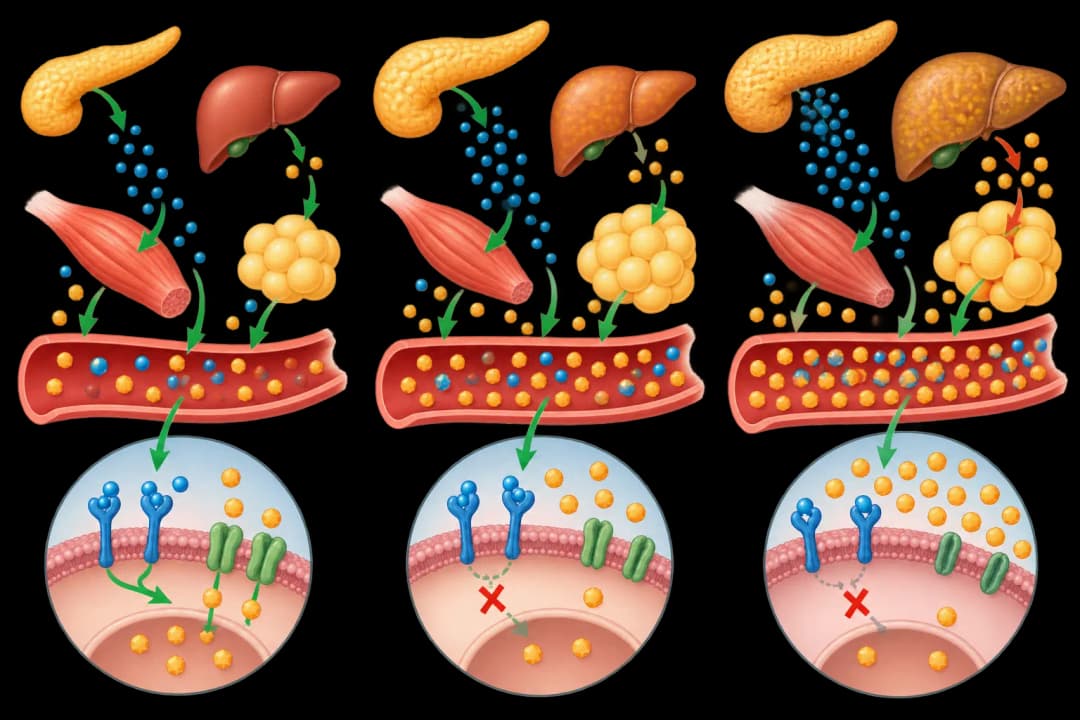
Insulin resistance means body cells respond less effectively to insulin, so the pancreas works harder and type 2 diabetes may develop when compensation falls short.
This answers one question. It is not a diagnosis and does not replace an assessment by a licensed doctor.
At a glance
- Insulin resistance
- Cells respond less effectively to insulin
- Compensation
- The pancreas may initially release more insulin
- Support
- Food, activity, sleep and treatment review can help
The connection explained
After food, insulin helps glucose move from blood into cells and signals the liver to store some glucose. With insulin resistance, muscle, liver and fat cells do not respond as strongly. The pancreas can release more insulin for a while, keeping glucose closer to its usual range. If insulin production cannot meet the demand, glucose rises and may reach the range used to diagnose prediabetes or type 2 diabetes.
Insulin resistance can exist without obvious symptoms. It is not a personal failure, and it is influenced by genetics, body composition, sleep, activity, medicines and other health conditions. Obesity can be associated with insulin resistance, but body size alone does not diagnose it.
Steps that support glucose control
Start with manageable changes: choose regular balanced meals, increase activity gradually if safe, protect sleep, and avoid smoking. A clinician can review blood pressure, cholesterol, glucose and medicines, then agree goals that fit your life. Nutrition Counselling or a Weight Management Programme may provide practical support. If you have diabetes, take prescribed treatment and attend monitoring appointments even when you feel well.
When to get medical advice
Arrange a review for persistent thirst, frequent urination, unexplained tiredness, blurred vision or repeated high glucose readings. Seek urgent help for vomiting, severe dehydration, confusion, collapse or difficult breathing. If you use glucose-lowering medicine or insulin, sweating, shaking, dizziness and confusion may indicate Hypoglycaemia; follow your personalised treatment plan and seek help if it continues.
Questions to bring
Ask which tests assess your glucose pattern, whether medicines or another condition may affect insulin sensitivity, and what change would be most useful first. Ask how progress will be monitored and which kidney, eye, nerve and cardiovascular checks are appropriate for you.
Find care
General Clinics & Polyclinics in Abu Dhabi
That answer is general. If you want it applied to your own case, these are licensed general clinics & polyclinics listed in Abu Dhabi.
27 Ar Ruwwad St - Shakhbout City - MSH4 - Abu Dhabi - United Arab Emirates
Accepts: Daman, Thiqa, Cigna, MetLife +20 more
Al Ruwais, Al Dhafrah
Accepts: Daman, Thiqa, AXA, Cigna +16 more
Al Bahyah - Al Bahyah Old - Abu Dhabi - United Arab Emirates
Accepts: Daman, Thiqa, Cigna, Allianz Care +18 more
Abu Dhabi
Accepts: Daman, Thiqa, AXA, Cigna +27 more
Ordered by verification status and how complete each clinic's public record is, then alphabetically. This is a directory listing, not a ranking — Zavis does not rate or recommend providers.
A factual listing drawn from the DHA, DOH and MOHAP licence registers. It is not a referral, an endorsement, or advice that any of these providers is right for you.
Questions people ask
Can insulin resistance occur before type 2 diabetes?
Yes. The pancreas may compensate for reduced insulin sensitivity before glucose rises into a diabetes range.
Does insulin resistance always cause symptoms?
No. Many people have no clear symptoms, which is why appropriate health checks and glucose testing matter.
Related
Related reading
Keep reading
Medical disclaimer. This page is general health information, not medical advice, and it cannot diagnose you. Always consult a licensed healthcare provider about your own symptoms and treatment. In an emergency in the UAE, call 998 for an ambulance.