
What should you know about insulin not working in type 2 diabetes?
Short answer
In type 2 diabetes, insulin may not work effectively because body cells respond less to it, allowing blood glucose to rise.
This answers one question. It is not a diagnosis and does not replace an assessment by a licensed doctor.
At a glance
- Key mechanism
- Cells respond less effectively to insulin, so glucose remains in the bloodstream.
- Medication safety
- Take diabetes medicine as prescribed and discuss changes with your clinician.
- Urgent warning
- Confusion, vomiting, breathing difficulty, or severe weakness needs urgent medical assessment.
The short answer
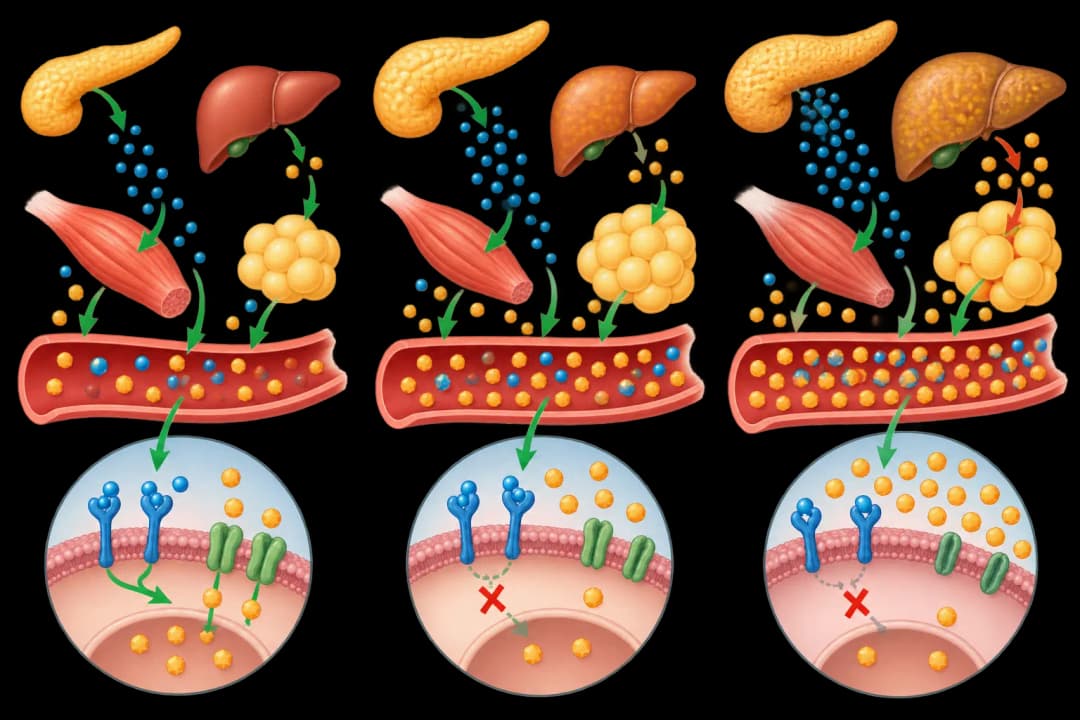
This reduced response is called insulin resistance. The pancreas may initially release extra insulin to compensate, but it may not keep up over time. Type 2 diabetes is a long-term condition, and symptoms can be mild or absent, so blood tests and regular reviews help guide care.
What insulin resistance means
Insulin helps move glucose from the bloodstream into cells, where it can be used for energy. With insulin resistance, muscle, liver, and fat cells do not respond to insulin as well as they should. The liver can also continue releasing glucose when the body does not need as much, adding to the rise in blood glucose.
The body can become less responsive for several interacting reasons, including inherited factors, excess body fat, limited physical activity, some medicines, and other health conditions. Having one factor does not determine what will happen to you. Prediabetes can occur before blood glucose reaches the range used to diagnose type 2 diabetes; see [Prediabetes](/conditions/prediabetes/) to learn more.
What you can do next
Arrange a review with your clinician if readings remain above your agreed target, or if you are unsure how to take or monitor your treatment. Do not stop, double, or change diabetes medicine without advice. Your clinician may review your glucose records, meals, activity, injection or tablet technique, other medicines, and kidney function before adjusting the plan.
Regular movement, meals with suitable portions, adequate sleep, and stopping tobacco can support glucose management. A dietitian or diabetes educator can help adapt these steps to your routines and cultural preferences. If body weight is affecting glucose management, discuss a realistic plan; [Obesity](/conditions/obesity/) is a related health condition, not a personal failing.
Keep appointments for checks of blood pressure, eyes, feet, nerves, and kidneys. Persistently high glucose can contribute to problems such as [Chronic Kidney Disease](/conditions/chronic-kidney-disease/) and [Peripheral Neuropathy](/conditions/peripheral-neuropathy/), while foot skin breaks can become infected, including [Cellulitis](/conditions/cellulitis/).
When to seek care urgently
Seek urgent medical help for severe thirst with frequent urination, vomiting, worsening weakness, confusion, unusual drowsiness, or difficulty breathing. These symptoms can signal a dangerous glucose problem, particularly during illness.
Get prompt advice for repeated low readings, sweating, shaking, palpitations, irritability, or confusion. These can be symptoms of [Hypoglycaemia](/conditions/hypoglycaemia/). If someone is unconscious or having a seizure, call emergency services and do not give food or drink by mouth. Sudden facial drooping, arm weakness, or speech difficulty requires emergency help because it may indicate a [Stroke](/conditions/stroke/).
Questions for your doctor
Ask: What glucose range is right for me? How often should I check it? Could another medicine, illness, or injection technique be affecting my readings? What should I do when I am unwell or eating less? Which foot, eye, kidney, and nerve checks do I need, and when should we review my plan?
Find care
General Clinics & Polyclinics in Abu Dhabi
That answer is general. If you want it applied to your own case, these are licensed general clinics & polyclinics listed in Abu Dhabi.
27 Ar Ruwwad St - Shakhbout City - MSH4 - Abu Dhabi - United Arab Emirates
Accepts: Daman, Thiqa, Cigna, MetLife +20 more
Al Ruwais, Al Dhafrah
Accepts: Daman, Thiqa, AXA, Cigna +16 more
Al Bahyah - Al Bahyah Old - Abu Dhabi - United Arab Emirates
Accepts: Daman, Thiqa, Cigna, Allianz Care +18 more
Abu Dhabi
Accepts: Daman, Thiqa, AXA, Cigna +27 more
Ordered by verification status and how complete each clinic's public record is, then alphabetically. This is a directory listing, not a ranking — Zavis does not rate or recommend providers.
A factual listing drawn from the DHA, DOH and MOHAP licence registers. It is not a referral, an endorsement, or advice that any of these providers is right for you.
Questions people ask
Does insulin resistance mean insulin treatment will not help?
Not necessarily. Insulin treatment can lower blood glucose when prescribed, although the dose and monitoring plan need to be tailored to you.
Can type 2 diabetes improve if insulin is not working well?
Glucose management can improve with an individual treatment plan, regular activity, suitable meals, and attention to other health factors. Some people still need medicine or insulin.
Why can my glucose readings change from day to day?
Food, activity, stress, illness, sleep, medicines, and testing technique can all affect readings. A pattern over time is more useful than one isolated result.
Related
Related reading
Keep reading
Medical disclaimer. This page is general health information, not medical advice, and it cannot diagnose you. Always consult a licensed healthcare provider about your own symptoms and treatment. In an emergency in the UAE, call 998 for an ambulance.