
If you have chronic kidney disease
Short answer
If you have chronic kidney disease, regular monitoring, prescribed treatment and control of blood pressure and diabetes can help protect remaining kidney function.
This answers one question. It is not a diagnosis and does not replace an assessment by a licensed doctor.
At a glance
- Monitoring
- Blood pressure, blood tests and urine tests help track kidney function.
- Medicines
- Check before taking anti-inflammatory pain medicines, supplements or herbal products.
- Related symptoms
- Fatigue, swelling, thirst and urine changes can occur, but some people have no symptoms.
What the diagnosis means
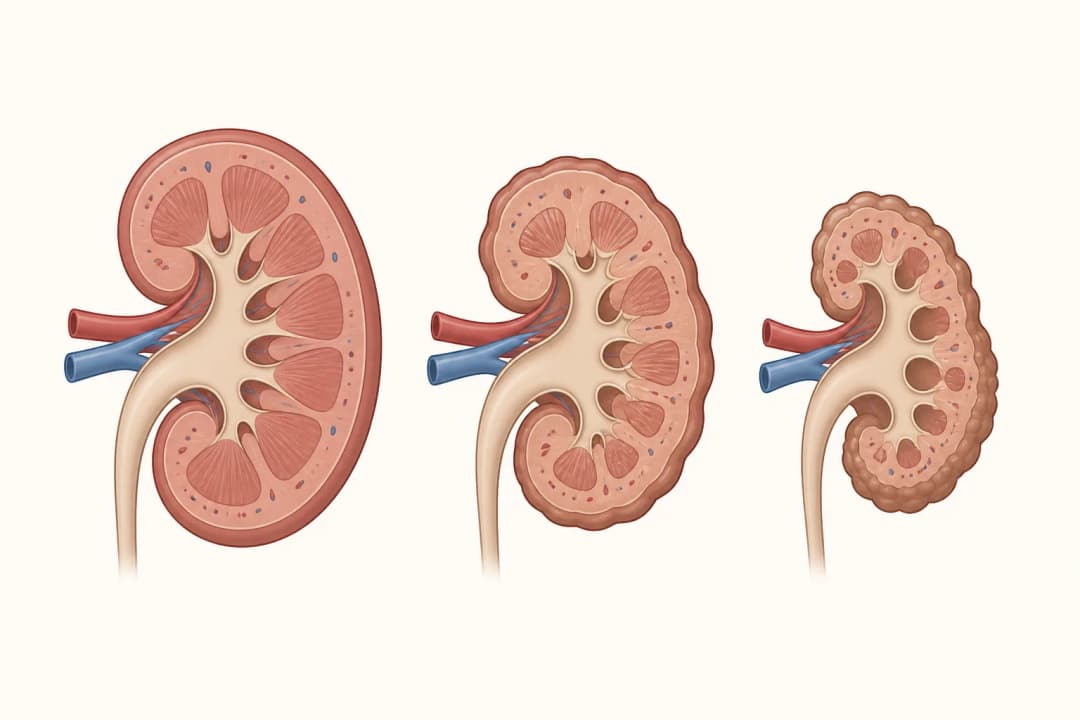
Chronic kidney disease means the kidneys have reduced or abnormal function over time. The kidneys help remove waste, balance fluid and salts, and support red blood cell production. Some people have few symptoms, so blood and urine checks are useful even when you feel well.
As kidney function changes, fatigue, excessive thirst, swelling, changes in urination, itching or restless legs may occur. Anaemia, gout and hypertension can be associated problems; type 2 diabetes is also a common condition that can affect kidney health.
How to care for your kidneys
Attend planned blood and urine checks and take medicines exactly as prescribed. Ask before using anti-inflammatory pain medicines, supplements or herbal products, because some can stress the kidneys or alter treatment. Follow the eating, fluid and salt advice tailored to your kidney function rather than copying a generic diet.
Keep blood pressure and blood glucose within the targets set for you. Bring an updated medicine list to appointments and tell clinicians about vomiting, diarrhoea or reduced drinking, which can increase the risk of dehydration.
When to seek medical help
Contact your care team promptly for much less urine, new swelling, persistent vomiting, breathlessness, chest discomfort, confusion or sudden severe weakness. Seek emergency care for severe breathlessness, chest pain, collapse or confusion. These symptoms can reflect fluid, electrolyte or kidney-function problems.
Useful questions
Ask what your latest kidney blood test and urine findings mean, which medicines need dose changes, how much fluid is suitable, and which symptoms should trigger a same-day call. Ask whether you need assessment for anaemia, gout or hypertension.
Find care
General Clinics & Polyclinics in Abu Dhabi
That answer is general. If you want it applied to your own case, these are licensed general clinics & polyclinics listed in Abu Dhabi.
27 Ar Ruwwad St - Shakhbout City - MSH4 - Abu Dhabi - United Arab Emirates
Accepts: Daman, Thiqa, Cigna, MetLife +20 more
Al Ruwais, Al Dhafrah
Accepts: Daman, Thiqa, AXA, Cigna +16 more
Al Bahyah - Al Bahyah Old - Abu Dhabi - United Arab Emirates
Accepts: Daman, Thiqa, Cigna, Allianz Care +18 more
Abu Dhabi
Accepts: Daman, Thiqa, AXA, Cigna +27 more
Ordered by verification status and how complete each clinic's public record is, then alphabetically. This is a directory listing, not a ranking — Zavis does not rate or recommend providers.
A factual listing drawn from the DHA, DOH and MOHAP licence registers. It is not a referral, an endorsement, or advice that any of these providers is right for you.
Questions people ask
Can chronic kidney disease improve?
The outlook depends on its cause and stage. Treating contributing conditions and avoiding kidney stress can help preserve function.
Should I change how much I drink?
Not automatically. Fluid advice depends on kidney function, swelling, urine output and other conditions, so follow your clinician’s plan.
Related
Related reading
Keep reading
Medical disclaimer. This page is general health information, not medical advice, and it cannot diagnose you. Always consult a licensed healthcare provider about your own symptoms and treatment. In an emergency in the UAE, call 998 for an ambulance.