
I pulled my groin muscle: what can I do?
Short answer
If you have pulled your groin muscle, stop the provoking activity, keep comfortable movement, and progress to strengthening only as pain and control improve.
This answers one question. It is not a diagnosis and does not replace an assessment by a licensed doctor.
At a glance
- First action
- Stop the painful activity and limit demanding walking
- Next phase
- Gentle motion followed by controlled strengthening
- Sport return
- Rehearse speed and direction changes progressively
What the injury may involve
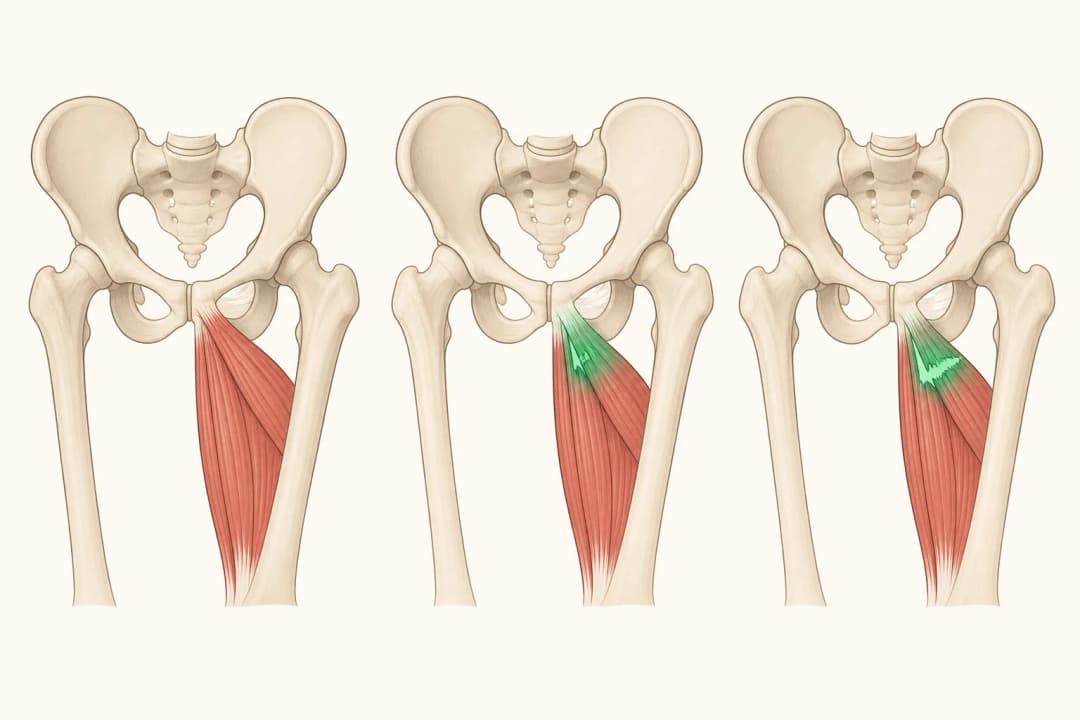
A groin strain commonly affects the adductor muscles on the inner thigh, which help bring the leg inward and stabilise the pelvis. It may occur with a sprint, kick, wide step, slide, or sudden change of direction. Pain can appear when walking quickly, climbing stairs, spreading the legs, or squeezing them together. Groin Pain is a symptom with several possible causes, so a clinician may also consider the hip, pubic region, abdomen, or nerve-related pain.
A measured recovery plan
Stop sport and reduce painful walking demands at first. Use relative rest rather than prolonged bed rest, and try a wrapped cold pack if it reduces recent soreness. Gentle hip movement can maintain mobility, but avoid forcing the stretch or repeatedly testing the injury. When basic movements are easier, begin controlled adductor and hip strengthening. Exercise Therapy can be adjusted to your current tolerance. If your goal includes running or competition, Sports Physiotherapy and a Return-to-Sport Programme can guide acceleration, cutting, kicking, and fatigue-related tasks before full participation.
When to get medical help
Arrange an assessment when you cannot walk normally, pain is not settling, bruising is spreading, or the injury keeps recurring. Seek urgent care for a visible deformity, sudden major weakness, numbness, a cold or pale leg, rapidly increasing swelling, or severe pain after a collision. Groin symptoms with abdominal pain, vomiting, fever, or testicular pain require prompt assessment rather than self-treatment.
Questions worth asking
Ask how much walking is appropriate, which exercises fit the current stage, what pain response is acceptable, and what functional tests should be passed before returning to sport.
Find care
General Clinics & Polyclinics in Abu Dhabi
That answer is general. If you want it applied to your own case, these are licensed general clinics & polyclinics listed in Abu Dhabi.
27 Ar Ruwwad St - Shakhbout City - MSH4 - Abu Dhabi - United Arab Emirates
Accepts: Daman, Thiqa, Cigna, MetLife +20 more
Al Ruwais, Al Dhafrah
Accepts: Daman, Thiqa, AXA, Cigna +16 more
Al Bahyah - Al Bahyah Old - Abu Dhabi - United Arab Emirates
Accepts: Daman, Thiqa, Cigna, Allianz Care +18 more
Abu Dhabi
Accepts: Daman, Thiqa, AXA, Cigna +27 more
Ordered by verification status and how complete each clinic's public record is, then alphabetically. This is a directory listing, not a ranking — Zavis does not rate or recommend providers.
A factual listing drawn from the DHA, DOH and MOHAP licence registers. It is not a referral, an endorsement, or advice that any of these providers is right for you.
Questions people ask
Can ice cure a groin strain?
Cold may reduce discomfort, but it does not rebuild muscle capacity. Recovery also requires gradual movement and loading when tolerated.
What if the pain returns during strengthening?
Reduce the exercise range, resistance, or volume and reassess the response. Sharp pain, increasing weakness, or worsening symptoms warrants clinical advice.
Related
Related reading
Keep reading
Medical disclaimer. This page is general health information, not medical advice, and it cannot diagnose you. Always consult a licensed healthcare provider about your own symptoms and treatment. In an emergency in the UAE, call 998 for an ambulance.