
What should you know about hypertrichosis genetics?
Short answer
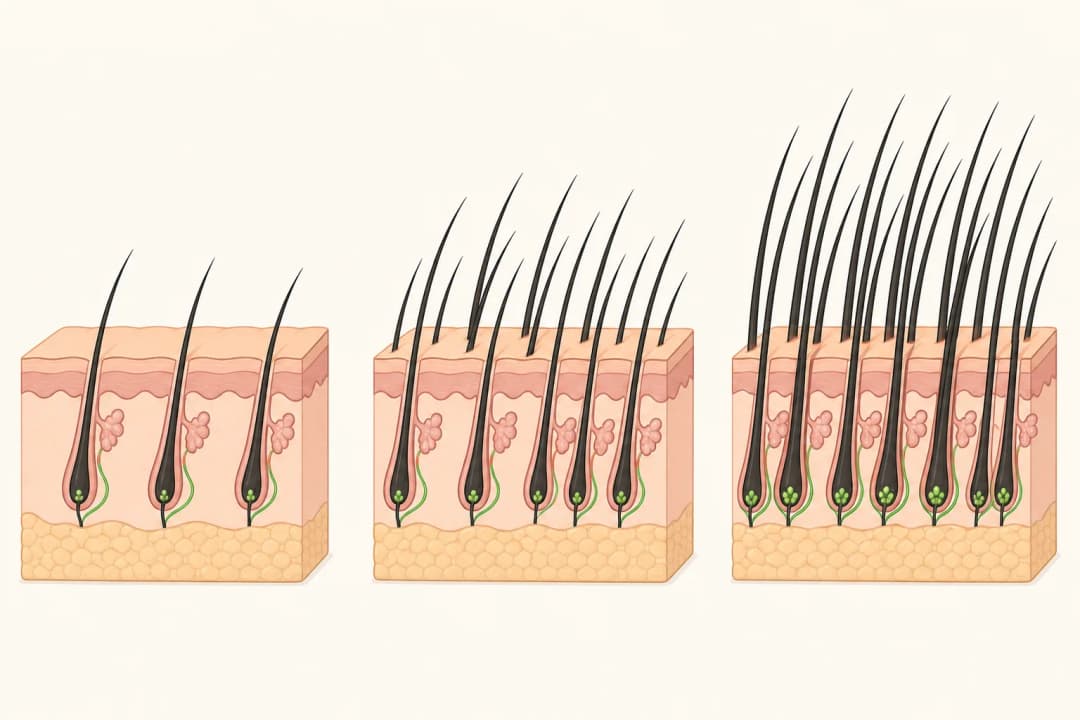
Genetics can contribute to hypertrichosis, particularly when excessive hair growth begins early or appears in several relatives, but family history is not required.
This answers one question. It is not a diagnosis and does not replace an assessment by a licensed doctor.
At a glance
- Family pattern
- May support an inherited explanation
- Family history absent
- Does not exclude hypertrichosis
- Useful record
- Onset, distribution, medicines, and changes
How inheritance may fit
Inherited hypertrichosis may follow a pattern within a family, start in childhood, and affect a defined distribution or broader body areas. A family member can have a different degree or pattern. A person may also develop hypertrichosis because of a medicine, a health condition, or an unexplained change, so the absence of affected relatives does not rule out the diagnosis.
A clinician asks when the growth began, whether it was present at birth, which relatives are affected, and whether other physical changes occurred. Genetic testing is not automatically needed and is considered in selected situations.
Steps for understanding your pattern
Write down the age at onset, body areas involved, medicines and supplements, and any changes over time. Ask relatives about similar hair growth without assuming that a shared trait proves a diagnosis. A dermatology assessment can distinguish a stable inherited pattern from new growth that warrants medical evaluation. For appearance, laser hair removal or electrolysis can be discussed after skin and hair characteristics are reviewed.
When to seek care
Seek assessment for sudden or rapidly increasing hair, a new localized patch with a changing mole or lump, or associated symptoms such as weakness, unexplained weight change, voice deepening, or menstrual disruption. A longstanding stable family pattern may be less urgent, but it still merits review if the diagnosis has never been confirmed.
Questions for your doctor
Does my pattern suggest inherited hypertrichosis or another cause? Would genetic counselling or testing change my care? Which relatives’ history would be useful? Should I have any medical tests before choosing hair removal?
Find care
General Clinics & Polyclinics in Abu Dhabi
That answer is general. If you want it applied to your own case, these are licensed general clinics & polyclinics listed in Abu Dhabi.
27 Ar Ruwwad St - Shakhbout City - MSH4 - Abu Dhabi - United Arab Emirates
Accepts: Daman, Thiqa, Cigna, MetLife +20 more
Al Ruwais, Al Dhafrah
Accepts: Daman, Thiqa, AXA, Cigna +16 more
Al Bahyah - Al Bahyah Old - Abu Dhabi - United Arab Emirates
Accepts: Daman, Thiqa, Cigna, Allianz Care +18 more
Abu Dhabi
Accepts: Daman, Thiqa, AXA, Cigna +27 more
Ordered by verification status and how complete each clinic's public record is, then alphabetically. This is a directory listing, not a ranking — Zavis does not rate or recommend providers.
A factual listing drawn from the DHA, DOH and MOHAP licence registers. It is not a referral, an endorsement, or advice that any of these providers is right for you.
Questions people ask
Is hypertrichosis always inherited?
No. It can be inherited, medication-related, associated with another condition, or unexplained.
Should my children be tested?
Testing is individual. A clinician or genetic counsellor can interpret the family pattern and explain whether testing would help.
Related
Related reading
Keep reading
Medical disclaimer. This page is general health information, not medical advice, and it cannot diagnose you. Always consult a licensed healthcare provider about your own symptoms and treatment. In an emergency in the UAE, call 998 for an ambulance.