
How is Osgood-Schlatter disease different in children?
Short answer
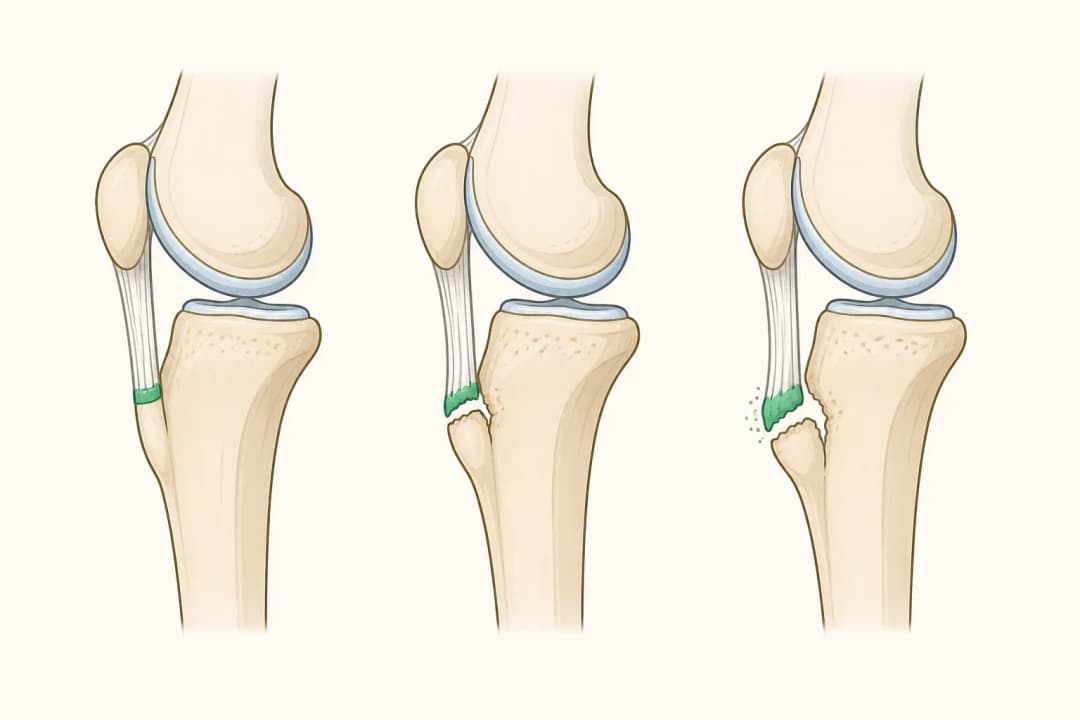
In children, Osgood-Schlatter disease involves a developing knee attachment that becomes sore when repeated activity pulls on the upper shin.
This answers one question. It is not a diagnosis and does not replace an assessment by a licensed doctor.
At a glance
- Pain location
- Front of the knee, over the bump below the kneecap
- Child-friendly plan
- Comfortable movement with gradual return to loading
How it can look in a child
The pain is usually at the front of the knee, over the firm bump just below the kneecap. It may appear during a period of growth and become more noticeable after running, jumping, climbing or kneeling. Some children describe soreness rather than sharp pain and may avoid sport, stairs or sitting on their knees. The knee may look otherwise well. Because children may find it difficult to describe symptoms precisely, a clinician should consider the location, activity pattern, walking and any injury.
Helping the child stay active
Let the child use pain as a guide: reduce activities that cause limping or continuing soreness, but encourage comfortable movement. Cold packs wrapped in cloth can soothe the area after activity. A clinician or physiotherapist can teach gentle thigh and calf flexibility work and progressive leg strength. Tell teachers and coaches about temporary limits, avoid repeated kneeling when it hurts, and return to sport in stages rather than in one jump.
When medical review is needed
Seek prompt assessment after a fall or collision, or when the child cannot bear weight, has substantial swelling, fever, redness, night pain or a locked knee. Arrange a review if pain is persistent, worsening, causes a limp or stops normal play. These features may point to a different or additional problem.
Questions for your doctor
Ask how much activity is suitable, which exercises fit the child’s age and symptoms, and what signs mean sport should stop. Ask when a follow-up is needed if the knee remains painful despite reducing aggravating activity.
Find care
General Clinics & Polyclinics in Abu Dhabi
That answer is general. If you want it applied to your own case, these are licensed general clinics & polyclinics listed in Abu Dhabi.
27 Ar Ruwwad St - Shakhbout City - MSH4 - Abu Dhabi - United Arab Emirates
Accepts: Daman, Thiqa, Cigna, MetLife +20 more
Al Ruwais, Al Dhafrah
Accepts: Daman, Thiqa, AXA, Cigna +16 more
Al Bahyah - Al Bahyah Old - Abu Dhabi - United Arab Emirates
Accepts: Daman, Thiqa, Cigna, Allianz Care +18 more
Abu Dhabi
Accepts: Daman, Thiqa, AXA, Cigna +27 more
Ordered by verification status and how complete each clinic's public record is, then alphabetically. This is a directory listing, not a ranking — Zavis does not rate or recommend providers.
A factual listing drawn from the DHA, DOH and MOHAP licence registers. It is not a referral, an endorsement, or advice that any of these providers is right for you.
Questions people ask
Is Osgood-Schlatter disease caused by one injury?
It often develops from repeated pulling during growth, although a direct injury can cause a separate knee problem that needs assessment.
Can a child walk with it?
Many children can walk, though limping or inability to bear weight should prompt medical review rather than being pushed through.
Related
Related reading
Keep reading
Medical disclaimer. This page is general health information, not medical advice, and it cannot diagnose you. Always consult a licensed healthcare provider about your own symptoms and treatment. In an emergency in the UAE, call 998 for an ambulance.