
How long does tumour removal surgery take to work for throat cancer?
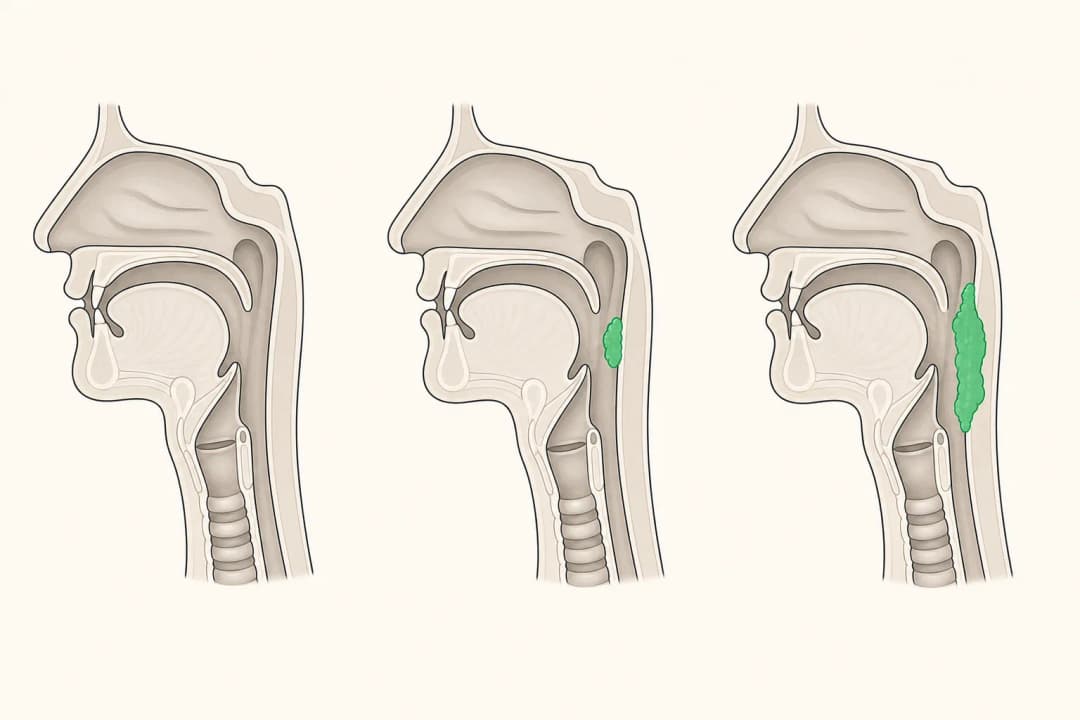
Short answer
Tumour removal surgery treats the throat tumour during the operation, while swallowing, speech, pain, and wound recovery may change over the following days and weeks.
This answers one question. It is not a diagnosis and does not replace an assessment by a licensed doctor.
At a glance
- Cancer treatment
- The tumour is removed during the operation
- Functions monitored
- Swallowing, speech, breathing, and neck movement
- Follow-up
- Reviews healing and pathology
What this means for throat cancer
The operation is planned around the tumour’s site and extent. It may involve removing tissue from the throat and, when needed, nearby lymph nodes or reconstructing an area to support swallowing and speech. The removed tissue is examined to guide the next treatment decision.
A temporary change in swallowing, voice, taste, saliva, or neck movement can occur after surgery. A speech and swallowing specialist may assess whether food and drink are safe and suggest exercises or texture changes. Some people need additional treatment after the operation, depending on the pathology and the wider treatment plan.
What to do during recovery
Follow instructions about eating, drinking, wound care, medicines, and exercises. Do not advance food textures or stop prescribed therapy until the care team confirms it is safe. Keep follow-up visits so the team can review healing, pathology, swallowing, speech, and neck function.
Ask for practical help with hydration, meals, communication, and rest while eating is difficult. Report pain that is not controlled or a new change in swallowing rather than waiting for the next routine appointment.
When to seek urgent care
Seek urgent medical help for breathing difficulty, rapidly increasing neck swelling, coughing or choking with inability to handle saliva, heavy bleeding, or sudden worsening weakness. Contact the surgical team promptly for fever, pus, wound separation, or worsening pain.
Questions for your doctor
Ask when swallowing will be tested, which foods and drinks are safe, whether speech therapy is needed, when the pathology result is expected, and whether further treatment is planned.
Questions people ask
Will swallowing return to normal immediately?
Not necessarily. Swallowing may be limited while tissues heal, and a specialist may guide exercises and food or drink changes.
Why might more treatment be discussed?
The pathology findings and tumour extent can show whether surgery should be followed by another treatment or closer monitoring.
Related
Related reading
Keep reading
Cancer care in the UAE
Hospitals & Medical Centers in Abu Dhabi
Most UAE cancer care is delivered inside hospital services rather than by standalone oncology clinics, so these are licensed hospitals & medical centers listed in Abu Dhabi. Confirm the specific cancer service exists before you travel, and know that asking for a second opinion is routine.
Ahalia Hospital Musaffah Building - Musaffah - Musaffah Industrial - Abu Dhabi - United Arab Emirates
Accepts: Daman, Thiqa, AXA, Cigna +26 more
Al Ruwais Industrial City - Abu Dhabi - United Arab Emirates
Accepts: Daman, Thiqa, AXA, Cigna +30 more
Abu Dhabi, Abu Dhabi
Accepts: Daman, Thiqa, AXA, Cigna +30 more
Second opinions are routine in cancer care and asking for one does not affect your treatment. How to arrange a second opinion in the UAE.
Ordered by verification status and how complete each clinic's public record is, then alphabetically. This is a directory listing, not a ranking — Zavis does not rate or recommend providers.
A factual listing drawn from the DHA, DOH and MOHAP licence registers. It is not a referral, an endorsement, or advice that any of these providers is right for you.
Medical disclaimer. This page is general health information, not medical advice, and it cannot diagnose you. Always consult a licensed healthcare provider about your own symptoms and treatment. In an emergency in the UAE, call 998 for an ambulance.