
How long does shockwave therapy take to work for gluteal tendinopathy?
Short answer
Shockwave therapy for gluteal tendinopathy usually works gradually, with symptoms often reassessed over several weeks alongside exercise and activity changes.
This answers one question. It is not a diagnosis and does not replace an assessment by a licensed doctor.
At a glance
- Useful early signs
- Better sleep, walking, or stair tolerance
- Core support
- Gradual hip-strengthening and load management
How improvement may show up
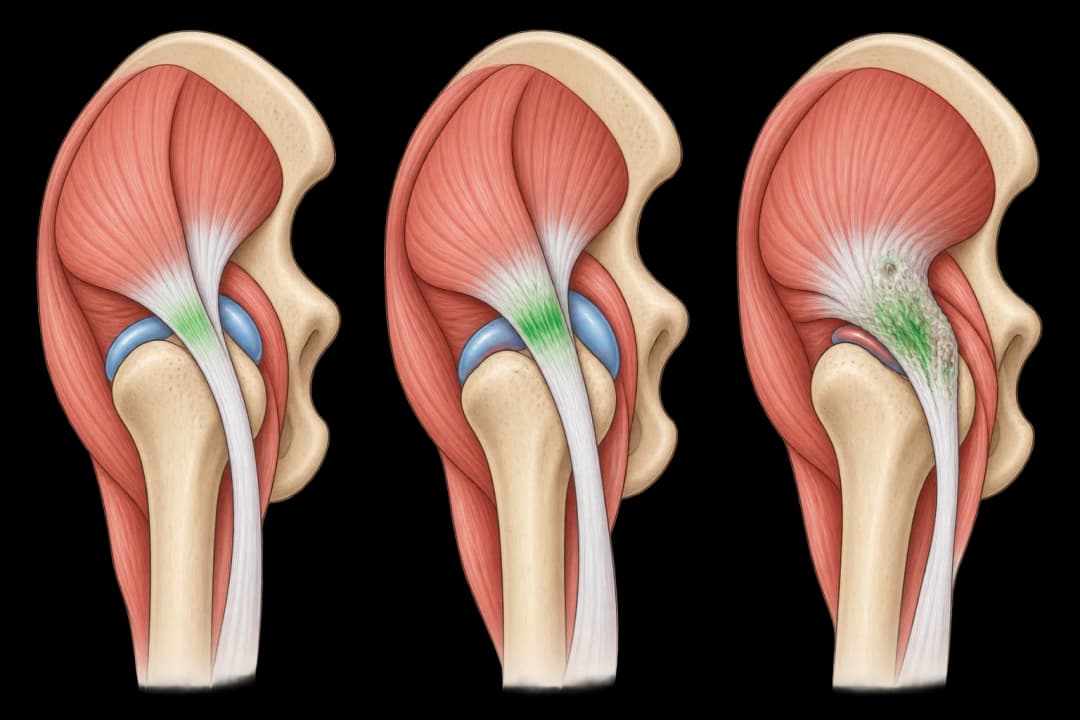
Gluteal tendinopathy affects tendons that help stabilise the hip. Shockwave treatment can leave the outer hip tender for a short time, and pain may fluctuate while the tendon adapts. Early progress may mean tolerating a longer walk, lying on the affected side for more of the night, or climbing stairs with less discomfort. A full return to running, side-stepping, or prolonged standing can take longer. The starting irritability of the tendon, sleep pressure, hip strength, and daily loading all influence the timeline.
Protecting progress
Use the plan given by your physiotherapist rather than testing the hip repeatedly. Reduce activities that compress or overload the tendon, such as lying directly on the painful side, crossing the legs for long periods, or sudden increases in hills and stairs. Keep prescribed strengthening consistent, with load increased in small stages as symptoms allow. A pillow between the knees may reduce night pressure. Record walking tolerance and next-day soreness so the programme can be adjusted sensibly.
When to seek care sooner
Report worsening night pain, new numbness, increasing weakness, or pain that remains substantially higher between sessions. Seek urgent assessment after a fall with inability to bear weight, a hot swollen hip, fever, or sudden severe pain.
Questions for your doctor
Ask which activities are currently compressing the tendon, how strengthening should progress, when side-lying or running can resume, and how treatment response will be reviewed.
Find care
General Clinics & Polyclinics in Abu Dhabi
That answer is general. If you want it applied to your own case, these are licensed general clinics & polyclinics listed in Abu Dhabi.
27 Ar Ruwwad St - Shakhbout City - MSH4 - Abu Dhabi - United Arab Emirates
Accepts: Daman, Thiqa, Cigna, MetLife +20 more
Al Ruwais, Al Dhafrah
Accepts: Daman, Thiqa, AXA, Cigna +16 more
Al Bahyah - Al Bahyah Old - Abu Dhabi - United Arab Emirates
Accepts: Daman, Thiqa, Cigna, Allianz Care +18 more
Abu Dhabi
Accepts: Daman, Thiqa, AXA, Cigna +27 more
Ordered by verification status and how complete each clinic's public record is, then alphabetically. This is a directory listing, not a ranking — Zavis does not rate or recommend providers.
A factual listing drawn from the DHA, DOH and MOHAP licence registers. It is not a referral, an endorsement, or advice that any of these providers is right for you.
Questions people ask
Is soreness after treatment expected?
Some temporary tenderness can occur, but persistent or escalating pain should be discussed with the treating clinician.
Should I stretch the outer hip?
Aggressive stretching can compress an irritable tendon; ask your physiotherapist which mobility work is suitable for your symptoms.
Related
Related reading
Keep reading
Medical disclaimer. This page is general health information, not medical advice, and it cannot diagnose you. Always consult a licensed healthcare provider about your own symptoms and treatment. In an emergency in the UAE, call 998 for an ambulance.