
How long does PRP injection take to work for patellar tendinitis?
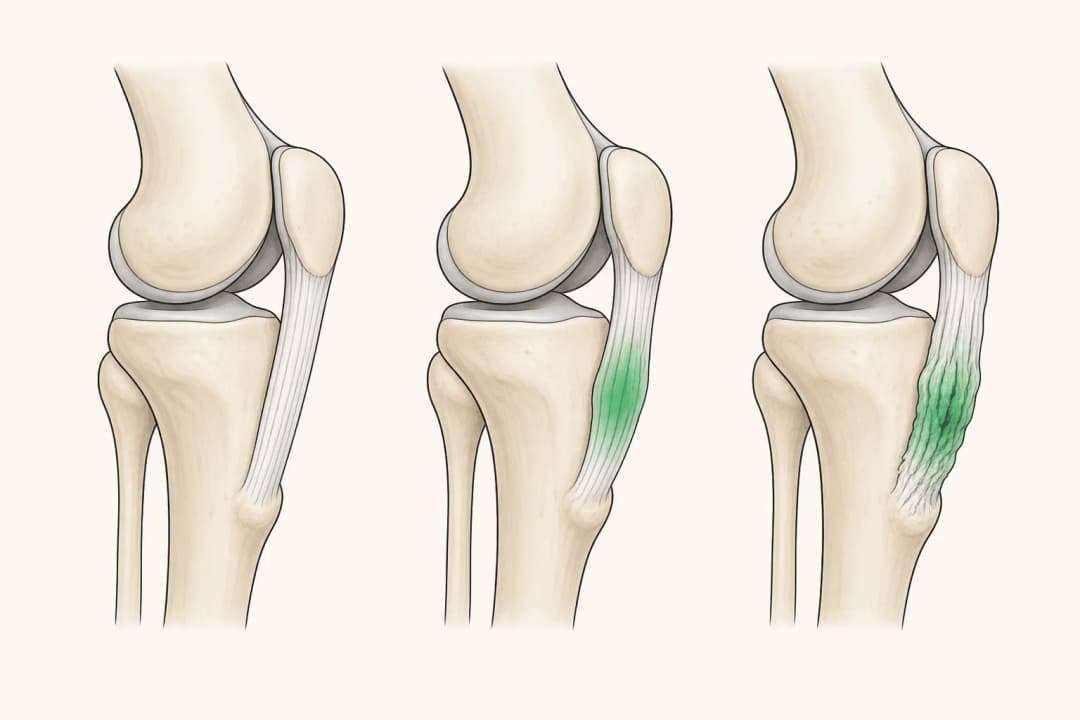
Short answer
PRP injection for patellar tendinitis may take several weeks to show meaningful improvement, with progress continuing as the tendon heals and rehabilitation advances.
This answers one question. It is not a diagnosis and does not replace an assessment by a licensed doctor.
At a glance
- Expected onset
- Improvement is usually gradual rather than immediate.
- Main support
- A carefully progressed tendon-loading programme.
- Target area
- The tendon below the kneecap.
What the timing means
The injection is intended to support the tendon’s repair environment; it is not a pain medicine that switches symptoms off immediately. Soreness around the kneecap can briefly increase after treatment. Early changes may be subtle, such as tolerating stairs or a controlled squat more comfortably, before jumping and running feel easier.
Patellar tendinitis, also called patellar tendinopathy, is affected by the tendon’s workload. Pain can improve unevenly if sport, stairs, or deep knee bending are increased too quickly. Your clinician may use examination findings and functional tasks to judge progress rather than relying on pain on one day.
How to support recovery
Follow the injection team’s advice about rest, icing, medicines, and driving. Avoid testing the knee with jumping, sprinting, or heavy leg work while it is irritable. Resume prescribed loading gradually: rehabilitation commonly starts with tolerable movements and progresses toward strengthening, landing control, and sport-specific activity.
Keep a simple record of pain, stiffness, and activities that trigger symptoms. This helps your physiotherapist adjust the load. Read more about [Patellar Tendinitis](/conditions/patellar-tendinitis/) and the procedure in [PRP Injection](/treatments/non-surgical-orthopedics/prp-injection/).
When to seek care
Contact your treating team if pain keeps intensifying, the injection site becomes increasingly red or hot, drainage appears, or you develop fever. Seek urgent assessment for marked calf swelling, new shortness of breath, inability to bear weight, or a sudden knee injury with a popping sensation and loss of function.
Questions for your doctor
Ask which activities to pause, when rehabilitation should begin, how progress will be measured, and what amount of post-injection soreness is expected. Confirm which pain medicines are suitable and when you should return if improvement has not started.
Find care
General Clinics & Polyclinics in Abu Dhabi
That answer is general. If you want it applied to your own case, these are licensed general clinics & polyclinics listed in Abu Dhabi.
27 Ar Ruwwad St - Shakhbout City - MSH4 - Abu Dhabi - United Arab Emirates
Accepts: Daman, Thiqa, Cigna, MetLife +20 more
Al Ruwais, Al Dhafrah
Accepts: Daman, Thiqa, AXA, Cigna +16 more
Al Bahyah - Al Bahyah Old - Abu Dhabi - United Arab Emirates
Accepts: Daman, Thiqa, Cigna, Allianz Care +18 more
Abu Dhabi
Accepts: Daman, Thiqa, AXA, Cigna +27 more
Ordered by verification status and how complete each clinic's public record is, then alphabetically. This is a directory listing, not a ranking — Zavis does not rate or recommend providers.
A factual listing drawn from the DHA, DOH and MOHAP licence registers. It is not a referral, an endorsement, or advice that any of these providers is right for you.
Questions people ask
Can PRP hurt before it helps?
Temporary soreness can occur after the injection. Persistent or worsening pain should be discussed with the treating team.
Does PRP replace physiotherapy?
No. Rehabilitation is commonly used to rebuild tendon capacity and guide a safe return to activity.
Related
Related reading
Keep reading
Medical disclaimer. This page is general health information, not medical advice, and it cannot diagnose you. Always consult a licensed healthcare provider about your own symptoms and treatment. In an emergency in the UAE, call 998 for an ambulance.