
How long does physiotherapy take to work for gluteal tendinopathy?
Short answer
Gluteal tendinopathy may feel more manageable after several weeks of physiotherapy, while tendon strength and confidence with heavier activity often build over several months.
This answers one question. It is not a diagnosis and does not replace an assessment by a licensed doctor.
At a glance
- Symptom change
- Daily activities may feel easier after several weeks.
- Tendon adaptation
- Strength and heavier-load confidence often take several months.
- Key guide
- Use the activity and next-day response to adjust load.
What the treatment is changing
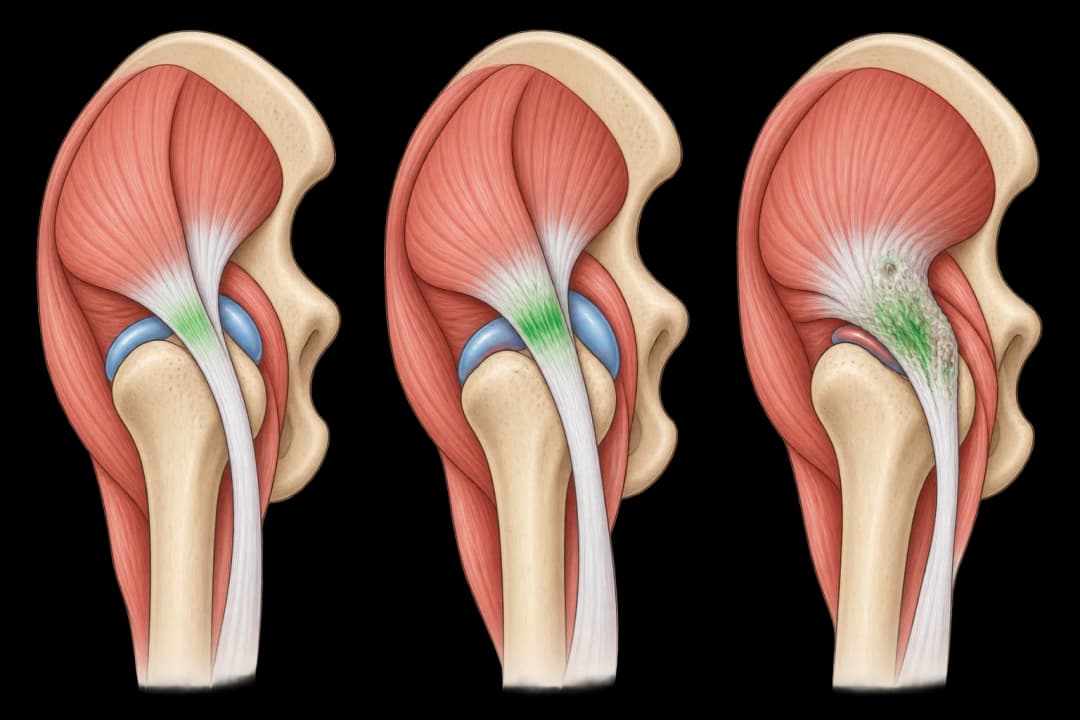
This condition affects the tendons of the buttock muscles near the outer hip. Compression and sudden increases in walking, hills, stairs, running or side-lying can aggravate symptoms. Physiotherapy commonly begins by reducing provocative load, then builds hip and leg strength in stages. Less pain while lying on the sore side or climbing stairs may come before full tolerance for sport. A temporary flare can happen when the tendon is asked to do more than it currently tolerates.
Managing load between visits
Follow the exercise progression rather than testing the tendon with a sudden return to long walks or hills. Avoid prolonged hip-hanging positions and choose a comfortable sleeping arrangement if side-lying increases pain. Keep track of symptoms during activity and the following day; that response helps your therapist set the next load. Report changes in work, sport or walking demands. See [Gluteal Tendinopathy](/conditions/gluteal-tendinopathy/) and [Physiotherapy](/treatments/physiotherapy-and-rehabilitation/physiotherapy/).
When symptoms need assessment
Arrange a review if pain keeps increasing, walking becomes difficult, or symptoms are not settling despite an adjusted programme. Seek prompt care after a fall, with sudden severe pain, inability to bear weight, marked bruising, fever, or new numbness or weakness. These features may point to an injury or another source of hip pain rather than a simple training flare.
Useful questions
Which activities are compressing or overloading my tendon? What level of next-day soreness is acceptable? How should I progress from isometric work to heavier strengthening? When can I resume hills, running or side-lying? Could my back or hip joint also be contributing?
Find care
General Clinics & Polyclinics in Abu Dhabi
That answer is general. If you want it applied to your own case, these are licensed general clinics & polyclinics listed in Abu Dhabi.
27 Ar Ruwwad St - Shakhbout City - MSH4 - Abu Dhabi - United Arab Emirates
Accepts: Daman, Thiqa, Cigna, MetLife +20 more
Al Ruwais, Al Dhafrah
Accepts: Daman, Thiqa, AXA, Cigna +16 more
Al Bahyah - Al Bahyah Old - Abu Dhabi - United Arab Emirates
Accepts: Daman, Thiqa, Cigna, Allianz Care +18 more
Abu Dhabi
Accepts: Daman, Thiqa, AXA, Cigna +27 more
Ordered by verification status and how complete each clinic's public record is, then alphabetically. This is a directory listing, not a ranking — Zavis does not rate or recommend providers.
A factual listing drawn from the DHA, DOH and MOHAP licence registers. It is not a referral, an endorsement, or advice that any of these providers is right for you.
Questions people ask
Should I rest completely with gluteal tendinopathy?
Complete rest is not usually the long-term aim; symptoms are commonly managed by reducing aggravating load while progressively strengthening.
Why does the pain return after I improve?
A sudden jump in hills, stairs, running or walking can exceed current tendon capacity, so progression may need to slow.
Related
Related reading
Keep reading
Medical disclaimer. This page is general health information, not medical advice, and it cannot diagnose you. Always consult a licensed healthcare provider about your own symptoms and treatment. In an emergency in the UAE, call 998 for an ambulance.