
How long do oral antibiotics take to work for central centrifugal cicatricial alopecia?
Short answer
Oral antibiotics for acne are not a dependable timeline for central centrifugal cicatricial alopecia; scalp inflammation and hair loss need diagnosis-specific review.
This answers one question. It is not a diagnosis and does not replace an assessment by a licensed doctor.
At a glance
- Main goal
- Control active scalp inflammation and protect remaining follicles.
- Hair changes
- Density can take time to reflect control, and scarred follicles may not regrow.
What the timing can and cannot show
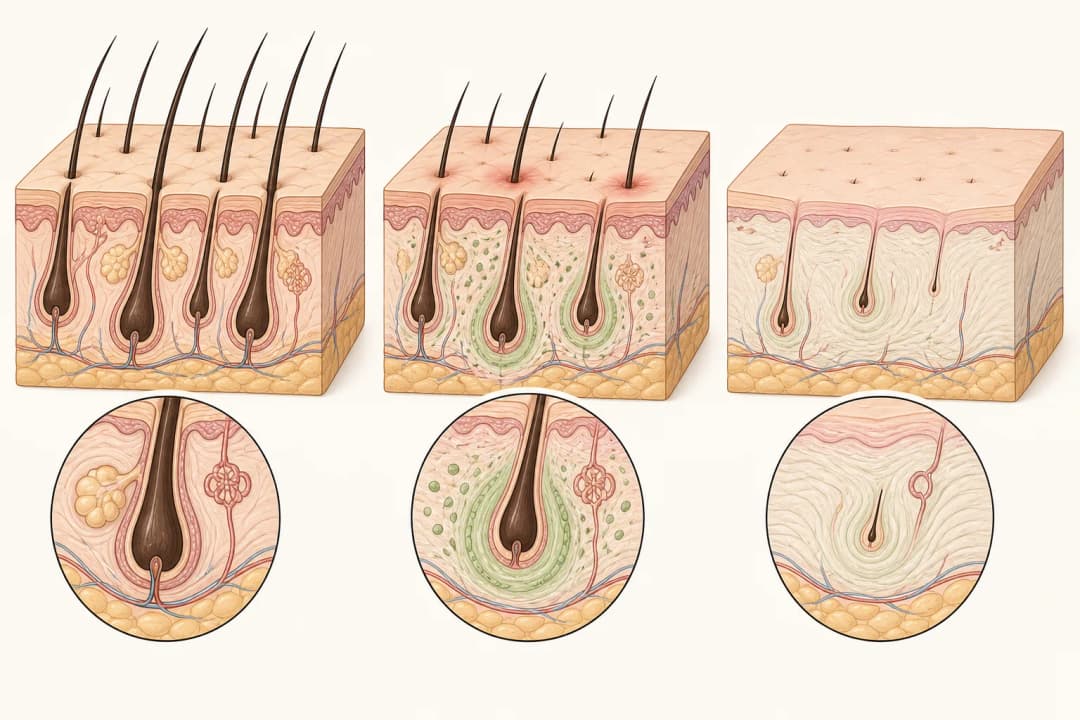
Central centrifugal cicatricial alopecia, or CCCA, is a scarring form of hair loss that often begins near the crown and can expand outward. Active inflammation may cause scalp tenderness, itching, burning, or increased shedding. An acne antibiotic may be considered in some anti-inflammatory treatment plans, but a medicine chosen for acne should not be used to predict whether CCCA is controlled.
The key early goal is usually to quiet active inflammation and protect remaining follicles. Hair density may change slowly, and areas where follicles have scarred may not regrow. A scalp examination can distinguish active disease from inactive scarring and other causes of hair loss.
Practical next steps
Arrange dermatology follow-up and take the medicine only as prescribed. Ask whether scalp photographs or another assessment will be used to track the crown, tenderness, shedding, and new areas. Avoid tight hairstyles, harsh chemical processing, heat injury, and scratching until your scalp has been reviewed. Use gentle hair care and report medication reactions rather than changing the dose yourself.
Mention family patterns of hair loss, recent styling practices, and any scalp symptoms. Those details can change the evaluation and treatment plan.
When to seek care
Seek prompt review if hair loss is spreading, the scalp becomes painful or crusted, pustules or drainage appear, or the area feels increasingly inflamed. Get urgent help for facial swelling, breathing difficulty, or a severe reaction after medication. Rapid progression should not be managed by waiting for an acne-treatment milestone.
Questions for your doctor
Ask whether inflammation is still active, how response will be monitored, whether the medicine is being used for an anti-inflammatory purpose, and which hair practices should be paused while treatment is adjusted.
Find care
General Clinics & Polyclinics in Abu Dhabi
That answer is general. If you want it applied to your own case, these are licensed general clinics & polyclinics listed in Abu Dhabi.
27 Ar Ruwwad St - Shakhbout City - MSH4 - Abu Dhabi - United Arab Emirates
Accepts: Daman, Thiqa, Cigna, MetLife +20 more
Al Ruwais, Al Dhafrah
Accepts: Daman, Thiqa, AXA, Cigna +16 more
Al Bahyah - Al Bahyah Old - Abu Dhabi - United Arab Emirates
Accepts: Daman, Thiqa, Cigna, Allianz Care +18 more
Abu Dhabi
Accepts: Daman, Thiqa, AXA, Cigna +27 more
Ordered by verification status and how complete each clinic's public record is, then alphabetically. This is a directory listing, not a ranking — Zavis does not rate or recommend providers.
A factual listing drawn from the DHA, DOH and MOHAP licence registers. It is not a referral, an endorsement, or advice that any of these providers is right for you.
Questions people ask
Does less itching prove that CCCA has stopped?
Not necessarily; your clinician also needs to assess shedding, scalp changes, and disease activity.
Will an acne antibiotic regrow hair lost to scarring?
It is not expected to reverse established follicle scarring; treatment focuses on active inflammation.
Related
Related reading
Keep reading
Medical disclaimer. This page is general health information, not medical advice, and it cannot diagnose you. Always consult a licensed healthcare provider about your own symptoms and treatment. In an emergency in the UAE, call 998 for an ambulance.