
How long does IVF take to work for polycystic ovary syndrome?
Short answer
IVF for polycystic ovary syndrome follows several treatment stages, so the time to pregnancy depends on response, safety checks, and transfer timing.
This answers one question. It is not a diagnosis and does not replace an assessment by a licensed doctor.
At a glance
- Key variable
- How the ovaries respond to stimulation medicines
- Possible scheduling choice
- Embryos may be frozen for a later transfer
Why PCOS can change the timeline
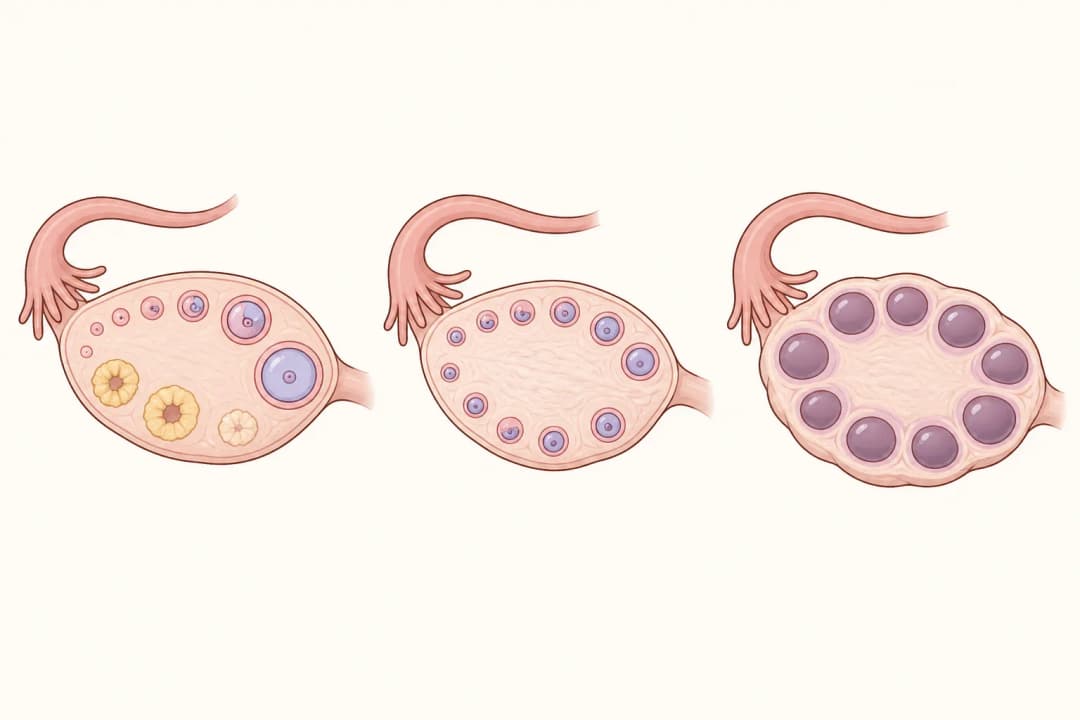
PCOS can affect ovulation and the way the ovaries respond to stimulation medicines. The fertility team may adjust medicine doses and use frequent scans and blood tests to guide treatment. If the ovaries respond strongly, the team may recommend freezing embryos and delaying transfer to support a safer plan. This means a positive pregnancy test may follow a later frozen transfer rather than the egg-collection cycle.
The process usually involves preparation, ovarian stimulation, monitoring, egg collection, fertilisation, embryo development, transfer, and pregnancy testing. PCOS does not create one fixed IVF schedule. Your age, ovarian reserve, menstrual pattern, previous treatment, and clinic protocol all influence the calendar. Read the IVF and PCOS pages together to prepare for your appointment.
Preparing for treatment
Tell the team about irregular periods, medicines, diabetes or thyroid problems, and any previous reaction to fertility drugs. Keep every monitoring appointment because scan findings can change the plan. Ask how the clinic will reduce the chance of excessive ovarian response and whether a fresh or frozen transfer is planned. Follow medication instructions and report new symptoms rather than changing doses yourself.
When to get urgent help
Call your clinic urgently for severe abdominal pain, rapidly increasing swelling, repeated vomiting, faintness, or breathing difficulty during or after stimulation. These symptoms can signal a complication requiring assessment. Seek emergency care if symptoms are severe or you cannot reach the fertility team.
Questions for your doctor
Ask: How might my PCOS affect stimulation? What monitoring will I need? What would make you delay transfer? How will you decide between fresh and frozen transfer? Which symptoms require same-day advice?
Find care
General Clinics & Polyclinics in Abu Dhabi
That answer is general. If you want it applied to your own case, these are licensed general clinics & polyclinics listed in Abu Dhabi.
27 Ar Ruwwad St - Shakhbout City - MSH4 - Abu Dhabi - United Arab Emirates
Accepts: Daman, Thiqa, Cigna, MetLife +20 more
Al Ruwais, Al Dhafrah
Accepts: Daman, Thiqa, AXA, Cigna +16 more
Al Bahyah - Al Bahyah Old - Abu Dhabi - United Arab Emirates
Accepts: Daman, Thiqa, Cigna, Allianz Care +18 more
Abu Dhabi
Accepts: Daman, Thiqa, AXA, Cigna +27 more
Ordered by verification status and how complete each clinic's public record is, then alphabetically. This is a directory listing, not a ranking — Zavis does not rate or recommend providers.
A factual listing drawn from the DHA, DOH and MOHAP licence registers. It is not a referral, an endorsement, or advice that any of these providers is right for you.
Questions people ask
Does PCOS mean IVF will take longer?
Not always, but dose adjustments, extra monitoring, or a later frozen transfer can change the schedule.
Why might embryo transfer be delayed with PCOS?
A clinic may delay transfer when ovarian response or hormone levels make a later transfer the safer option.
Related
Related reading
Keep reading
Medical disclaimer. This page is general health information, not medical advice, and it cannot diagnose you. Always consult a licensed healthcare provider about your own symptoms and treatment. In an emergency in the UAE, call 998 for an ambulance.