
How long does antibiotic treatment take to work for giardiasis?
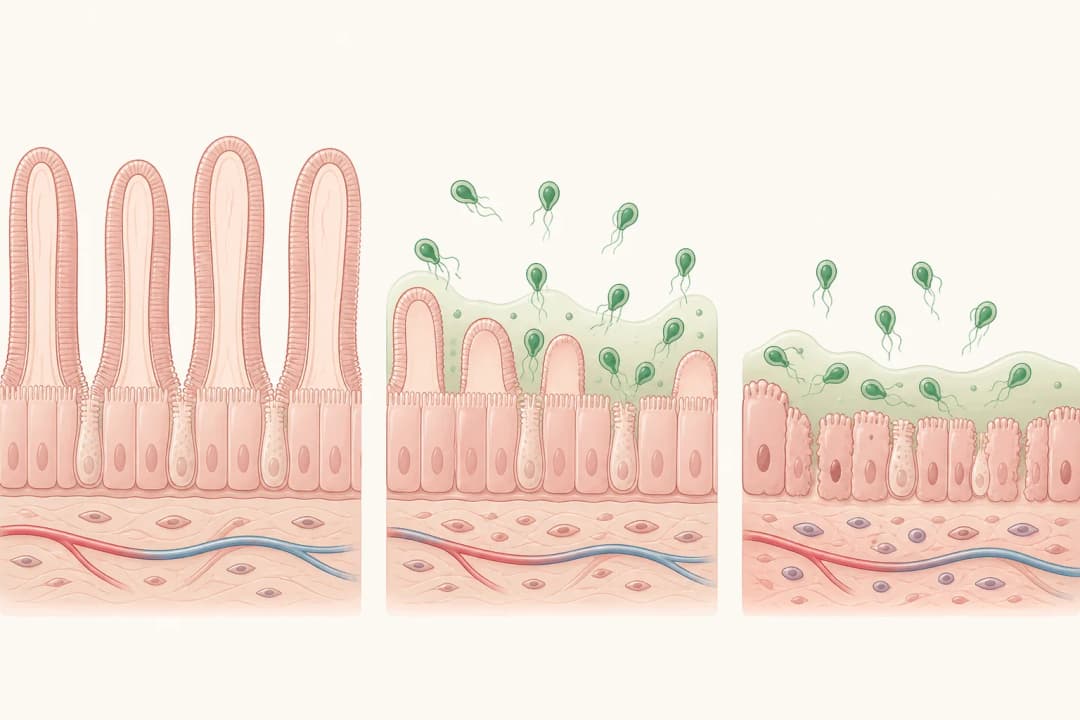
Short answer
Giardiasis symptoms often begin to ease during or soon after the prescribed treatment course, but diarrhoea, bloating, and altered bowel habits can continue while the intestine recovers.
This answers one question. It is not a diagnosis and does not replace an assessment by a licensed doctor.
At a glance
- Bowel recovery
- Loose stools and bloating may persist after the infection starts responding.
- Prevention
- Handwashing and safe water reduce spread and reinfection risk.
Why symptoms may linger
The infection can irritate the small intestine, so stool changes may outlast the active infection. Temporary difficulty digesting certain foods can also leave gas or loose stools after treatment. Persistent symptoms may reflect reinfection, treatment failure, or another digestive problem, and they deserve review rather than repeated self-treatment.
Supporting recovery
Take the prescribed medicine exactly as directed and drink fluids regularly. Wash hands carefully after using the toilet and before preparing food; clean shared bathroom surfaces and avoid preparing food for others while diarrhoea continues. Avoid swallowing untreated water, and ask a clinician how to manage milk or other foods if they worsen symptoms. Read about [Giardiasis](/conditions/giardiasis/) and [Antibiotic Treatment](/treatments/medical-management/antibiotic-treatment/).
When a review is needed
Contact a clinician if diarrhoea does not settle after treatment, returns, or prevents normal drinking and eating. Seek urgent care for signs of dehydration such as very little urine, marked dizziness, confusion, or inability to keep fluids down. Blood in the stool, severe abdominal pain, or a high fever also needs prompt assessment.
Questions to bring
Ask whether you need repeat stool testing, when it is safe to return to food preparation or childcare, which fluids are suitable, and whether ongoing symptoms suggest temporary food intolerance or another cause.
Find care
General Clinics & Polyclinics in Abu Dhabi
That answer is general. If you want it applied to your own case, these are licensed general clinics & polyclinics listed in Abu Dhabi.
27 Ar Ruwwad St - Shakhbout City - MSH4 - Abu Dhabi - United Arab Emirates
Accepts: Daman, Thiqa, Cigna, MetLife +20 more
Al Ruwais, Al Dhafrah
Accepts: Daman, Thiqa, AXA, Cigna +16 more
Al Bahyah - Al Bahyah Old - Abu Dhabi - United Arab Emirates
Accepts: Daman, Thiqa, Cigna, Allianz Care +18 more
Abu Dhabi
Accepts: Daman, Thiqa, AXA, Cigna +27 more
Ordered by verification status and how complete each clinic's public record is, then alphabetically. This is a directory listing, not a ranking — Zavis does not rate or recommend providers.
A factual listing drawn from the DHA, DOH and MOHAP licence registers. It is not a referral, an endorsement, or advice that any of these providers is right for you.
Questions people ask
What if diarrhoea continues after the course?
Arrange a clinical review to check for ongoing infection, reinfection, treatment failure, or another digestive cause.
Can I prepare food for others?
Avoid doing so while diarrhoea continues and follow local medical advice about returning to food handling.
Related
Related reading
Keep reading
Medical disclaimer. This page is general health information, not medical advice, and it cannot diagnose you. Always consult a licensed healthcare provider about your own symptoms and treatment. In an emergency in the UAE, call 998 for an ambulance.