
How is cracked skin treated?
Short answer
Cracked skin is treated with regular emollient therapy, protection from irritants, and care for any underlying skin condition.
This answers one question. It is not a diagnosis and does not replace an assessment by a licensed doctor.
At a glance
- Moisturise
- Apply an emollient after washing and whenever tightness returns.
- Protect
- Reduce detergents, friction, pressure, and repeated wet-dry cycles.
- Escalate
- Painful, infected, deep, or persistent fissures need assessment.
What may be causing the cracks
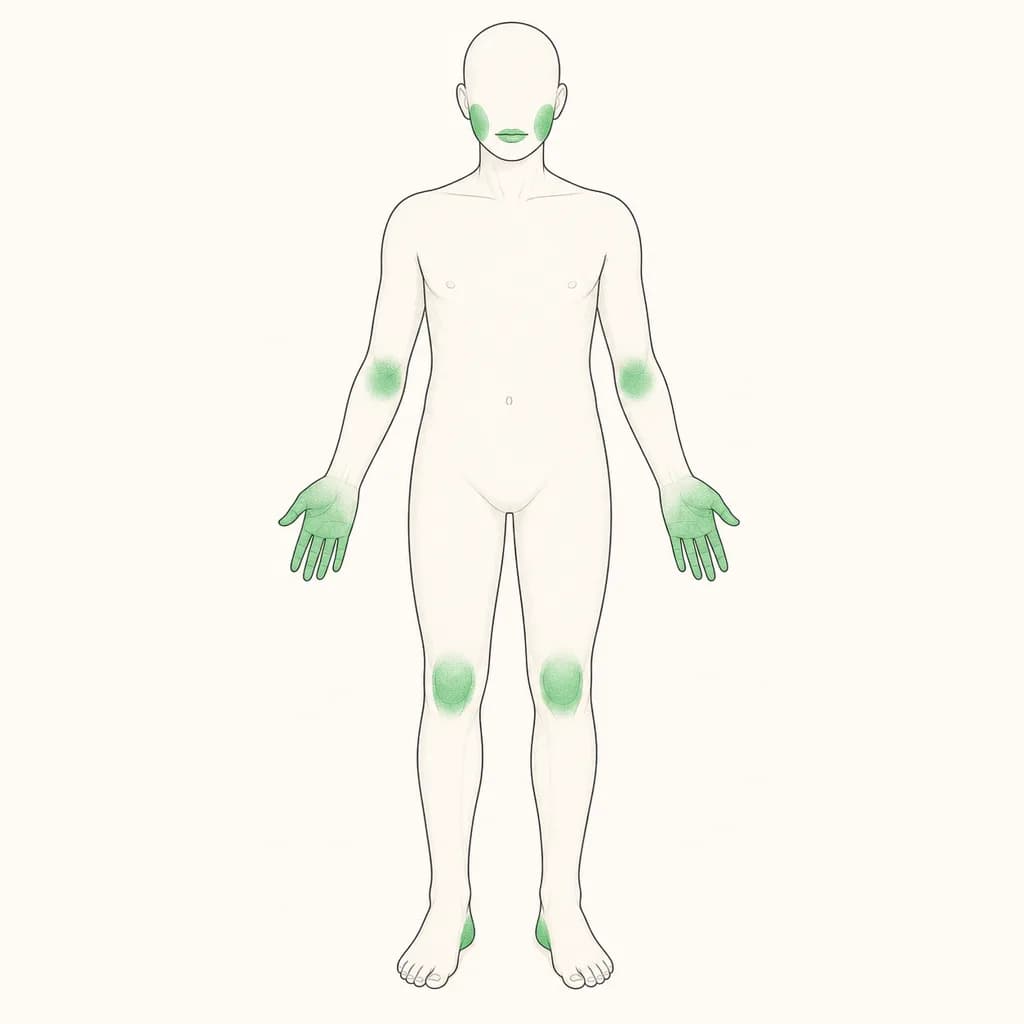
Fissures form when the outer skin barrier becomes dry, thickened, inflamed, or repeatedly exposed to water, detergents, cold air, or friction. Cracked heels often need softening and protection from pressure. Hand eczema can affect the fingers and palms, while atopic dermatitis or psoriasis may cause persistent scaling and splits elsewhere.
A clinician may recommend a thick moisturising ointment, a protective dressing, or prescription treatment for inflammation. The best choice depends on the site, depth, bleeding, itch, and suspected cause.
Steps that support healing
Apply an emollient soon after washing and reapply whenever the skin feels tight. Use lukewarm water, a gentle cleanser, and gloves that keep irritating substances away from the hands. For feet, well-fitting shoes and soft socks reduce rubbing. Do not pull loose skin or file a painful fissure; protect it with a clean dressing and keep the area from reopening.
When to seek care
Seek medical advice when cracks are deep, repeatedly bleeding, very painful, or not improving with careful moisturising. Prompt assessment is needed for spreading redness, warmth, swelling, pus, fever, or difficulty using a hand or walking. Cracking with a new widespread rash or significant inflammation may require treatment beyond moisturiser.
Questions for your doctor
Ask which emollient texture suits the area, how often to apply it, and whether a barrier dressing is appropriate. Ask whether your pattern fits hand eczema, psoriasis, atopic dermatitis, or cracked heels, and which warning signs should bring you back.
Find care
General Clinics & Polyclinics in Abu Dhabi
That answer is general. If you want it applied to your own case, these are licensed general clinics & polyclinics listed in Abu Dhabi.
27 Ar Ruwwad St - Shakhbout City - MSH4 - Abu Dhabi - United Arab Emirates
Accepts: Daman, Thiqa, Cigna, MetLife +20 more
Al Ruwais, Al Dhafrah
Accepts: Daman, Thiqa, AXA, Cigna +16 more
Al Bahyah - Al Bahyah Old - Abu Dhabi - United Arab Emirates
Accepts: Daman, Thiqa, Cigna, Allianz Care +18 more
Abu Dhabi
Accepts: Daman, Thiqa, AXA, Cigna +27 more
Ordered by verification status and how complete each clinic's public record is, then alphabetically. This is a directory listing, not a ranking — Zavis does not rate or recommend providers.
A factual listing drawn from the DHA, DOH and MOHAP licence registers. It is not a referral, an endorsement, or advice that any of these providers is right for you.
Questions people ask
What is useful for cracked skin?
A thick emollient applied regularly, gentle washing, and protection from friction can support the skin barrier.
When do cracks need medical treatment?
Arrange care for deep or recurring fissures, marked inflammation, bleeding, or signs such as pus, spreading redness, or fever.
Related
Related reading
Keep reading
Medical disclaimer. This page is general health information, not medical advice, and it cannot diagnose you. Always consult a licensed healthcare provider about your own symptoms and treatment. In an emergency in the UAE, call 998 for an ambulance.