
How is patellar tendinitis treated?
Short answer
Patellar tendinitis is treated by reducing aggravating activity, using pain relief when suitable, and progressively strengthening the tendon through physiotherapy.
This answers one question. It is not a diagnosis and does not replace an assessment by a licensed doctor.
At a glance
- Main focus
- Progressive tendon loading
- Common support
- Physiotherapy and activity adjustment
- Avoid
- Repeated painful jumping while symptoms are active
What treatment involves
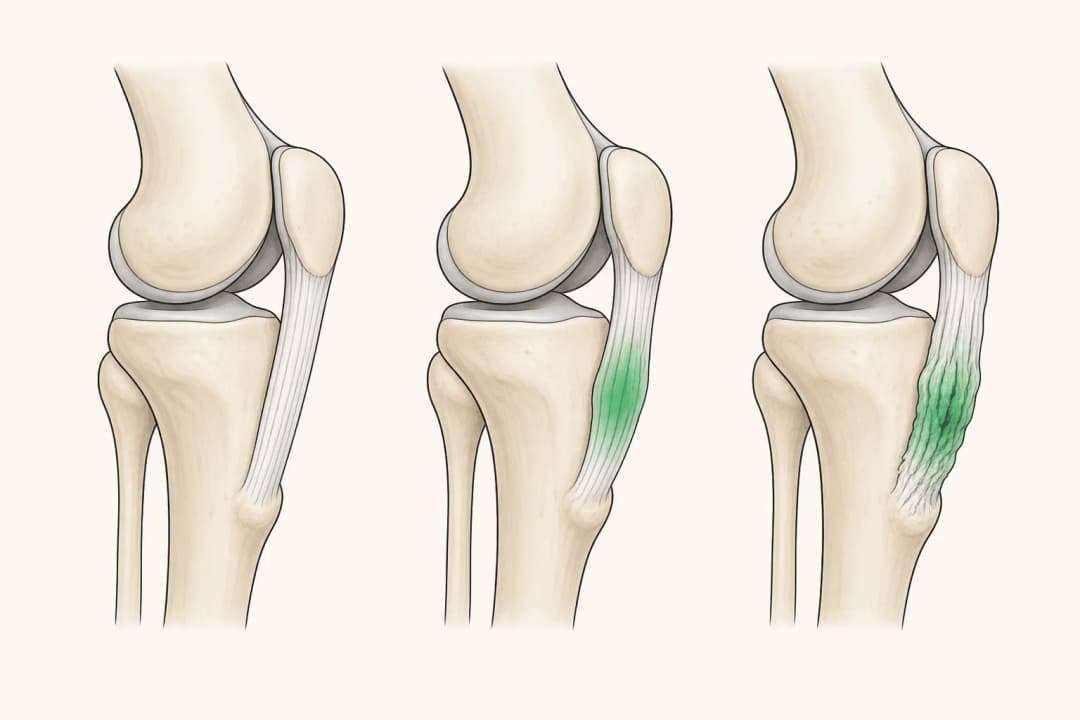
The patellar tendon connects the kneecap to the shinbone and transfers force when you straighten your knee. Treatment aims to calm an overloaded tendon without leaving the leg inactive. A clinician may check your movement, training pattern, strength, and the point of tenderness. Relative rest can mean pausing jumping, running, deep squats, or frequent stairs while keeping comfortable low-impact movement. Ice after activity may ease symptoms, and an appropriate pain medicine may be discussed if you can take it safely. Persistent symptoms may lead to options such as shockwave therapy or a PRP injection after an individual assessment.
Practical steps
Begin with a load that does not sharply increase pain during the exercise or leave a clear flare later that day. A physiotherapist can prescribe isometric exercises, then slow strengthening for the quadriceps and surrounding hip muscles. Progression may move from controlled knee extension to squats, step work, and eventually jumping or sport-specific drills. Strength training rehabilitation helps the tendon adapt gradually; the pace depends on symptoms and function. Warm up before demanding activity, increase training in small steps, and avoid testing the tendon with repeated maximal jumps while it is irritable.
When to seek care
Arrange an assessment if pain continues despite reducing the provoking activity, limits walking or stairs, or keeps returning when you resume sport. Seek prompt care after a sudden pop, marked swelling, bruising, or inability to straighten the knee or bear weight, because these features can indicate a more serious tendon injury. New warmth, redness, fever, or rapidly increasing swelling also needs timely medical attention.
Questions for your doctor
Ask which activities to pause, what level of exercise discomfort is acceptable, how strength will be measured, and when jumping can be reintroduced. You can also ask whether imaging is needed and why a procedure such as shockwave therapy or PRP injection fits your situation.
Find care
General Clinics & Polyclinics in Abu Dhabi
That answer is general. If you want it applied to your own case, these are licensed general clinics & polyclinics listed in Abu Dhabi.
27 Ar Ruwwad St - Shakhbout City - MSH4 - Abu Dhabi - United Arab Emirates
Accepts: Daman, Thiqa, Cigna, MetLife +20 more
Al Ruwais, Al Dhafrah
Accepts: Daman, Thiqa, AXA, Cigna +16 more
Al Bahyah - Al Bahyah Old - Abu Dhabi - United Arab Emirates
Accepts: Daman, Thiqa, Cigna, Allianz Care +18 more
Abu Dhabi
Accepts: Daman, Thiqa, AXA, Cigna +27 more
Ordered by verification status and how complete each clinic's public record is, then alphabetically. This is a directory listing, not a ranking — Zavis does not rate or recommend providers.
A factual listing drawn from the DHA, DOH and MOHAP licence registers. It is not a referral, an endorsement, or advice that any of these providers is right for you.
Questions people ask
Can I keep exercising with patellar tendinitis?
Often, comfortable low-impact exercise is possible, but jumping and other activities that clearly worsen symptoms may need temporary modification.
Is surgery always needed?
No. Many treatment plans begin with activity modification, rehabilitation, and gradual strengthening; persistent or severe cases need specialist review.
Related
Related reading
Keep reading
Medical disclaimer. This page is general health information, not medical advice, and it cannot diagnose you. Always consult a licensed healthcare provider about your own symptoms and treatment. In an emergency in the UAE, call 998 for an ambulance.