
How is Osgood-Schlatter disease treated?
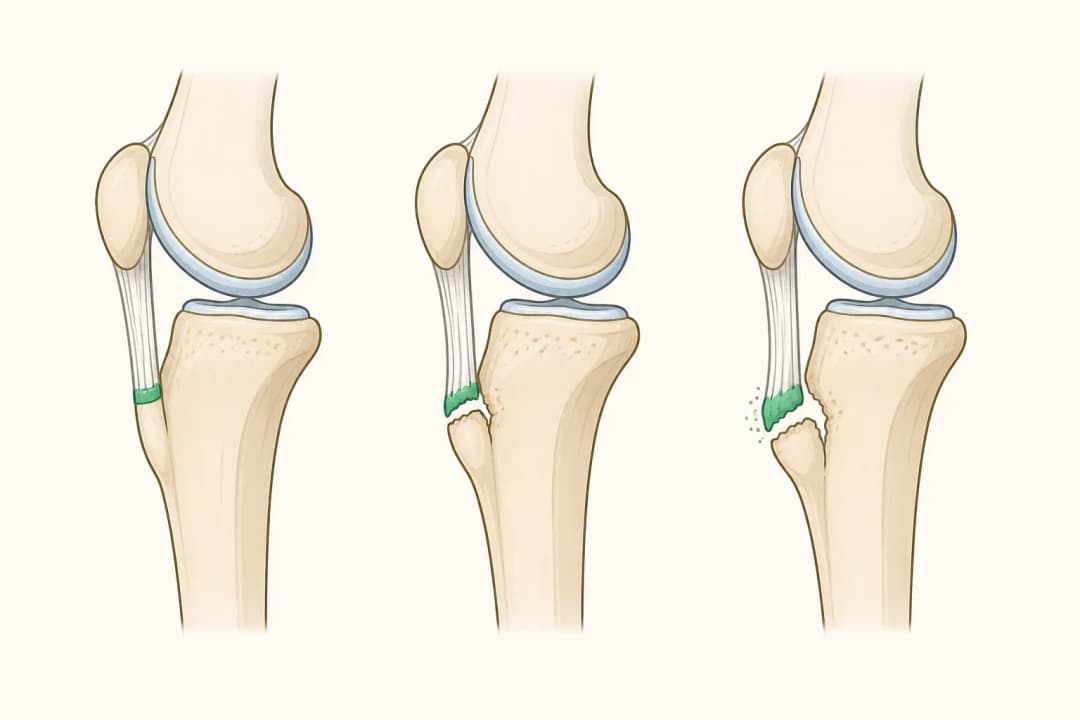
Short answer
Osgood-Schlatter disease is treated by adjusting painful activities, using symptom relief, and gradually strengthening the leg with guided rehabilitation.
This answers one question. It is not a diagnosis and does not replace an assessment by a licensed doctor.
At a glance
- Common focus
- Activity adjustment plus progressive leg strengthening.
- Useful support
- A child-specific rehabilitation plan.
What is happening at the knee
This condition affects the growth area where the tendon below the kneecap attaches to the shin. Repeated running, jumping and kneeling can irritate that area while a young person is growing. Pain and tenderness often increase with activity and may be felt around a firm bump below the kneecap.
The diagnosis is usually based on the story and examination. A clinician checks knee movement, tenderness, strength and the way the child walks or runs. Growing Pains are a different pattern and should not be assumed to explain focused pain at the tibial tubercle.
How to manage symptoms
Reduce or pause activities that clearly trigger pain, while keeping comfortable movement such as easy walking or swimming if tolerated. Ice or warmth through Hot and Cold Therapy may provide short-term comfort; protect the skin and follow professional advice about timing.
Paediatric Physiotherapy can teach stretching for tight thigh muscles, progressive strengthening for the quadriceps and hips, and a safe return-to-sport plan. Supportive footwear and avoiding repeated kneeling may also help. Medication should be discussed with a parent, clinician or pharmacist because age, allergies and other medicines matter.
When to seek care
Arrange assessment if pain causes limping, interrupts sleep, limits school or sport, or does not settle after activity changes. Seek prompt care after a sudden injury, if the knee becomes very swollen or hot, or if the child cannot bear weight. New or worsening Kneecap Pain deserves review rather than repeated training through it.
Questions for your doctor
Ask which activities can continue, what pain level should stop exercise, how to progress strengthening, and when sport is safe again. Ask whether the tender bump needs monitoring and how to distinguish this condition from another cause of knee pain.
Find care
General Clinics & Polyclinics in Abu Dhabi
That answer is general. If you want it applied to your own case, these are licensed general clinics & polyclinics listed in Abu Dhabi.
27 Ar Ruwwad St - Shakhbout City - MSH4 - Abu Dhabi - United Arab Emirates
Accepts: Daman, Thiqa, Cigna, MetLife +20 more
Al Ruwais, Al Dhafrah
Accepts: Daman, Thiqa, AXA, Cigna +16 more
Al Bahyah - Al Bahyah Old - Abu Dhabi - United Arab Emirates
Accepts: Daman, Thiqa, Cigna, Allianz Care +18 more
Abu Dhabi
Accepts: Daman, Thiqa, AXA, Cigna +27 more
Ordered by verification status and how complete each clinic's public record is, then alphabetically. This is a directory listing, not a ranking — Zavis does not rate or recommend providers.
A factual listing drawn from the DHA, DOH and MOHAP licence registers. It is not a referral, an endorsement, or advice that any of these providers is right for you.
Questions people ask
Does the condition require surgery?
Most young people are managed without surgery. An orthopaedic review can discuss other options when symptoms remain disabling after growth and rehabilitation.
Can a child keep playing sport?
Some activity may continue if it does not increase pain or cause a limp. High-impact drills may need a temporary reduction and gradual return.
Related
Related reading
Keep reading
Medical disclaimer. This page is general health information, not medical advice, and it cannot diagnose you. Always consult a licensed healthcare provider about your own symptoms and treatment. In an emergency in the UAE, call 998 for an ambulance.