
How is kidney infection treated?
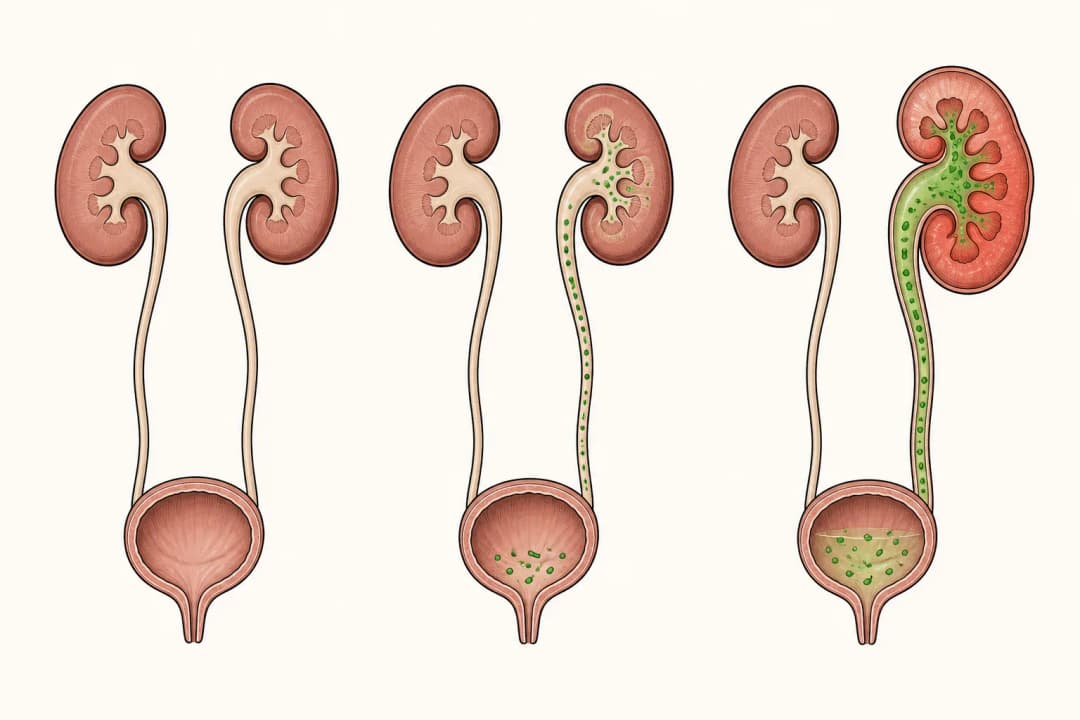
Short answer
Kidney infection is treated promptly with prescribed antibiotics, fluids and monitoring, with hospital care when illness is severe.
This answers one question. It is not a diagnosis and does not replace an assessment by a licensed doctor.
At a glance
- Core treatment
- Prescribed antibiotics
- Assessment
- Symptoms and urine testing
How treatment is chosen
A clinician will ask about fever, flank pain, painful urination and other symptoms, then may arrange a urine test. The sample can help identify infection and guide the choice of antibiotic. Kidney infection can develop from a urinary tract infection and should not be managed with leftover antibiotics or medication prescribed for someone else.
Many people can take antibiotics at home when they are able to drink, keep medicines down and are not seriously unwell. Treatment must be taken exactly as prescribed, even if symptoms start easing. Fluids can help prevent dehydration, but people with fluid restrictions should follow their clinician's advice.
What to do after diagnosis
Take the prescribed antibiotic on schedule and ask what to do if you vomit or miss a dose. Rest, drink according to medical advice and use only recommended pain or fever relief. Arrange follow-up if symptoms do not begin improving as expected, return after treatment or remain difficult to control.
Do not delay assessment because burning urination seems mild. Note changes such as blood in urine, worsening flank pain, reduced urination or new confusion, and tell the clinician about pregnancy, kidney problems, allergies and regular medicines.
When to seek urgent care
Seek urgent medical help for high fever with shaking, severe flank pain, repeated vomiting, faintness, confusion, marked weakness or difficulty passing urine. Pregnancy, significant kidney disease, an impaired immune system or inability to keep fluids and antibiotics down may require same-day review or hospital treatment.
Questions for your doctor
Ask whether a urine test is needed, how long to take the antibiotic, what improvement to expect, and which symptoms mean you should return urgently.
Find care
General Clinics & Polyclinics in Abu Dhabi
That answer is general. If you want it applied to your own case, these are licensed general clinics & polyclinics listed in Abu Dhabi.
27 Ar Ruwwad St - Shakhbout City - MSH4 - Abu Dhabi - United Arab Emirates
Accepts: Daman, Thiqa, Cigna, MetLife +20 more
Al Ruwais, Al Dhafrah
Accepts: Daman, Thiqa, AXA, Cigna +16 more
Al Bahyah - Al Bahyah Old - Abu Dhabi - United Arab Emirates
Accepts: Daman, Thiqa, Cigna, Allianz Care +18 more
Abu Dhabi
Accepts: Daman, Thiqa, AXA, Cigna +27 more
Ordered by verification status and how complete each clinic's public record is, then alphabetically. This is a directory listing, not a ranking — Zavis does not rate or recommend providers.
A factual listing drawn from the DHA, DOH and MOHAP licence registers. It is not a referral, an endorsement, or advice that any of these providers is right for you.
Questions people ask
Can a kidney infection clear without antibiotics?
A suspected kidney infection needs medical assessment because untreated infection can become serious; do not wait for it to clear on its own.
When is hospital treatment considered?
Hospital care may be needed if you are severely unwell, cannot keep fluids or antibiotics down, have complications or need antibiotics through a vein.
Related
Related reading
Keep reading
Medical disclaimer. This page is general health information, not medical advice, and it cannot diagnose you. Always consult a licensed healthcare provider about your own symptoms and treatment. In an emergency in the UAE, call 998 for an ambulance.