
How Is Joint Swelling Treated?
Short answer
Joint swelling is treated by addressing its cause, reducing irritation, and restoring comfortable movement; options may include rest, cold therapy, medicines, physiotherapy, or an injection after assessment.
This answers one question. It is not a diagnosis and does not replace an assessment by a licensed doctor.
At a glance
- Main principle
- Treat the underlying cause, not swelling in isolation.
- Self-care
- Protect the joint, use wrapped cold therapy, and keep movement gentle.
- Urgent warning
- A hot, very painful swollen joint with fever needs urgent medical assessment.
What treatment depends on
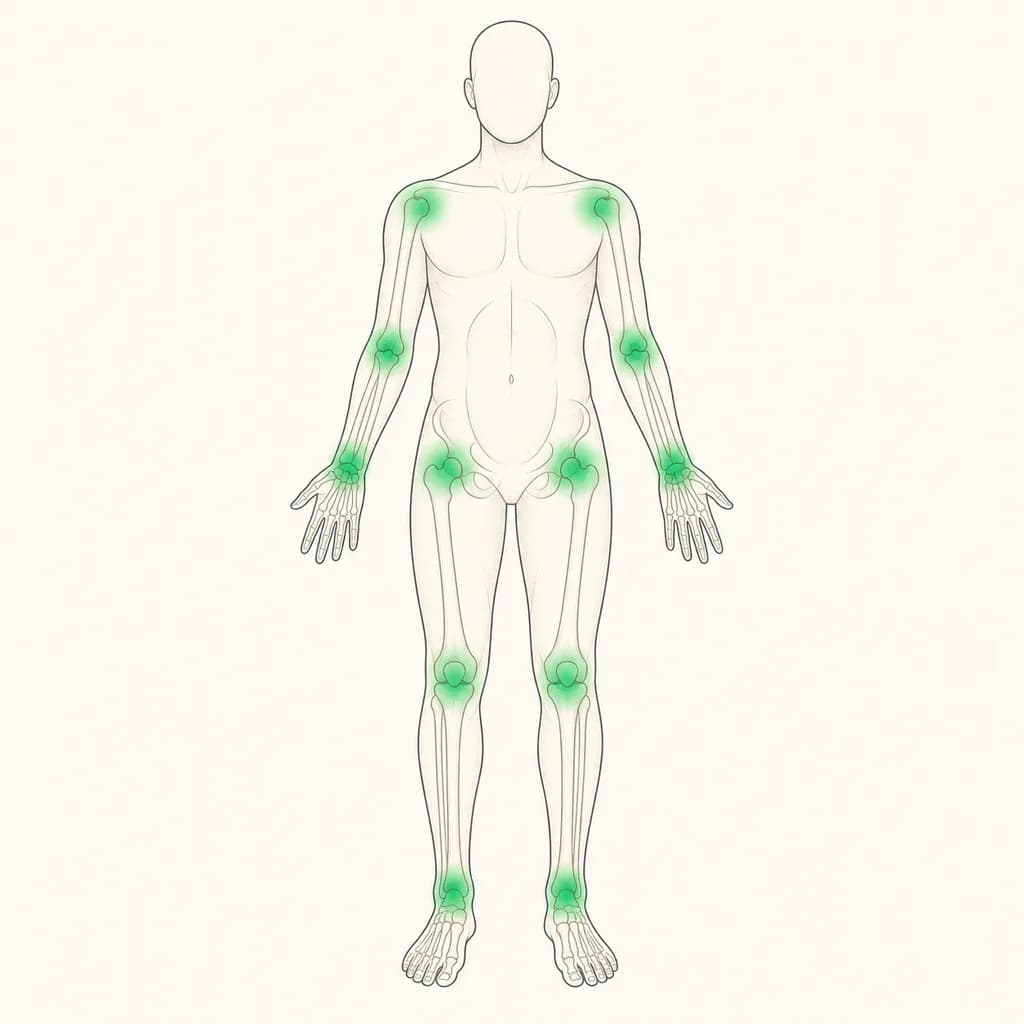
A swollen joint can reflect irritation around the joint, an injury, crystal inflammation, wear-related change, or an inflammatory condition. A clinician may examine the joint and ask about pain, stiffness, fever, skin changes, recent injury, and other affected joints. The pattern helps guide treatment rather than treating the swelling alone.
Gout and pseudogout can require condition-specific treatment. Osteoarthritis is often managed with activity adjustment, strengthening, and symptom relief. Bursitis can improve when pressure and the provoking activity are reduced. Psoriatic arthritis needs assessment because ongoing inflammation can affect several joints.
What you can do
For a recent, mild swelling, protect the area from activities that increase pain and use a wrapped cold pack for short periods. Elevating the limb may feel more comfortable. Keep the joint gently moving within a comfortable range unless a clinician has advised immobilisation; prolonged complete rest can increase stiffness.
A physiotherapist can adapt exercises to your joint, strength, and mobility. A clinician may also recommend medication or a cortisone injection when appropriate. Do not self-start anti-inflammatory medicine if you have kidney disease, a stomach ulcer, take blood thinners, or are pregnant without checking with a healthcare professional.
When to seek care
Seek urgent medical care if swelling is sudden and severe, the joint is hot and very painful, or you have fever, feel markedly unwell, or cannot move or bear weight. Prompt assessment is also sensible after a significant injury, visible deformity, numbness, or a change in skin colour.
Arrange a clinical review when swelling keeps returning, lasts despite reducing the provoking activity, or is accompanied by prolonged morning stiffness, unexplained weight change, or swelling in several joints. These features need evaluation for an underlying cause.
Questions for your doctor
Ask what may be causing the swelling, whether you need an examination or tests, which activities are safe, and how to use cold or heat. You can also ask which symptoms should trigger urgent review and when to reassess if the swelling does not settle.
Find care
General Clinics & Polyclinics in Abu Dhabi
That answer is general. If you want it applied to your own case, these are licensed general clinics & polyclinics listed in Abu Dhabi.
27 Ar Ruwwad St - Shakhbout City - MSH4 - Abu Dhabi - United Arab Emirates
Accepts: Daman, Thiqa, Cigna, MetLife +20 more
Al Ruwais, Al Dhafrah
Accepts: Daman, Thiqa, AXA, Cigna +16 more
Al Bahyah - Al Bahyah Old - Abu Dhabi - United Arab Emirates
Accepts: Daman, Thiqa, Cigna, Allianz Care +18 more
Abu Dhabi
Accepts: Daman, Thiqa, AXA, Cigna +27 more
Ordered by verification status and how complete each clinic's public record is, then alphabetically. This is a directory listing, not a ranking — Zavis does not rate or recommend providers.
A factual listing drawn from the DHA, DOH and MOHAP licence registers. It is not a referral, an endorsement, or advice that any of these providers is right for you.
Questions people ask
Should I use heat or cold for a swollen joint?
Cold is often more comfortable for recent swelling or irritation. Heat may help stiffness for some people, but avoid heat over a hot, acutely swollen joint and ask a clinician or physiotherapist what fits your symptoms.
Will joint swelling go away on its own?
Mild swelling after an obvious strain may settle with protection and gradual movement, but recurring, persistent, hot, or severe swelling needs assessment because treatment depends on the cause.
Can an injection treat joint swelling?
A clinician may consider a cortisone injection for selected causes after examining the joint. It is not suitable for every swollen joint, particularly when infection has not been ruled out.
Related
Related reading
Keep reading
Medical disclaimer. This page is general health information, not medical advice, and it cannot diagnose you. Always consult a licensed healthcare provider about your own symptoms and treatment. In an emergency in the UAE, call 998 for an ambulance.