
How is female pattern hair loss treated?
Short answer
Female pattern hair loss is treated with topical or oral medicines, supportive procedures, and sometimes hair transplantation.
This answers one question. It is not a diagnosis and does not replace an assessment by a licensed doctor.
At a glance
- Typical change
- Gradual thinning over the top or widening of the part
- Treatment principle
- Medicines generally need ongoing use to maintain benefit
How clinicians assess it
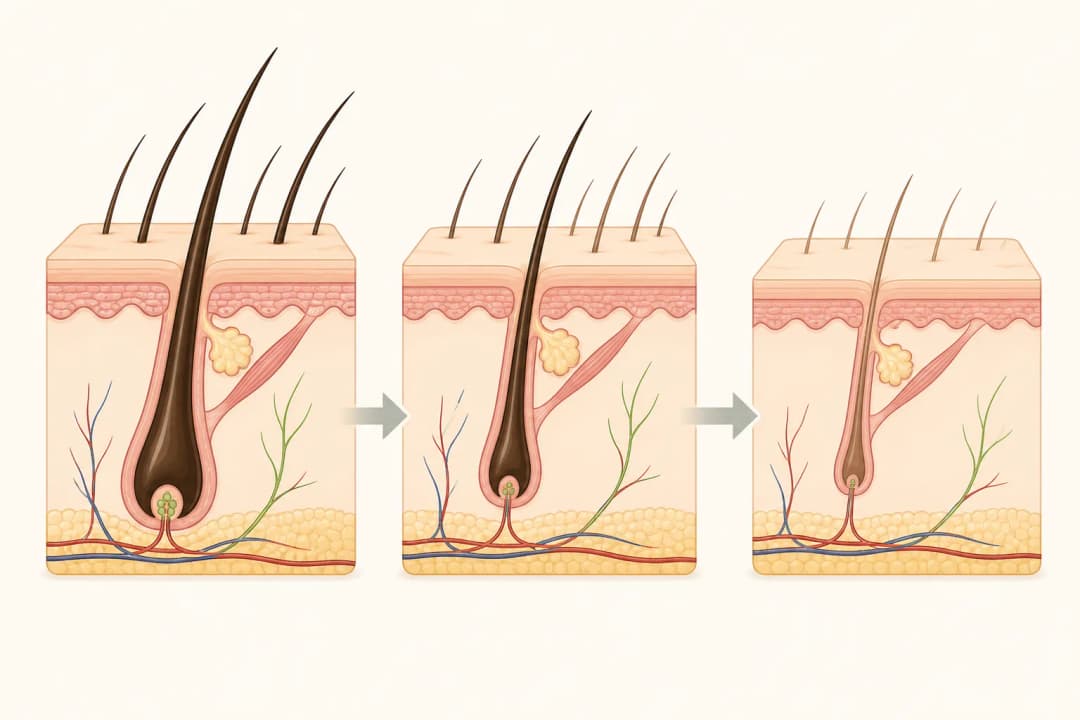
The usual pattern is gradual widening of the part or reduced density over the top of the scalp, while the front hairline may remain relatively preserved. A clinician examines the scalp and may ask about family history, recent illness, nutrition, periods, pregnancy, medicines, and sudden shedding. Other causes can resemble this pattern, including iron or thyroid problems, scalp inflammation, and patchy hair loss. Treating an identified contributor may be part of the plan. Explore Female Pattern Hair Loss, Hair Loss, and Thinning Hair for descriptions of related changes.
Treatment choices
Topical minoxidil is applied to the scalp as directed and needs consistent use to maintain benefit. Oral minoxidil may be discussed when topical treatment is unsuitable or insufficient; it requires clinician supervision because it can affect blood pressure and fluid balance. PRP or hair mesotherapy may be offered as adjunctive procedures, with results varying between people. Hair transplantation can redistribute follicles from a donor area when there is adequate donor density. Use gentle hair care, avoid tight styles and repeated heat or chemical stress, and photograph the parting in consistent lighting to track change.
When to seek care
Arrange assessment for sudden shedding, bald patches, scalp pain, scale, pus, marked itching, or loss of eyebrows or eyelashes. Seek prompt care if hair loss occurs with severe fatigue, faintness, rapid weight change, or other systemic symptoms. Earlier review can help distinguish pattern loss from a condition that needs different treatment.
Questions for your doctor
Does the pattern fit female pattern hair loss? Do I need blood tests or scalp examination? Which treatment is appropriate if I am pregnant, trying to conceive, or breastfeeding? How will we monitor progress and side effects?
Find care
General Clinics & Polyclinics in Abu Dhabi
That answer is general. If you want it applied to your own case, these are licensed general clinics & polyclinics listed in Abu Dhabi.
27 Ar Ruwwad St - Shakhbout City - MSH4 - Abu Dhabi - United Arab Emirates
Accepts: Daman, Thiqa, Cigna, MetLife +20 more
Al Ruwais, Al Dhafrah
Accepts: Daman, Thiqa, AXA, Cigna +16 more
Al Bahyah - Al Bahyah Old - Abu Dhabi - United Arab Emirates
Accepts: Daman, Thiqa, Cigna, Allianz Care +18 more
Abu Dhabi
Accepts: Daman, Thiqa, AXA, Cigna +27 more
Ordered by verification status and how complete each clinic's public record is, then alphabetically. This is a directory listing, not a ranking — Zavis does not rate or recommend providers.
A factual listing drawn from the DHA, DOH and MOHAP licence registers. It is not a referral, an endorsement, or advice that any of these providers is right for you.
Questions people ask
Can female pattern hair loss be reversed?
Treatment can reduce further thinning and improve density for some people, but response varies and ongoing treatment may be needed.
Is hair transplantation an option?
It may be considered when donor hair is suitable and the pattern has been assessed by a hair-restoration clinician.
Related
Related reading
Keep reading
Medical disclaimer. This page is general health information, not medical advice, and it cannot diagnose you. Always consult a licensed healthcare provider about your own symptoms and treatment. In an emergency in the UAE, call 998 for an ambulance.