
How is alopecia areata treated?
Short answer
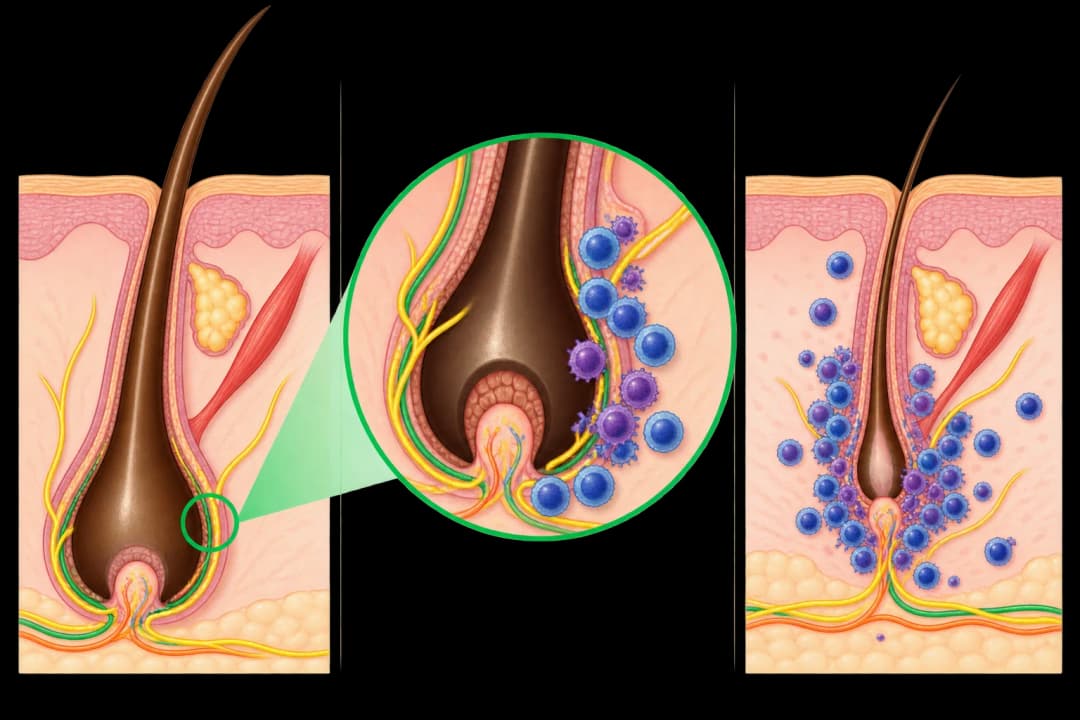
Alopecia areata treatment may calm immune activity around hair follicles using topical medicines, injections, or systemic therapy chosen by a dermatologist.
This answers one question. It is not a diagnosis and does not replace an assessment by a licensed doctor.
At a glance
- Possible areas
- Scalp, eyebrows, or other hair-bearing skin
- Treatment aim
- Reduce immune activity around follicles
Why treatment is individual
Alopecia areata can appear as one or more smooth bald patches, and it may also affect eyebrows or other hair-bearing areas. The pattern can change over time, so a dermatologist examines the scalp and may check for another cause of hair loss. Treatment choice depends on the size and number of patches, how quickly they appeared, the person’s age, and whether the eyebrows or nails are involved.
Available approaches
Topical corticosteroids may be prescribed for selected patches. Steroid injection into the skin can place medicine directly into limited areas, while oral corticosteroid treatment may be considered in particular patterns and circumstances. JAK inhibitor treatment is another option for some people with more extensive disease. Protect exposed scalp from sun and cold, handle regrowing hair gently, and use cosmetic or brow options if they support confidence.
When assessment matters
Arrange a dermatology review for sudden bald patches, rapid expansion, widespread hair loss, or thinning eyebrows. Seek prompt care if hair loss comes with scalp pain, scaling, pus, scarring, or marked illness, because those features can suggest another scalp problem. Do not start prescription immune treatments without a clinician’s assessment.
Questions for your doctor
Ask whether the pattern fits alopecia areata, which treatment suits the affected areas, and how follow-up will check response and side effects. Ask what to do if new bald patches appear and whether other medicines or health conditions affect the plan.
Find care
General Clinics & Polyclinics in Abu Dhabi
That answer is general. If you want it applied to your own case, these are licensed general clinics & polyclinics listed in Abu Dhabi.
27 Ar Ruwwad St - Shakhbout City - MSH4 - Abu Dhabi - United Arab Emirates
Accepts: Daman, Thiqa, Cigna, MetLife +20 more
Al Ruwais, Al Dhafrah
Accepts: Daman, Thiqa, AXA, Cigna +16 more
Al Bahyah - Al Bahyah Old - Abu Dhabi - United Arab Emirates
Accepts: Daman, Thiqa, Cigna, Allianz Care +18 more
Abu Dhabi
Accepts: Daman, Thiqa, AXA, Cigna +27 more
Ordered by verification status and how complete each clinic's public record is, then alphabetically. This is a directory listing, not a ranking — Zavis does not rate or recommend providers.
A factual listing drawn from the DHA, DOH and MOHAP licence registers. It is not a referral, an endorsement, or advice that any of these providers is right for you.
Questions people ask
Is alopecia areata contagious?
No. Alopecia areata is not spread by touching, sharing items, or close contact.
Can treatment regrow hair?
Treatment can support regrowth for some people, but response varies and new patches may still develop.
Related
Related reading
Keep reading
Medical disclaimer. This page is general health information, not medical advice, and it cannot diagnose you. Always consult a licensed healthcare provider about your own symptoms and treatment. In an emergency in the UAE, call 998 for an ambulance.