
How high can prostatitis raise PSA?
Short answer
Prostatitis can raise PSA by a variable amount, so the number alone cannot distinguish prostate inflammation from other causes of an elevated result.
This answers one question. It is not a diagnosis and does not replace an assessment by a licensed doctor.
At a glance
- PSA effect
- Inflammation can raise PSA by a variable amount
- Interpretation
- The result needs symptoms, history and examination for context
- Urgent symptom
- Inability to pass urine, especially with fever or severe pain
Why inflammation changes PSA
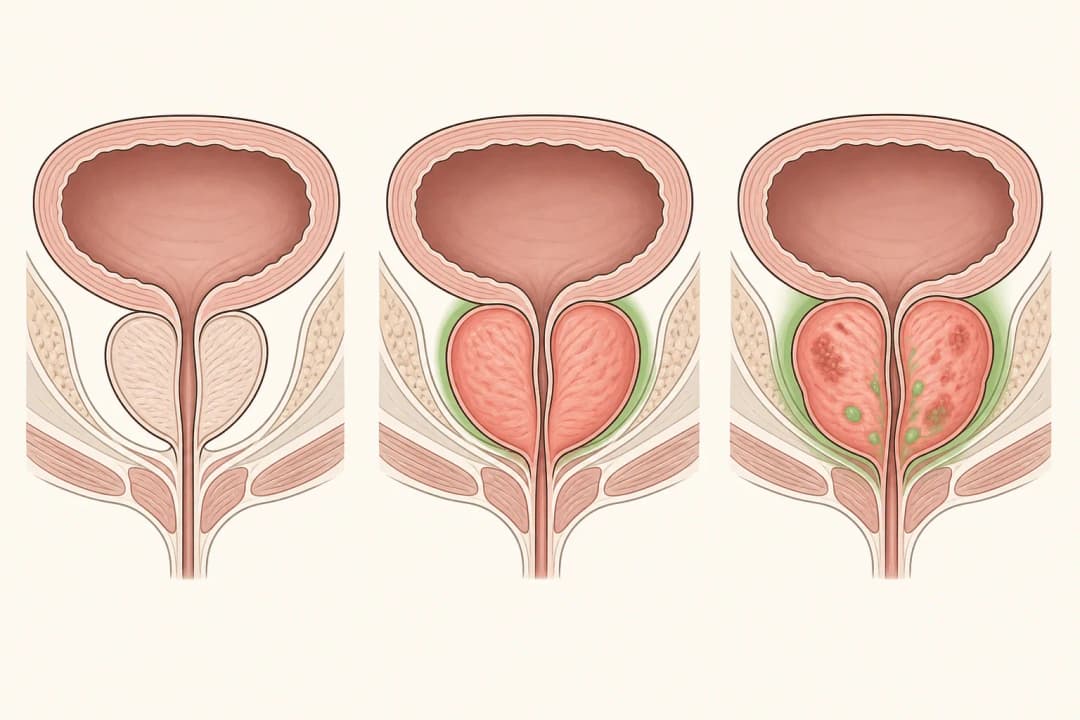
PSA is made by prostate cells and can enter the blood in greater amounts when prostate tissue is inflamed or irritated. Infection, urinary retention, recent procedures and other prostate conditions can also affect the result. There is no single PSA value that proves prostatitis is responsible, and a raised result does not by itself diagnose cancer. Clinicians interpret the result alongside symptoms, examination, previous PSA values, age and the timing of illness.
How the result is assessed
Tell the clinician about fever, pelvic or lower-back pain, urinary symptoms, recent catheter use, procedures and medicines. Assessment may include an examination, urine testing and treatment when infection or inflammation is suspected. A repeat PSA may be considered after the acute problem has settled, using timing chosen by the clinician. Do not start leftover antibiotics simply to change a test result; treatment should match the clinical findings.
When to seek care promptly
Seek urgent care for fever with chills, severe pelvic pain, vomiting, confusion or feeling suddenly very unwell. Get prompt help if you cannot pass urine, because acute retention needs treatment. Burning urine, urgency and frequent urination also warrant assessment, particularly with fever or pain. A PSA concern should be followed up even when urinary symptoms improve, because inflammation and other prostate conditions can overlap.
Questions for your doctor
Ask what may have influenced the result, whether urine testing or treatment is needed, when a repeat test is appropriate, and what change would lead to referral for further prostate assessment.
Find care
General Clinics & Polyclinics in Abu Dhabi
That answer is general. If you want it applied to your own case, these are licensed general clinics & polyclinics listed in Abu Dhabi.
27 Ar Ruwwad St - Shakhbout City - MSH4 - Abu Dhabi - United Arab Emirates
Accepts: Daman, Thiqa, Cigna, MetLife +20 more
Al Ruwais, Al Dhafrah
Accepts: Daman, Thiqa, AXA, Cigna +16 more
Al Bahyah - Al Bahyah Old - Abu Dhabi - United Arab Emirates
Accepts: Daman, Thiqa, Cigna, Allianz Care +18 more
Abu Dhabi
Accepts: Daman, Thiqa, AXA, Cigna +27 more
Ordered by verification status and how complete each clinic's public record is, then alphabetically. This is a directory listing, not a ranking — Zavis does not rate or recommend providers.
A factual listing drawn from the DHA, DOH and MOHAP licence registers. It is not a referral, an endorsement, or advice that any of these providers is right for you.
Questions people ask
Does a raised PSA prove prostatitis?
No. Prostatitis is one possible explanation, and the result must be interpreted with the rest of the clinical picture.
Should PSA be checked during urinary infection?
Ask the clinician about timing. Infection and inflammation may affect interpretation, so testing plans are individualised.
Related
Related reading
Keep reading
Medical disclaimer. This page is general health information, not medical advice, and it cannot diagnose you. Always consult a licensed healthcare provider about your own symptoms and treatment. In an emergency in the UAE, call 998 for an ambulance.