
How effective is vaginal dilator therapy for genitourinary syndrome of menopause?
Short answer
Vaginal dilator therapy may improve tolerance of vaginal insertion and stretching in genitourinary syndrome of menopause, but results depend on symptoms and consistent, comfortable use.
This answers one question. It is not a diagnosis and does not replace an assessment by a licensed doctor.
At a glance
- Potential benefit
- More comfortable insertion and stretching
- Best approach
- Gradual use without forcing or sharp pain
- May need combination care
- Moisturising, local treatment, or pelvic-floor support
How it may help
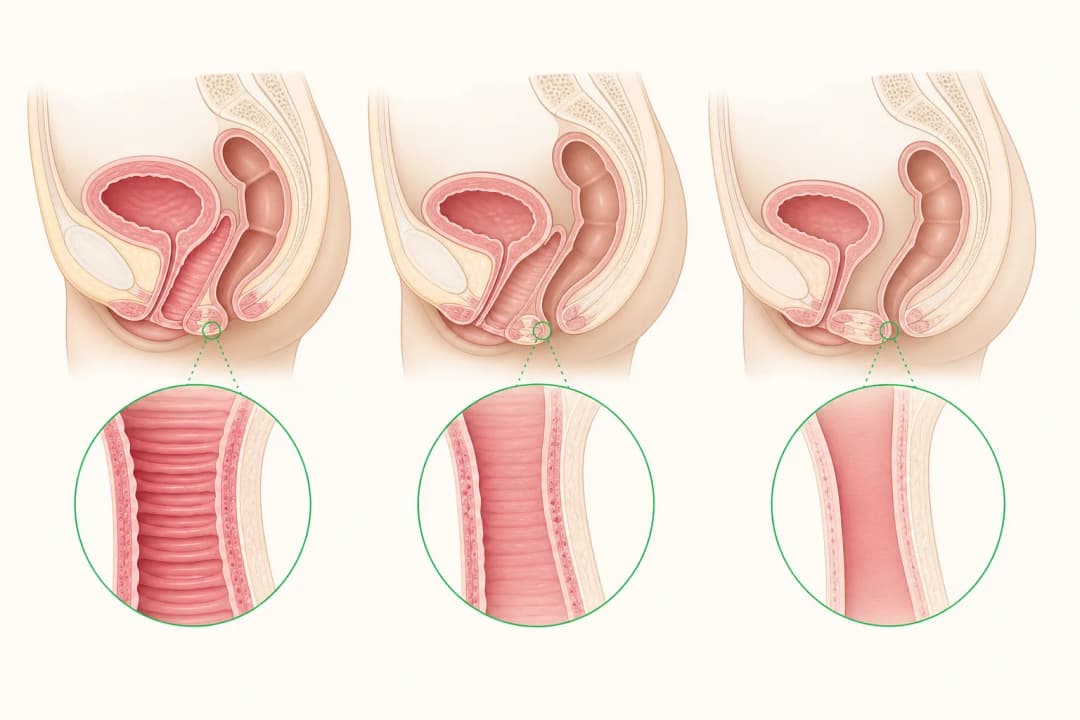
Genitourinary syndrome of menopause can involve dryness, burning, irritation, tissue fragility, painful sex, or discomfort during an examination. A dilator provides gradual, controlled stretching and can help you become more comfortable with insertion. It does not restore hormone levels or treat every urinary or vaginal symptom. A clinician may combine it with moisturising care, local treatment, pelvic-floor therapy, or management of another cause of pain.
Using therapy safely
Ask a clinician to help choose the size, material, lubricant, and progression that fit your symptoms. Begin only when the tissue is comfortable enough and stop if there is sharp pain, bleeding, or significant burning. Slow breathing and relaxed pelvic-floor muscles can make insertion easier; forcing the device can reinforce guarding. Clean it as directed and keep a brief record of comfort, dryness, urinary symptoms, and activities that remain difficult.
When to seek care
Arrange a review for bleeding after insertion, new sores, unusual discharge, persistent burning, worsening pain, or urinary symptoms that do not settle. Seek urgent care for severe pelvic pain, fever with feeling very unwell, or heavy bleeding. Bleeding after menopause should be assessed rather than assumed to be caused by dilator use.
Questions for your doctor
Are my symptoms consistent with genitourinary syndrome of menopause? Is the tissue ready for dilator use? Which lubricant or moisturiser is suitable? How should I increase size or frequency? Should local treatment or pelvic-floor therapy be added? What bleeding or urinary changes need assessment?
Find care
General Clinics & Polyclinics in Abu Dhabi
That answer is general. If you want it applied to your own case, these are licensed general clinics & polyclinics listed in Abu Dhabi.
27 Ar Ruwwad St - Shakhbout City - MSH4 - Abu Dhabi - United Arab Emirates
Accepts: Daman, Thiqa, Cigna, MetLife +20 more
Al Ruwais, Al Dhafrah
Accepts: Daman, Thiqa, AXA, Cigna +16 more
Al Bahyah - Al Bahyah Old - Abu Dhabi - United Arab Emirates
Accepts: Daman, Thiqa, Cigna, Allianz Care +18 more
Abu Dhabi
Accepts: Daman, Thiqa, AXA, Cigna +27 more
Ordered by verification status and how complete each clinic's public record is, then alphabetically. This is a directory listing, not a ranking — Zavis does not rate or recommend providers.
A factual listing drawn from the DHA, DOH and MOHAP licence registers. It is not a referral, an endorsement, or advice that any of these providers is right for you.
Questions people ask
Can dilators treat dryness on their own?
They mainly address comfort with stretching and insertion; dryness may need additional vaginal care.
Should dilator use hurt?
Mild stretching may be felt, but sharp or worsening pain is a reason to stop and seek advice.
Related
Related reading
Keep reading
Medical disclaimer. This page is general health information, not medical advice, and it cannot diagnose you. Always consult a licensed healthcare provider about your own symptoms and treatment. In an emergency in the UAE, call 998 for an ambulance.